
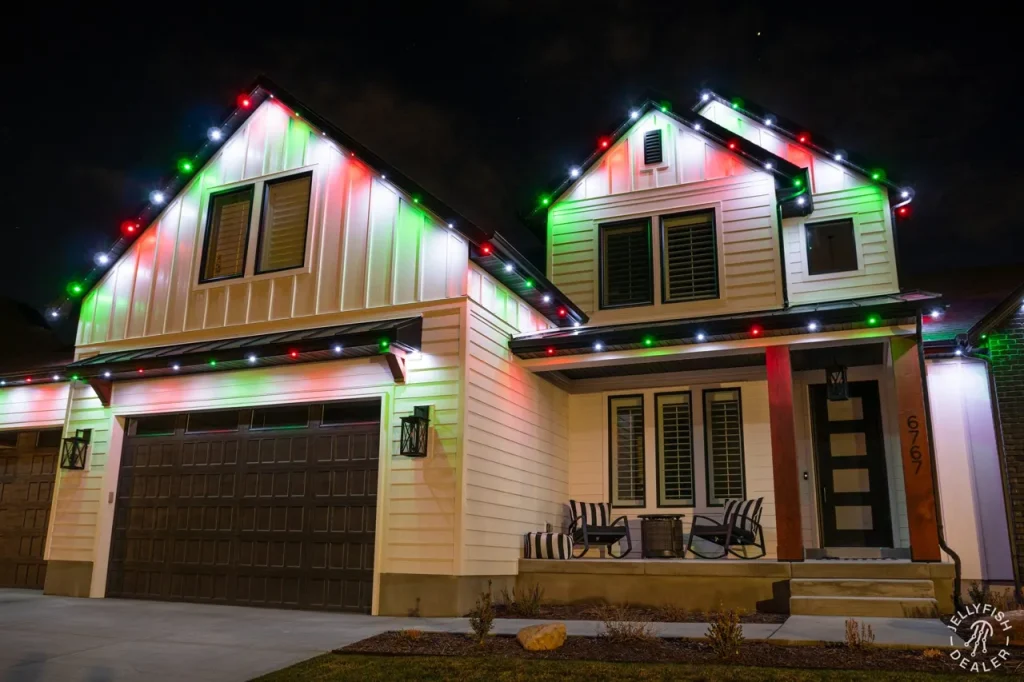
Permanent Christmas lights ready by Christmas time start with booking early. Here is how it goes in Pinellas, from the first call to the first lit night: the estimate, the written proposal, any HOA or condo review, and the install visit. People also call it permanent holiday lighting or soffit lighting, and once it’s up, Tampa Bay owners use it for every holiday of the year, not just December.
Request a free permanent Christmas lights estimate
Tell us your address and add a photo of your home for a free design preview. A licensed electrician will call or text you back.
Want your home lit for Christmas? Call (727) 476-7079 or request a free estimate online.
The short version
Book early. Holiday calendars get crowded in November, and if your association has to sign off, that review alone can add a week or two.
Step 1: Free estimate (or a photo first)
A licensed electrician walks the house with you. We measure the soffit runs and gable rakes, count the stories, check the fascia for soft spots and test the garage outlet the controller will use. If you’d like to see the look before anyone visits, send a photo for a free design preview.
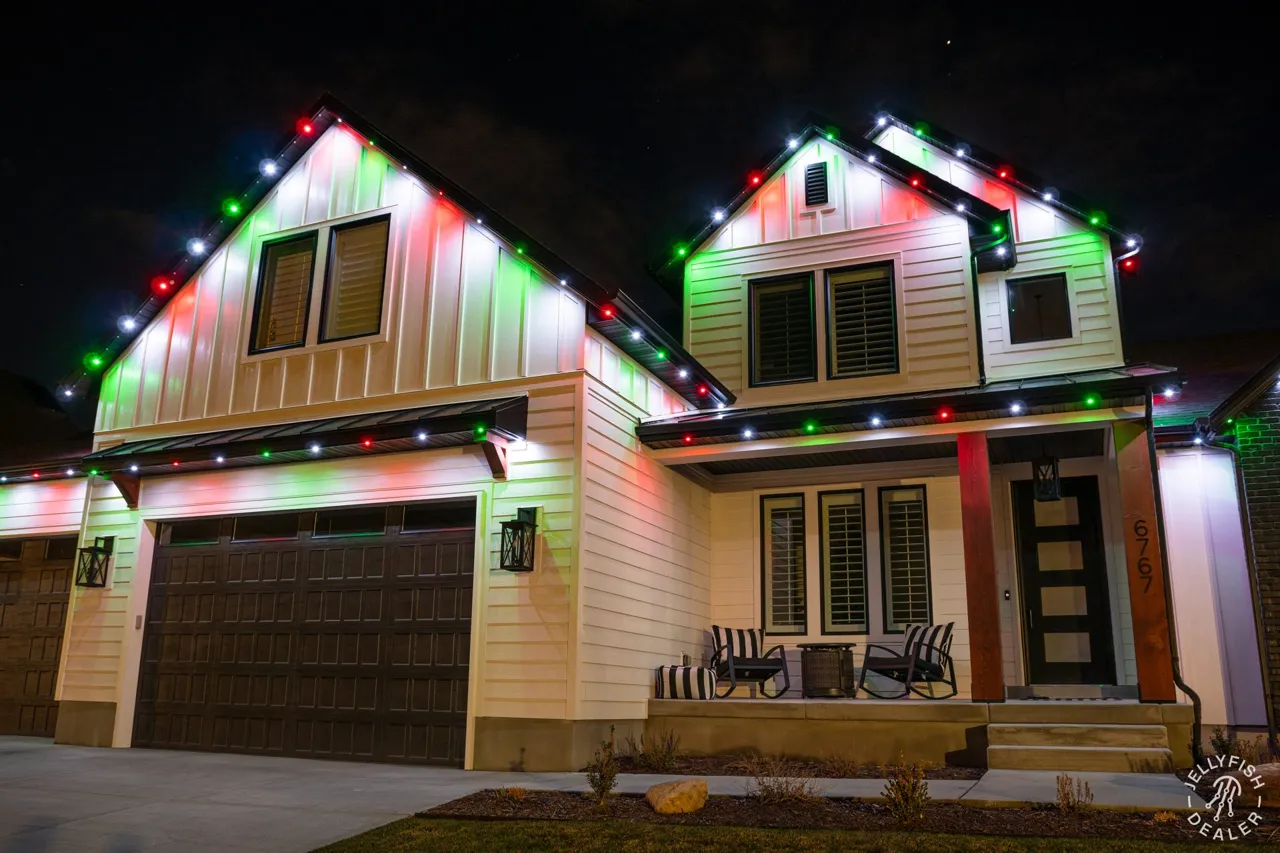
Step 2: Written proposal
The proposal spells out every run, the light spacing, the controller location and any electrical work. If the garage needs a new receptacle or circuit, it’s listed there along with the permit we’ll file.
Step 3: HOA or condo approval, if you need it
Association members should file the day the proposal arrives. We include the product sheet and a marked-up photo for the packet. Boards that meet once a month are the most common reason a December install slips, so don’t wait on this step.
Step 4: Install day and app walkthrough
How long the visit takes depends on the house, and your proposal gives the estimate. Before the crew leaves, we load a Christmas scene and an everyday schedule and show you how to change both from your phone.
Install dates booking now
Reach us by phone or the form. City pages are listed in the Pinellas County guide, or start with Seminole, Largo or Pinellas Park.
Why homeowners pick Keywest Lights & Electric
- Florida licensed electrical contractor EC13014717 (verify with DBPR)
- 24/7 electrician for emergencies, not just a lighting crew
- 2-year workmanship warranty, 5 years for members
- 5-year JellyFish parts warranty
- Home Depot preferred installer
- Outlet and power work done by a licensed electrician, with a permit when it’s required
- Local, not a franchise: Seminole-based, woman-owned, and led by Mark Einstein, the license holder
How long it takes from yes to lights on
After you sign, we order the JellyFish material, which usually ships in about 4 days. While it’s in transit, we lock in your date and schedule any receptacle or circuit work and its permit. Association review is usually the longest wait of the whole process.
Aiming for Christmas: A mid-November booking leaves slack for board review and rain. Later than that, call and we’ll give you a straight answer on open dates.
Find your city: JellyFish permanent lighting hub, plus city pages for Seminole, Clearwater, St. Petersburg, Largo, Dunedin, Palm Harbor and Tampa, and the Pinellas County guide.
What can slow down getting lights up before Christmas
Three things push dates back most often. The first is board review, since many associations only decide at a monthly meeting. The second is fascia repair: soft or rotted wood has to be fixed by a carpenter or painter before we fasten anything. The third is rain, because we don’t mount in wet weather.
A sample calendar
Here is how a typical early-season job runs. Week one: estimate and design preview. A few days later: proposal signed, material ordered, HOA packet filed. Week two: material arrives. Weeks two to four: board decision. Then the install visit and an app walkthrough. Move the whole calendar earlier if your board meets rarely or your fascia needs work.
Getting ready for the visit
A little prep keeps things moving. Find your association’s covenants and the architectural request form. Check that the Wi-Fi reaches the garage, since the controller connects there; a weak signal is easy to fix with a mesh node or extender. Clear a spot on the garage wall near the existing outlet. Think about which side of the house matters most from the street, and whether you’d want the back lit too.
What you’ll have when it’s done
Coverage is the JellyFish 5-year parts warranty plus our 2-year workmanship warranty, which becomes five years with a Member Care Plan. The channel sits beneath the soffit and up the gable rakes, never on the roof. Your scenes are saved in the app, so next year’s Christmas lights, and every holiday in between, are a tap away with no ladder and no storage bins.
If you’ve used a seasonal hang-and-remove crew before, the difference shows up the following year: there’s nothing to book, and the lights are already in place for Thanksgiving week.
Related pages
- JellyFish permanent lighting
- Pinellas County service area
- our Seminole page
- Hillsborough County service area
- Seminole and Pinellas local guide
- board approval and permits in Pinellas
- how JellyFish handles salt air
- the daytime and nighttime look
- booking in Seminole
- lighting a storefront
- color ideas for the whole year
Outside steps that can affect timing
Only one part of the schedule is out of our hands: your board’s review calendar.
After the holidays
Nothing comes down in January. Switch the app from the Christmas scene to an everyday warm white, or turn the schedule off until the next holiday. Many Pinellas owners run a low white at dusk year-round, add orange and purple for Halloween, red, white and blue for the Fourth, and your team’s colors on game days. If a section ever goes dark, the parts warranty covers the hardware and our workmanship warranty covers the labor, so one call gets it handled.
One more planning note: if your house will need a new garage receptacle, that work is permitted and inspected, so it goes on the calendar before the light install. We file the permit as soon as you sign, and in most cases the inspection lands while your material is still in transit, so it rarely adds time. Ask about it at the estimate and we’ll tell you whether your house needs it. Should a storm be forecast, you don’t need to do anything. The channel stays put under the overhang, and the controller is inside the garage.
Related: booking in Seminole · HOA and permit guide · Seminole JellyFish lighting · permanent lighting
See also: permanent vs. seasonal lights · lights for condos, townhomes and villas · game-day and holiday color schedules.
How we install it differently
As an extra KWLE option, the system can be split into two zones. The front zone covers the street-facing soffit and turns the corners so the ends look finished, and where there’s a gable, it follows the rake up to the peak and back down. The back is the second zone, so the front can glow while the yard side stays dark. The controller stays in the garage on an existing outlet either way.
Questions about getting it done before Christmas
Do I need a permit for permanent lights? Only when the job adds electrical work, such as a new garage receptacle or circuit. The channel itself just fastens beneath the soffit.
How long after I approve the proposal can you install? Material is usually on its way within about 4 days, and after that your date depends on the calendar, the weather and any board review.
What slows things down most? Association review. File it as soon as the proposal arrives.
Can you install before my HOA approves? No. If your community requires approval, we wait for it so nothing has to come down later.
Is it too late to switch from a seasonal installer this year? Often it isn’t. Get an estimate soon and weigh the two approaches in permanent vs. seasonal lights.