
Keywest Lights & Electric installs JellyFish Lighting across Pinellas County from our base in Seminole. We are an independent, licensed electrical contractor (EC13014717) and an Authorized Dealer of JellyFish Lighting, not JellyFish Lighting, the company. In a county this built out, permanent roofline lighting is less about Christmas and more about how a home or business looks and feels every night: brighter entries and walkways, soft white on the trim, steady brand colors on a storefront, and holiday scenes when the season comes around.
Planning lights for a Pinellas home or business? Call (727) 476-7079 or request a free estimate online.
Keywest Lights & Electric is an Authorized Dealer of JellyFish Lighting. We are not JellyFish Lighting.
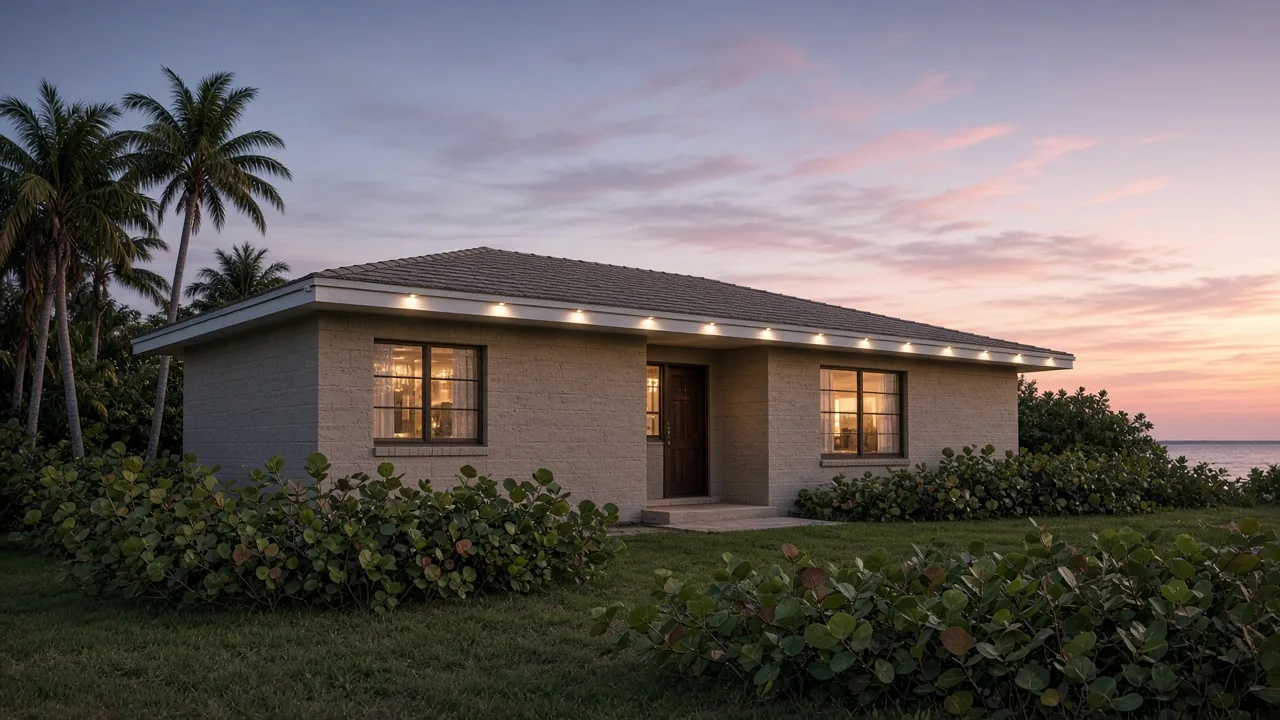
Pinellas rooflines: older homes, condos and shared buildings
Pinellas is one of the most built-out counties in Florida. Census estimates put the median home here at 1977, with 58.8% of housing built before 1980. Just under half of all units are single-family detached homes, and 18% sit in buildings of 20 or more units, so a lot of our lighting conversations start with an association rather than a single owner. Mobile homes make up about 9% of the county’s housing as well.
Older block ranches tend to have long, simple eaves that take a track well. Condo and townhome buildings need the association’s sign-off before anything goes on the roofline, and a shared building usually means a longer conversation about where the controller lives and which outlet powers it.
Beach towns and sea turtle season
Pinellas sea turtle season runs May 1 through October 31. Loggerheads are the most common nesters here, and the county reported a record 669 nests in 2019. FWC lists lighting ordinances for Belleair Beach, Clearwater, Dunedin, Indian Rocks Beach, Indian Shores, Madeira Beach, North Redington Beach, Redington Beach, Redington Shores, St. Pete Beach and Treasure Island.
FWC’s guidance for beachfront property is simple: keep lights from being visible on the beach, use long-wavelength amber, orange or red light where light is needed, and leave decorative lights off until after October 31. For beachfront homes, we set up a turtle-friendly JellyFish schedule so the lights stay off from May 1 through October 31, the nesting season FWC recognizes, then open up the full palette for the holidays.
Storefronts and offices: steady color, checked against the sign code
The county’s planning documents point redevelopment toward Central Avenue in St. Petersburg, Clearwater-Largo Road and US 19, and name downtown St. Pete, downtown Clearwater and the Gateway area as employment centers. St. Pete’s Grand Central and EDGE districts, Largo’s West Bay Drive and downtown Clearwater are full of buildings that look great with a lit roofline.
Here is the catch for businesses: sign codes across Pinellas are strict about changing light. Unincorporated Pinellas counts color changes on a sign facing as an animated sign and prohibits animated signs. St. Petersburg prohibits sign lights that change intensity, brightness, color or direction. Clearwater allows LED outlining of a building’s architecture as long as it does not change color, brightness or direction. Largo, Pinellas Park and Seminole all restrict flashing or animated signs. So for commercial buildings we install steady brand colors and confirm the rules for your address before setup. Chases and animated patterns stay on the residential side. See our commercial electrician page for other building work.
Wind, salt air and how the track goes up
Under the Pinellas local amendment to the Florida Building Code, the design wind speed for typical homes and businesses (Risk Category II) is 145 mph countywide, which puts all of Pinellas inside the wind-borne debris region. We fasten the track to solid framing along the soffit or fascia rather than relying on clips or adhesive, keep wiring inside the track or the attic, and use corrosion-resistant hardware and outdoor devices near the water.
Permits by jurisdiction
Permanent lighting that needs a new outlet or dedicated circuit requires an electrical permit anywhere in Pinellas County. Clearwater, Largo, Seminole, St. Petersburg and the other cities run their own building departments, and unincorporated areas such as Palm Harbor and Lealman go through Pinellas County. We pull the permit from the right office for your address and handle the inspection for you, so the circuit behind your lights is on record.
Homes and HOAs
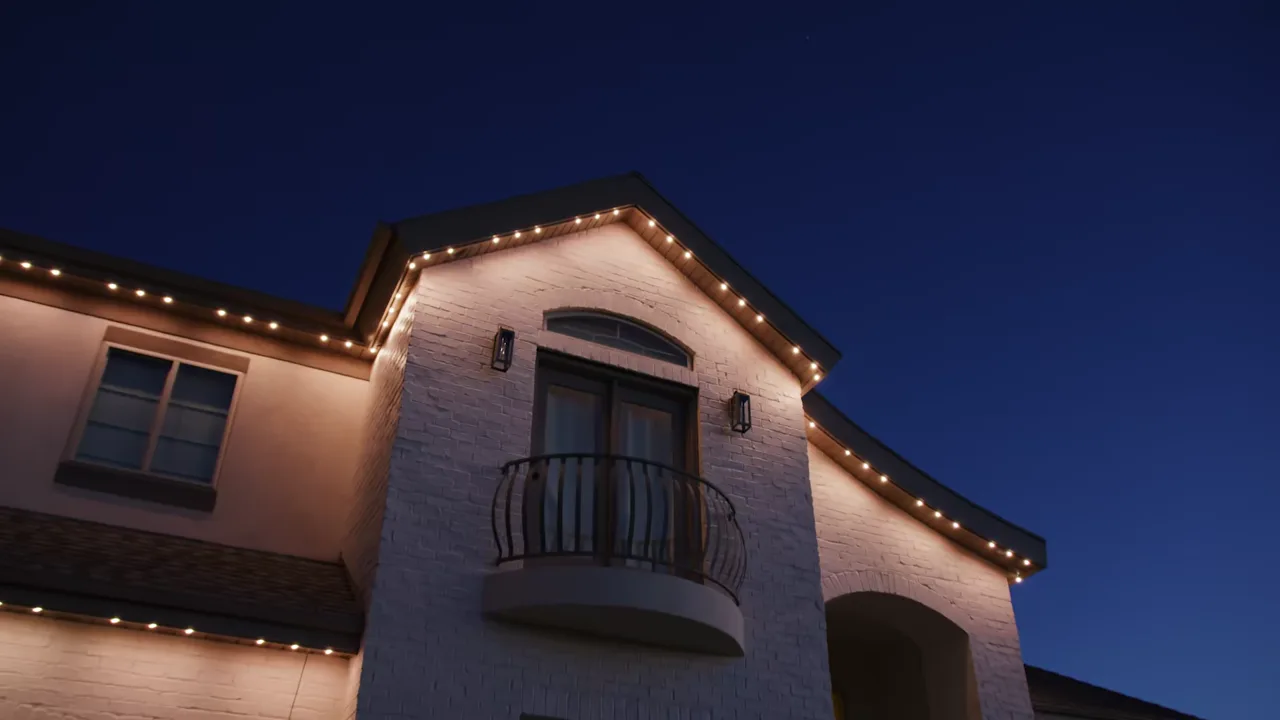
On a house, the most-used settings are a warm white that shows off the stucco and trim and a brighter white that lights the driveway, entry and side yard for security. Holiday and game-day scenes are there when you want them. Florida law limits what an HOA can regulate only for items that are not visible from the street or neighbors, and roofline lighting is visible, so association rules can apply. We provide the track color, layout and product details for your review board.
Holiday lights around the county
Pinellas already loves its lights. Holiday Lights in the Gardens at the Florida Botanical Gardens in Largo puts up more than a million lights, and St. Petersburg’s Holidays in the Sunshine City season lights up Straub Park, Pioneer Park and the St. Pete Pier. A JellyFish roofline lets you join in from your own driveway without a ladder.
Duke Energy and Tampa Electric
Duke Energy Florida serves most of Pinellas, and Tampa Electric serves parts of the county. Both lease area and fixture lighting, but neither program covers decorative roofline lighting, which is why JellyFish runs on your own outlet and app.
Pinellas JellyFish Lighting FAQ
Can my shop or restaurant in Pinellas use color-changing JellyFish lights? For the building facade, plan on steady colors. Pinellas County’s code counts color changes on a sign facing as an animated sign, St. Petersburg prohibits sign lights that change color or brightness, and Clearwater treats LED outlining as signage unless it stays static. We set business systems to steady brand colors and check the code for your address first.
I live on the beach. Can I keep my roofline lights on in summer? Not where they can be seen from the beach. We set up turtle-friendly schedules that keep beachfront roofline lights off from May 1 through October 31, sea turtle nesting season per FWC, and most Pinellas beach cities have their own lighting ordinances as well.
Does a JellyFish install need a permit in Pinellas County? Yes, when the job needs a new outlet or dedicated circuit. That work requires an electrical permit, and we pull it with your city or the county and handle the inspection for you.
Who powers my lights, Duke Energy or Tampa Electric? Most of Pinellas is served by Duke Energy Florida, and Tampa Electric serves parts of the county. Either way, JellyFish Lighting plugs into your home’s outlet, so nothing changes on your utility account.
More about the system on our main JellyFish Lighting page, our permanent lighting page and the Pinellas County hub.
JellyFish Lighting by city in Pinellas: St. Petersburg (Snell Isle, Old Northeast, Shore Acres) · Clearwater (Island Estates, Clearwater Beach)
Ready to light a Pinellas home or business? Call (727) 476-7079 or request a free estimate online.
JellyFish Lighting is a trademark of JellyFish Lighting. Keywest Lights & Electric is an independent Authorized Dealer and is not JellyFish Lighting, the company.