
Permanent lights or a seasonal installer? A side-by-side look for Florida homes: upkeep, salt air, storms, HOAs, turtle season and power.
Request a free permanent lighting estimate
Tell us your address and what you need. A licensed electrician will call or text you back.
Planning lights for this year? Call (727) 476-7079 or request a free estimate online.
Every fall, Florida homeowners face the same choice: pay someone to hang and remove holiday lights again, or install a permanent system once. Both are reasonable. The right answer depends on how long you plan to stay, how you want the house to look the other eleven months, and how the setup holds up in our climate. This guide compares the two for Florida homes without the sales pitch.
The two options, defined
A hired seasonal install means a crew clips strings of lights to the house each fall, comes back if something fails, takes everything down after the holidays and often stores it for you. You pay for that cycle every year.
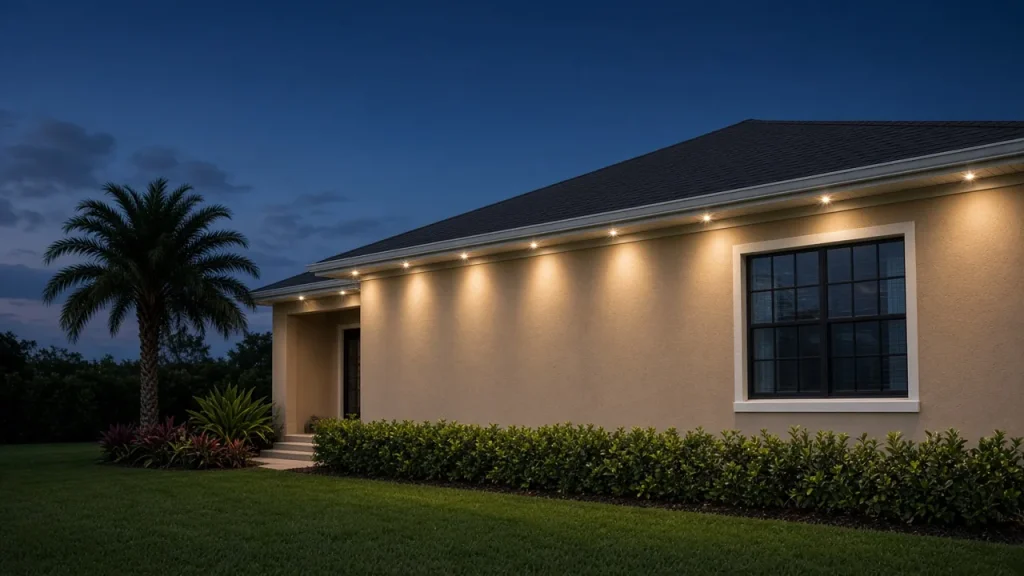
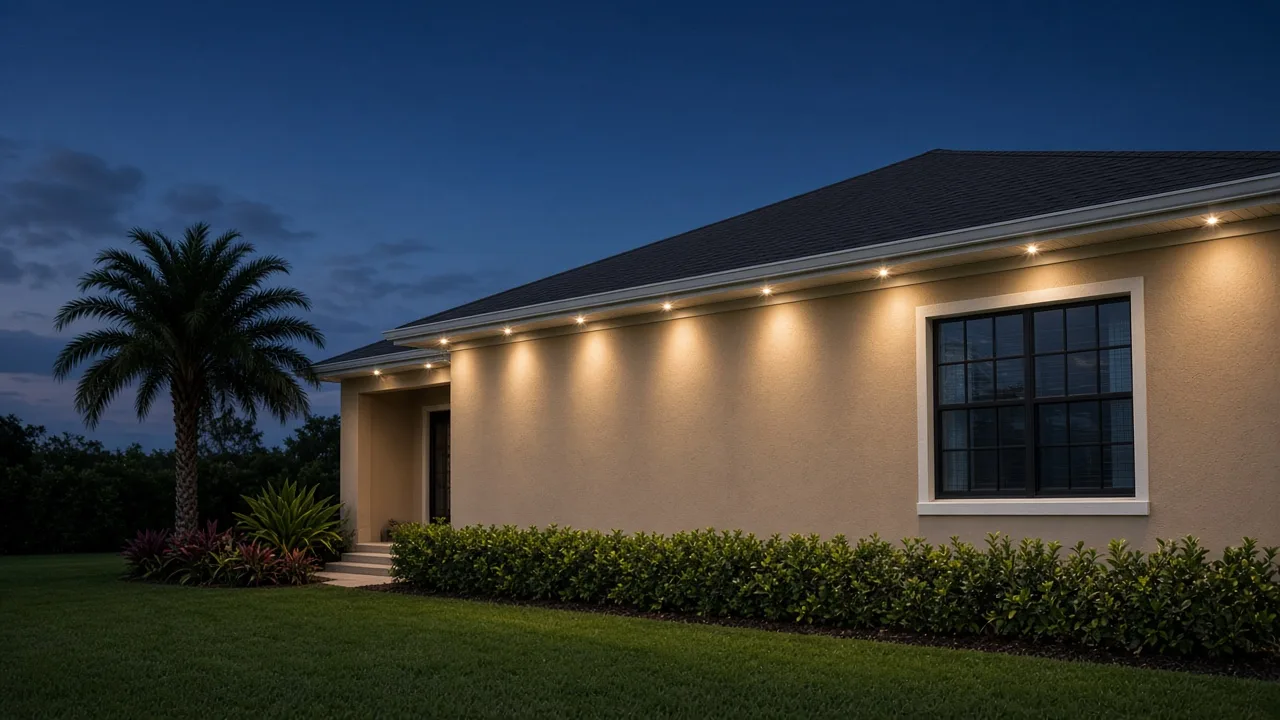
A permanent system uses LED lights housed in a low-profile track fastened under the eaves and soffit and along the sides of the house. It stays up all year, runs from a controller and a phone app, and can show warm white on ordinary nights and color for holidays. It is not mounted on the roof.
Side-by-side for a Florida home
- Who climbs the ladder: with seasonal service, a crew climbs twice a year. With a permanent system, the climbing happens once, at install.
- How long the lights are up: seasonal strings come down in January. Permanent track stays, so the same lights work for Halloween, Fourth of July, game days and everyday accent or security lighting.
- Daytime look: clipped strings and cords are visible by day for the whole season. A permanent track sits under the eave, color-matched to the trim, and is hard to notice from the street.
- Salt air and humidity: temporary strings and plug connections sit in the weather for weeks. A permanent system keeps its connections inside a channel, which matters within a few miles of the Gulf or the bay.
- Summer storms: seasonal lights are down during hurricane season. Permanent track is fastened along the eave, so it is worth asking any installer how the track is secured and what the warranty covers.
- Scheduling: seasonal crews book up in the fall, and the install date is theirs. A permanent system is installed once, and after that you choose when the lights change.
- Cost pattern: seasonal service is a recurring yearly fee. A permanent system is a larger one-time cost. Which works out better depends on how many years you will use it.
When a seasonal installer makes more sense
If you rent, plan to move within a year or two, or only want lights one month a year with a different look each time, a seasonal service can be the better fit. The same goes for large trees and yard displays, which permanent eave track does not cover.
When a permanent system makes more sense
If you plan to stay, want lights for more than one holiday, or like the idea of soft warm white at night for curb appeal and security, a permanent system usually fits better. It also suits owners who are away part of the year, since schedules run from the app.
Florida details people forget
- Power: a seasonal display usually runs on outdoor outlets and extension cords. A permanent system’s controller goes in the garage and usually plugs into an existing outlet; a licensed electrician adds one only if needed.
- HOA review: many associations want to see the product and layout before any permanent exterior change. Seasonal lights often fall under separate holiday rules, so read both sections of your covenants.
- Sea turtle season: beachfront homes follow sea turtle lighting rules from May 1 to October 31 (FWC). A permanent system can keep beach-facing zones dark during nesting season, while seasonal lights usually go up after it ends.
- Who does the electrical work: Florida requires a licensed contractor for new receptacles or circuits. Ask any installer who handles that part.
How we handle permanent lighting
Keywest Lights & Electric is an Authorized JellyFish Dealer. A licensed electrician visits, checks the eaves, soffit and power, and gives you a written estimate and a design preview. After any HOA approval, we install the track under the eaves and along the sides, mount the controller in the garage on a GFCI-protected outlet, and set up the app with you. JellyFish parts carry a 5-year warranty, and our workmanship is covered for 2 years (5 for Member Care Plan members).
Related: JellyFish lighting · permanent eave lighting · HOA approval guide · ready-by-Christmas timeline · comparing systems in salt air · Pinellas County · Tampa · game-day and holiday color schedules
Keywest Lights & Electric is a licensed electrical contractor (EC13014717), woman-owned and based at 6248 Seminole Blvd, Seminole, FL 33772. Our workmanship warranty is 2 years, or 5 years for Member Care Plan members.
How we install it differently
As an option, we can split your install into two zones. The front zone runs across the face of the house and wraps about 4 feet down each side so the corners look finished; where a side has a pitched gable, the front zone follows that gable up and down under the overhang instead. The back of the house is its own zone, so you can light the front while the back stays dark.
Frequently asked questions
Are permanent lights mounted on the roof? No. The track is fastened under the eaves and soffit and along the sides of the house, not on the roof.
Can permanent lights look like normal white lights most of the year? Yes. Most owners run a warm white scene on ordinary nights and switch to color for holidays.
Is a seasonal installer cheaper? In a single year, usually. Over several years the recurring fee adds up, so the answer depends on how long you will keep the house.
Do permanent lights need a new outlet? Usually not. The controller goes in the garage and plugs into an existing outlet. If there isn’t a suitable one, we add it under a permit.