
Need electrical inspection 4 point corrections in Tampa Bay? Keywest Lights & Electric corrects the electrical items on the report, documents each fix with photos, and gives you the paperwork your agent asks for. We are a woman-owned, licensed electrical contractor (EC13014717) working from 6248 Seminole Blvd in Seminole. Call or text (727) 476-7079, or send us the report and we will tell you what it really needs.
Request a quote
Tell us what you need and where you are. A licensed electrician will call or text you back to set a time. For an emergency, call (727) 476-7079, 24/7.
Electrical inspection 4 point corrections in Tampa Bay.
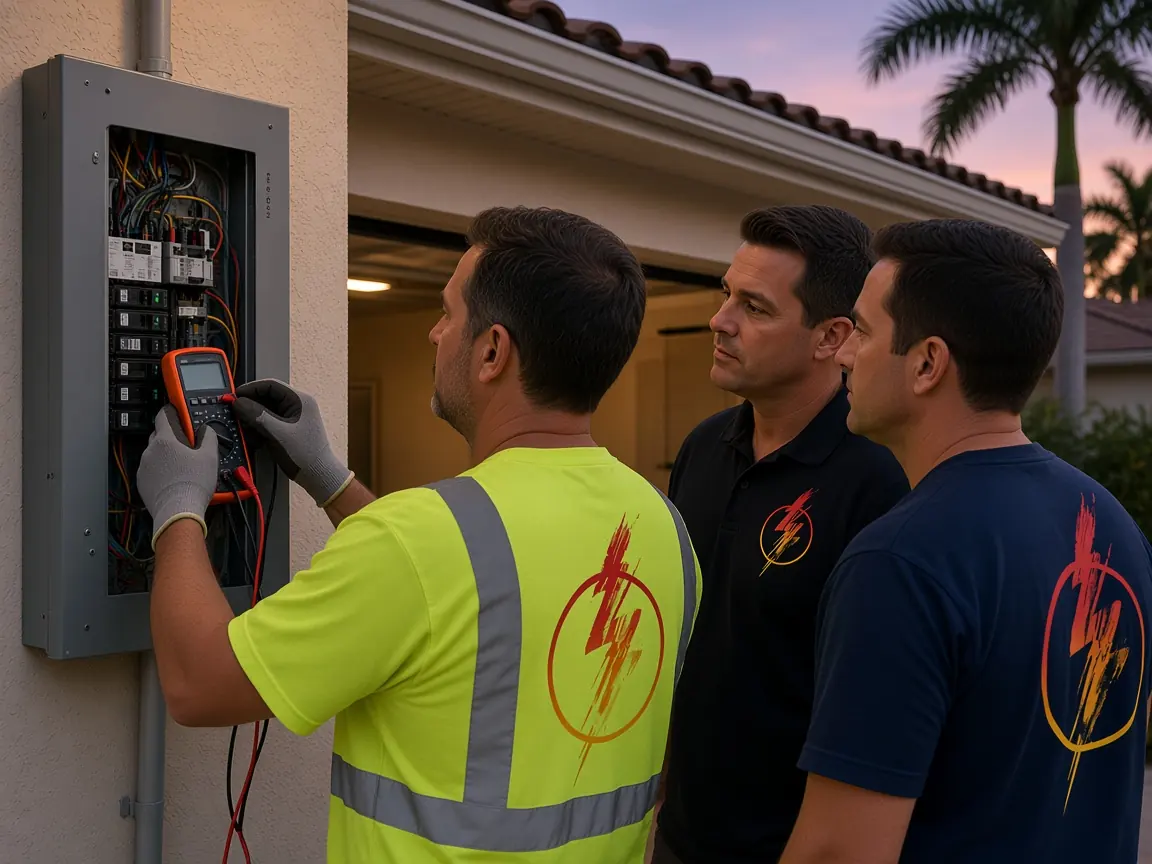
What a 4-point inspection is.
A 4-point inspection looks at four systems in an older house: the roof, the electrical system, the plumbing and the heating and cooling. Florida insurers use it to decide whether they will write or keep a policy. It is not a full home inspection. It records the age, type and condition of each system and lists any hazards the inspector sees.
Citizens Property Insurance, the state-backed insurer, says on its public inspections page that it requires a 4-point inspection for homeowner, dwelling and mobile home applications on properties more than 20 years old, and that serious hazards such as exposed wiring should be repaired before an application is submitted. Private carriers set their own rules, and some ask for a 4-point on younger homes, so ask your agent which rule applies to your policy.
The electrical hazards the form asks about.
The electrical page of the Citizens 4-point form has a checklist of hazards. The inspector ticks any that are present, then marks the system satisfactory or unsatisfactory. These are the items we are called about most:
- Double taps: two wires on a breaker terminal made for one.
- Empty sockets or open spaces: missing filler plates that leave live parts reachable.
- Improper grounding: ungrounded three-prong outlets, or a weak connection to earth.
- Scorching or corrosion: heat marks on breakers or bus bars, or rust in an outdoor panel.
- Loose, exposed or unsafe wiring: open splices, missing covers, cable run where it can be damaged.
- Over-fusing or improper breaker size: a breaker larger than the wire it protects.
- Blowing fuses or tripping breakers: signs a circuit is overloaded or faulted.
The form also records the wiring type. Cloth-jacketed wiring, active knob and tube, and single-strand aluminum branch wiring are all called out, and the form asks for separate documentation of any aluminum wiring remediation, certified by a licensed electrician. Many insurers also decline certain older panel types outright. If your report names one of those, see our older panel replacement page.
What the inspector photographs.
The form lists minimum photos: each side of the house, the open main electrical panel with its interior door label, the electrical box with the panel cover off, and every hazard noted. That is why a missing breaker directory, a rusted cover screw or a double tap that is hard to see from outside the panel still ends up on the report. When we finish, we take matching photos of the same views, so the underwriter can compare the before and after side by side.
Common findings in older Tampa Bay homes.
Much of Pinellas was built in the 1950s through the 1970s, and many of those homes still have their original panels, a mix of two-prong and three-prong outlets, and grounding that met the rules of its day but not today’s. Homes near the water add salt air, which speeds up corrosion on outdoor panels, meter cans and disconnects. Additions and garage conversions done decades ago sometimes left a subpanel or a few circuits that do not match the rest of the house. None of this means the whole system has to go. It means each item should be checked against what the report actually says.
How a correction job works with us.
- Send the report. Email or text us the electrical page and photos. We read exactly what was checked and what was not.
- Visit and confirm. A licensed electrician opens the panel, checks each flagged item and looks at the grounding.
- Written scope. You get a plain list that matches each fix to a line on the report, so nothing is added that the report did not call for.
- Correct the items. We make the repairs. We pull the permit and handle the inspection when the work needs one.
- Photos and paperwork. You get before and after photos and a written summary of the work to pass to your agent or re-inspector.
A real example from Largo.
A Largo homeowner with a 1975 house needed insurance, and her 4-point came back unsatisfactory for corrosion at the outdoor panel, empty breaker spaces and ungrounded outlets in two rooms. Another company had quoted replacing every panel in the house. We fixed what the report flagged: a new outdoor-rated breaker box with whole-home surge protection in place of the corroded one, a wiring fault traced and corrected in a bedroom box, filler plates and sealed openings, and added ground rods. The interior panel was not flagged and stayed. Read the full write-up in our Largo 4-point project.
Fix in place, or replace?
Many findings can be corrected without a new panel. An open breaker space takes a filler plate. A double tap can often be split onto its own breaker or joined correctly. An ungrounded outlet usually comes down to a fault in one box or a missing ground path, and it can be corrected or protected the way the electrical code allows. Other findings point to replacement: a panel type your carrier will not accept, heavy corrosion inside the enclosure, scorched bus bars, or a fuse box. In those cases we explain why and quote a panel replacement. Every new panel or service we install comes with whole-house surge protection.
If the report points to old wiring throughout the house, such as cloth wiring or knob and tube, the answer may be a partial or whole-home rewire. We scope that room by room so you know which circuits matter for the insurer and which can wait.
Buyers, sellers and landlords.
Buyers often see a 4-point for the first time when their agent asks for one before closing. Send us the report early and we can give you a written scope to use in your negotiations. Sellers can have flagged items corrected before listing so the buyer’s inspection goes smoothly. Landlords and owners of second homes along the beaches can arrange access with a tenant or a property manager, and we send photos so you can see the work from out of town.
After a storm or a lightning strike.
High water, wind-driven rain and nearby lightning strikes can leave corrosion, damaged breakers or a weakened ground connection that shows up on the next inspection. If your home took on water or lost power in a storm, we can check the panel, the meter area and the grounding, and our whole-house surge protection adds a layer of defense at the panel. For an outage or burning smell right now, call our 24/7 emergency line.
Not sure yet? Start with a safety checkup.
If you have not had a 4-point yet and want to know what an inspector is likely to find, our electrical safety checkup looks at the panel, grounding, outlets and wiring type ahead of time. That gives you time to make corrections before the policy deadline, not after.
Why homeowners call Keywest Lights & Electric.
- Woman-owned, Florida-licensed electrical contractor, EC13014717.
- Open 24/7 for electrical emergencies.
- We correct what the report flags, with a written scope tied to each line.
- Before and after photos and a written summary for your insurer.
- Workmanship warranty of 2 years, or 5 with Member Care.
- SPAN Authorized Installer and Home Depot preferred contractor.
More on the service itself: all of our electrical services.
Electrical 4-point inspection corrections in Tampa Bay for buyers, sellers, and landlords.
Electrical 4-point inspection corrections in Tampa Bay start from the photos and the form, not from a generic punch list. Open neutrals, damaged receptacles, and panel findings already described here are written as a scope, and a Largo-file example already on this page is typical of what we actually open.
4-point correction questions.
Do you do the 4-point inspection itself? No. The 4-point form has to be completed and signed by a Florida-licensed inspector your insurer accepts. We are the electrical contractor who corrects what that report flags and documents the repairs so you can send them back to your agent.
What should I send you before the visit? The full report, or at least the electrical page and its photos, plus the name of the insurer or agent asking for it. With that in hand we can see which hazards were checked and plan the visit around those items.
Will I have to replace my whole panel? Not always. Some reports flag items that can be corrected in place, such as an open breaker space, a loose connection or an ungrounded outlet. Other findings, like a panel type your insurer will not accept or heavy corrosion, do call for replacement. We tell you which category each item falls into before any work starts.
Do you handle aluminum branch wiring findings? Yes. The Citizens form asks for separate documentation of aluminum wiring remediation, certified by a licensed electrician. We can correct the connections or rewire the affected circuits, and we give you written documentation of the work.
Can you check a home I am buying before closing? Yes. If your home inspection or 4-point report lists electrical items, send it over and we will review it, visit the house with the seller’s permission, and give you a written scope for each item so you can plan before closing.
Is there a warranty on the correction work? Yes. Our workmanship is warranted for 2 years, or 5 years with a Member Care plan.
Related reading: electrical code corrections after a failed permit inspection · 4-point inspections and your electrical panel · Largo 4-point panel fix · panel upgrades · rewiring · older panel replacement