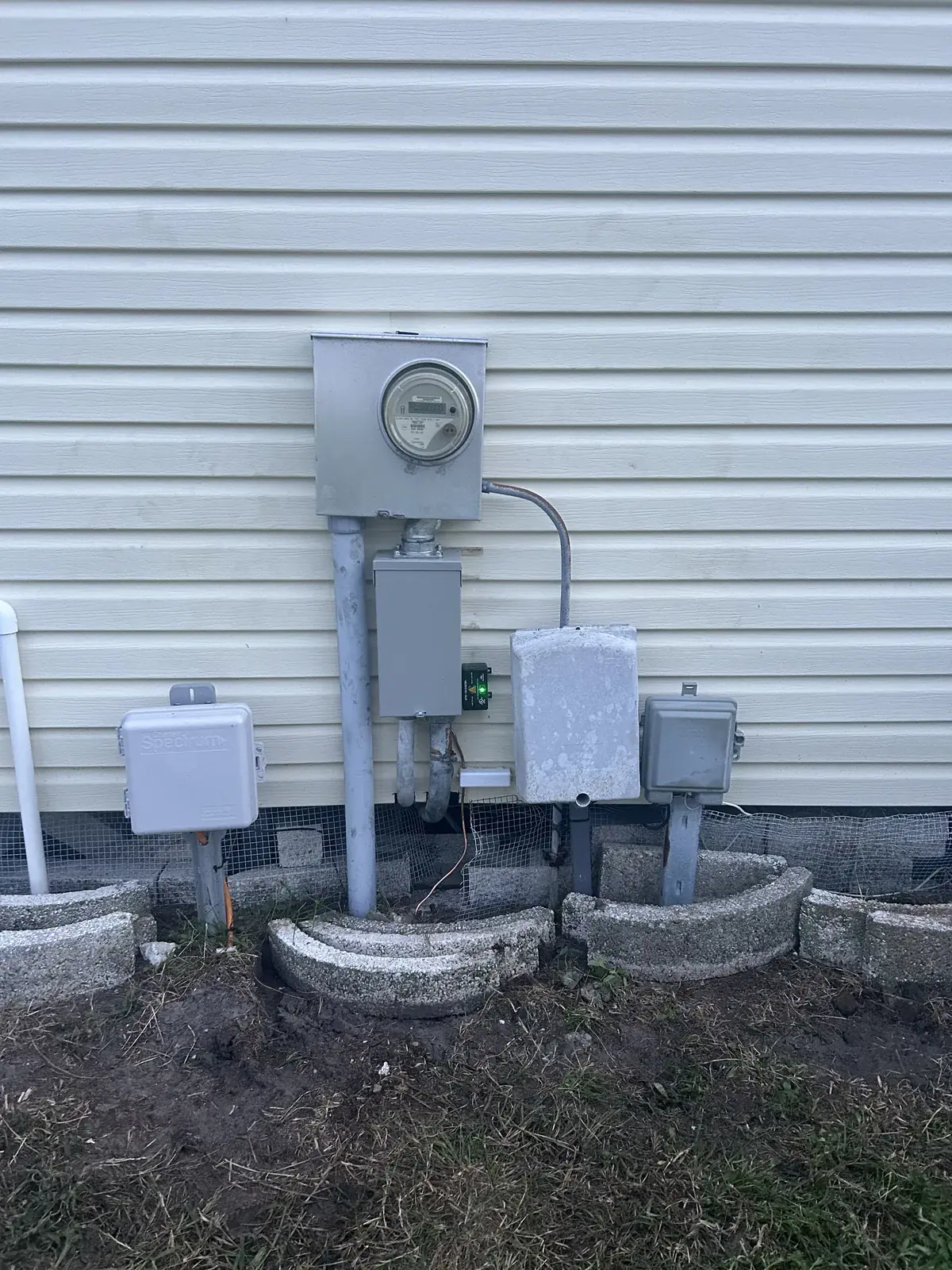
Looking for whole-house surge protection in Tampa Bay? Keywest Lights & Electric can help. Keywest Lights & Electric handles it. A woman-owned Seminole contractor, license EC13014717, with Pinellas and Tampa Bay in its service area.
Request a quote.
Tell us what you need and where you are. A licensed electrician will call or text you back to set a time. For an emergency, call (727) 476-7079, 24/7.
A surge protector at your panel guards every circuit in the house. AC, appliances, pool equipment and electronics.
Request a quote.
Tampa Bay sees a lot of lightning, and utility switching and storms send surges through the lines. Today’s AC systems, appliances, pool pumps and smart devices all run on sensitive electronics. A plug-in strip only protects what’s plugged into it. A whole-house surge protective device (SPD) at the panel is the first line of defense for everything.
Call (727) 476-7079 to add surge protection.
What we install.
- A UL 1449-listed Type 1 or Type 2 surge protective device in or right next to your service equipment (the meter-main or main panel), matched to your equipment.
- A check of your grounding and bonding, since a surge protector is only as good as the ground it diverts to.
- Recommendations for point-of-use protection on high-value electronics (layered protection).
Included with every panel we install.
Every panel upgrade, service upgrade and SPAN panel we install includes whole-house surge protection. Section 230.67 of the 2020 National Electrical Code. The current Florida Building Code (8th Edition. 2023) Adopts. Requires a Type 1 or Type 2 surge protective device on every service supplying a home. Including when the service equipment is replaced.
Hurricane season: surge protection.
Lightning and utility switching spikes are common in Gulf coast storm season. Practical notes:
- Whole-house surge protection (a Type 1 or Type 2 SPD) mounts in or right beside the service equipment. Florida’s adopted electrical code requires one on the service for every home, new or replaced. We include it with every panel we install.
- Before storm season is a good time to add a panel-mounted protector even if you are not upgrading the panel, especially if you have already replaced HVAC, a well pump, or sensitive electronics.
- After a storm: if the surge device shows a failed/end-of-life indicator, or if appliances failed during a strike, call us to inspect the protector and the panel before assuming everything is fine.
- Pair surge work with a safe generator hookup when you are also planning backup power. See generator installation and Member Care Plans.
How whole-home surge protection works.
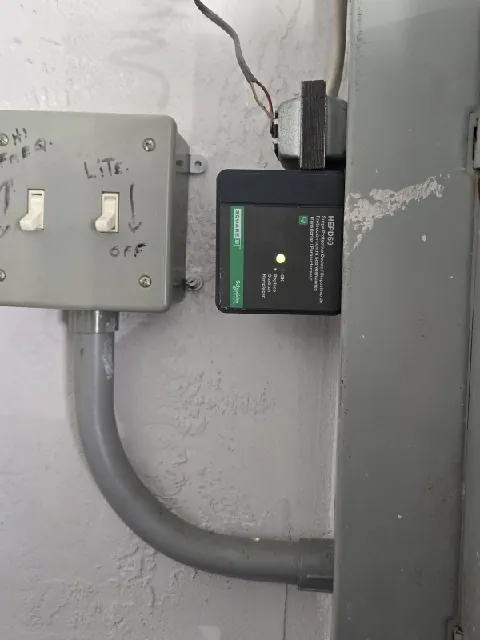
A whole-home surge protector mounts at your panel and diverts voltage spikes from lightning and utility switching to ground before they reach your wiring. It works best with plug-in surge strips at sensitive electronics. It also depends on good grounding. So we check grounding and bonding during the install.
Licensed electrical contractor EC13014717, woman-owned and based at 6248 Seminole Blvd, Seminole. Workmanship carries a 2-year warranty, or 5 years for Member Care Plan members. Call (727) 476-7079 or request service online.
Will it protect against a direct lightning strike? No device can promise that. Whole-home surge protection reduces damage from the much more common nearby strikes and utility surges.
How long does installation take? An hour or two in most cases. With a short power shutoff.
Adding smart outdoor lighting such as JellyFish permanent lighting? Whole-home surge protection helps protect controllers and power supplies along with the rest of your electronics.
Type 1, Type 2 and plug-in protectors: how they fit together.
Surge protection works in layers. A Type 1 device mounts at the meter or service disconnect. A Type 2 device installs at the panel and is the usual whole-home choice. Plug-in strips at TVs, computers and chargers catch smaller surges created inside the house when motors and compressors cycle. The 2020 NEC, which Florida uses today. Requires a surge protective device whenever a home’s service is installed or replaced.
- Panel device for the whole house, sized to your service.
- Point-of-use protectors for sensitive electronics.
- Cable, satellite and phone lines bonded to the same grounding point, since a surge can enter on any wire.
What a surge protector won’t stop.
No device survives a direct lightning strike to the house. A surge protector is not a substitute for a good grounding and bonding system. Most whole-home units have a status light. When it goes out. The protective part has done its job and the unit needs replacing. We check that light and the grounding at every visit for Member Care Plan homes.
After a storm, see our guide on what to check after a nearby lightning strike.
Start with the full list of KWLE services for the basics.
Whole-house surge protection in Tampa Bay at the service and the panel.
Whole-house surge protection in Tampa Bay is installed at the service or the panel so a strike or a utility event is not left to a plug-in strip. Type 1 and Type 2 devices already described here are chosen from the equipment on the wall, not as a one-size kit.
FAQ.
What is the difference between Type 1 and Type 2 surge protection? Type 1 installs at the meter or service disconnect. Type 2 installs at the panel. Most homes use a Type 2 device plus plug-in protectors at sensitive electronics.
Is whole-home surge protection required? Under the 2020 NEC. A surge protective device is required when a dwelling’s service is installed or replaced. Adding one to an existing service is optional but common here.
How do I know if my surge protector still works? Most whole-home units have an indicator light. If it is out. The device has absorbed a surge and needs to be replaced.
Will a surge protector stop a direct lightning strike? No device can guarantee that. A whole-house SPD greatly reduces damage from the much more common indirect and utility surges. It’s one part of a layered protection plan.
Type 1 or Type 2: what’s the difference? Mainly where it can be installed. UL 1449, the safety standard surge protectors are listed to, defines a Type 1 SPD as permanently connected and suitable for the line side of your main breaker, such as the meter socket, as well as the load side, without a separate breaker.
A Type 2 SPD goes on the load side of the main breaker, in or beside the panel and fed from a breaker there. Either type meets the code requirement for a home. Plug-in strips and receptacle-type protectors are Type 3. Point-of-use protection that adds a layer but doesn’t replace a whole-house device.
Does code require a whole-house surge protector? For homes, yes. NEC 230.67 requires a Type 1 or Type 2 SPD on all services supplying dwelling units, built into the service equipment or installed immediately next to it (or at each next panel downstream). The rule applies when service equipment is replaced. Florida currently enforces the 2020 NEC through the 8th Edition (2023) Florida Building Code. The 9th Edition (2026), expected to take effect December 31. 2026. Moves to the 2023 NEC. Which keeps the same requirement. Inspectors check for it on panel and service replacements.
Can you add a surge protector to my existing panel? Yes. If the panel is in good condition and has space or a compatible mounting option. If the panel itself is obsolete, we’ll tell you.
How long do surge protectors last? They wear with each surge they absorb. Most have an indicator light showing they’re still protecting. We check it during Member Care Plan visits.
Do I still need plug-in surge strips? For computers. TVs and networking gear. A quality point-of-use protector adds a second layer. We recommend both.
Protect what’s plugged in. Call (727) 476-7079.
Ready to get started? Call (727) 476-7079 or request service online.
Areas we serve: Seminole. Largo. Bay Pines. St. Petersburg. Clearwater. Pinellas Park. Palm Harbor. Dunedin. Safety Harbor. Tarpon Springs. Tampa. Brandon. Carrollwood. Westchase. Wesley Chapel. Bradenton. All service areas →.
Surge protection by city: Seminole. Largo. Pinellas Park. Tampa. Westchase. Town ‘n’ Country. Palm Harbor. Oldsmar. Dunedin. Safety Harbor. Tierra Verde. Clearwater. Feather Sound. Belleair. Gulfport. Belleair Shore. Lealman. South Pasadena. Indian Rocks Beach. Treasure Island. Kenneth City. Indian Shores. Redington Shores. Madeira Beach. North Redington Beach. Redington Beach. Bardmoor. Bay Pines. Apollo Beach. Ruskin. Keystone. St. Petersburg. St. Pete Beach. Tarpon Springs. Carrollwood. Citrus Park. Egypt Lake-Leto. East Lake. Lake Magdalene. Holiday. Northdale. Sun City Center. Cheval. Elfers. Progress Village. Trinity. Palm River-Clair Mel. Gibsonton. Lutz. Riverview. New Port Richey. Temple Terrace. East Lake-Orient Park. Odessa. University.
Call or text (727) 476-7079.
Our workmanship warranty is 2 years, or a full 5 years for Member Care Plan members. We also check whole-house surge protectors during Member Care Plan visits.
Related: Grounding and bonding. Generator installation. Panel upgrades. SPAN smart panels. Member Care Plans. Service upgrades.
County pages: Hillsborough County. Pasco County. Pinellas County.
Storm or lightning damage can show up later on a 4-point inspection as corrosion or a weak ground. See 4-point inspection corrections.