
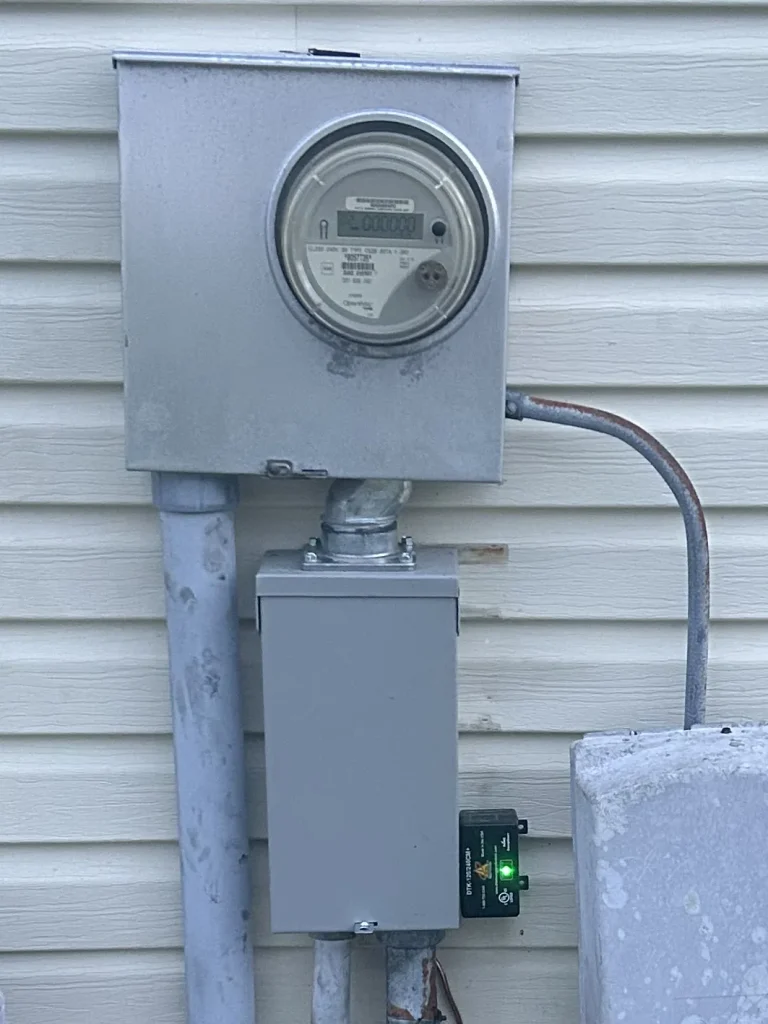
Insurers often want a 4-point inspection before they write or renew a policy on an older Clearwater home, and the electrical section is where many reports come back unsatisfactory. Here is what gets flagged and how to fix it.
Request a quote
Tell us what you need and where you are. A licensed electrician will call or text you back to set a time. For an emergency, call (727) 476-7079, 24/7.
Keywest Lights & Electric is a licensed and insured electrical contractor (EC13014717) based just south of Clearwater in Seminole. We’ve worked on Pinellas County homes since 2010, and we regularly hear from homeowners holding a 4-point report and a deadline. This guide explains what the electrical section checks, what usually gets flagged in Clearwater homes, and how to fix it without paying for more work than the report calls for.
What a 4-point inspection checks on your electrical system
A 4-point inspection is a short report on the four systems insurers care most about: roof, electrical, plumbing and HVAC. Florida carriers commonly ask for one once a home reaches a certain age, and the cutoff varies by company, so ask your agent what yours requires. The inspector fills out a standard form, and the electrical section usually records:
- The panel itself: brand, age, amperage, and whether it uses breakers or fuses, plus any second panel or subpanel
- Capacity: whether the amperage looks sufficient for the home
- Branch wiring type: copper, aluminum, cloth-insulated or knob-and-tube
- A hazard checklist: blowing fuses, tripping breakers, empty breaker spaces, loose or exposed wiring, improper grounding, corrosion, double taps, scorching and missing cover plates
Photos of the open panel usually go with the form. If a hazard box is checked, or the panel or wiring type is one your carrier won’t accept, the electrical system can be marked unsatisfactory until it’s corrected.
What usually gets flagged in Clearwater homes
Clearwater’s median home was built in 1978 (Census ACS 2020–2024), and central neighborhoods like Skycrest, Morningside and Del Oro have many homes from the 1950s through the ’70s. These are the findings we see most often on reports from homes of that age.
Older recalled-brand panels insurers avoid
Older recalled-brand panels were common in homes from that era, and both have well-documented breaker reliability concerns. Many Florida insurers won’t write a policy with one in place, so the fix is a new panel, not new breakers. Our Recalled-brand panel replacement page explains how to tell whether you have one.
Corrosion on outdoor panels
Plenty of Clearwater homes have the panel on an outside wall next to the meter. Humidity and wind-driven rain get into the enclosure over the years, and near Clearwater Beach, Island Estates and Sand Key, salt air speeds it up. A panel can look fine from the outside and still have corroded breakers, lugs or bus bars inside, and corroded connections run hot.
Empty breaker spaces and open knockouts
An open slot in the panel cover or an unused knockout in the box leaves live parts within reach of fingers and pests. Inspectors write it up, and it’s usually one of the simplest items to fix with listed filler plates and knockout seals.
Improper grounding
Three-prong outlets that test as ungrounded are a frequent finding in mid-century homes. Sometimes the cause is a single wiring fault in one box. Sometimes the circuit never had a ground wire at all. Finding out which one you have comes before anyone should talk about rewiring.
Double taps and older branch wiring
Two wires under a breaker terminal that’s rated for one, aluminum branch wiring from the late ’60s and ’70s, and cloth-insulated wiring all show up on reports. Double taps are usually a quick correction. Aluminum wiring can often be remediated with approved connectors at each connection rather than full rewiring, but your carrier decides what it will accept.
Read the report before you accept a quote
A failed electrical section doesn’t automatically mean you need a new panel, let alone several. The report lists specific items, and the repair should match them.
A job we did just down the road in Largo shows why this matters. The homeowner’s 1975 house had two original panels, and her 4-point marked the electrical system unsatisfactory for severe corrosion at the exterior panel, empty breaker spaces and some ungrounded outlets. Another company had quoted her to replace every panel in the house. The same report noted the panels had enough amperage for the home, so we replaced only the corroded outdoor panel, sealed the open spaces, corrected the wiring fault behind the ungrounded outlets, and finished in one day. The interior panel stayed, because nothing was wrong with it. You can read the full Largo 4-point inspection case study, with before and after photos.
Sometimes a full replacement really is the right answer: an older recalled-brand panel, burned or pitted bus bars, obsolete breakers, or a panel with no room left for the circuits you need. When that’s the case, we’ll show you photos of what we found and explain why.
How we fix 4-point electrical findings in Clearwater
- Share the report. Call us or request service online and tell us what the electrical section says. We’ll explain what it actually calls for.
- Site visit and itemized quote. We confirm each finding in person and quote each item separately, so you can see exactly what you’re paying for.
- Permit. Panel replacements need a permit. We pull it for your address.
- Meter disconnect. When the meter or service has to come off, we book the shutoff and reconnect with the utility on your bill.
- Repair, testing and inspection. We fix the flagged items, test the circuits, and meet the building inspector when a permit is required.
- Paperwork for your agent. Ask your agent what they need to see. We can provide the invoice and the permit record, and some carriers also want an updated 4-point inspection after the repair, so ask before you schedule.
Don’t wait for the renewal deadline
Insurance renewals and home closings rarely leave much room. If your home is old enough to need a 4-point and your renewal is coming up, have a licensed electrician look at the panel first. Fixing a corroded breaker or an open knockout before the inspection is a lot easier than doing it against a deadline.
And if you notice warning signs, such as breakers that feel warm, a burning smell, buzzing, or rust and water stains on the panel, don’t wait for an inspection at all. Turn off the main breaker if it’s safe to do so and call us. We answer emergency calls 24/7. For more on panel work around the city, see our panel upgrades in Clearwater page or our Clearwater electrician page.
What insurers look for on a 4-point electrical
A 4-point inspection covers the roof, electrical, plumbing and HVAC of an older home. On the electrical side, inspectors typically note the panel brand and age, service size, wiring type, and hazards such as double taps, missing knockouts, scorched breakers or exposed wiring. Older recalled-brand panels, fuse panels and cloth or aluminum branch wiring often draw extra attention.
Need the flagged items fixed? See our 4-point inspection corrections service: send us the report and we correct what it lists, with photos for your insurer.
Related: recalled-brand panel replacement · panel replacement in Clearwater · 4-point panel fix in Largo · rewiring · electrical checklist for buying an older home
Guide: aluminum wiring in Pinellas homes: insurance, risks and repair options.
Also useful: aluminum wiring and insurance · buying an older home: electrical checklist.
4-point inspection electrical questions
Which homes need a 4-point inspection? Many Florida insurers ask for one on older homes, often those 25 to 30 years old or more. Your insurer sets the age threshold.
What electrical items commonly fail a 4-point? Panels from flagged brands, double-tapped breakers, missing breaker blanks, exposed or damaged wiring and signs of overheating.
Does a failed electrical section on a 4-point inspection mean I need a new panel?
Not always. The report lists specific hazards, such as corrosion, empty breaker spaces or ungrounded outlets, and many of those can be corrected without replacing the panel. A new panel is the right fix when the panel is a brand your insurer won’t accept, like older recalled-brand panels, or when the bus bars are burned or badly corroded.
Will my insurance company accept an older recalled-brand panel?
Many Florida insurers won’t write or renew a policy while one of these panels is in place. Ask your agent what your carrier requires. A permitted panel replacement is the reliable fix, because new breakers don’t solve the underlying concerns with these panels.
How quickly can you fix the items on my 4-point report?
Many 4-point repairs take a day or less of work. We give you a timeline with your itemized quote, and we’re open 7 a.m. to 5 p.m., with weekend service available.
How much does it cost to fix a failed 4-point electrical inspection?
What if my 4-point report flags aluminum wiring?
Ask your insurer which repair it accepts: rewiring or COPALUM or AlumiConn pigtails, documented by a licensed electrician. See our aluminum wiring guide.
Got a 4-point report with electrical items flagged?
Tell us what the report says and we’ll fix exactly what it calls for, with an itemized quote after a site visit. We’re open 7 a.m. to 5 p.m., with weekend service and 24/7 emergency calls.