
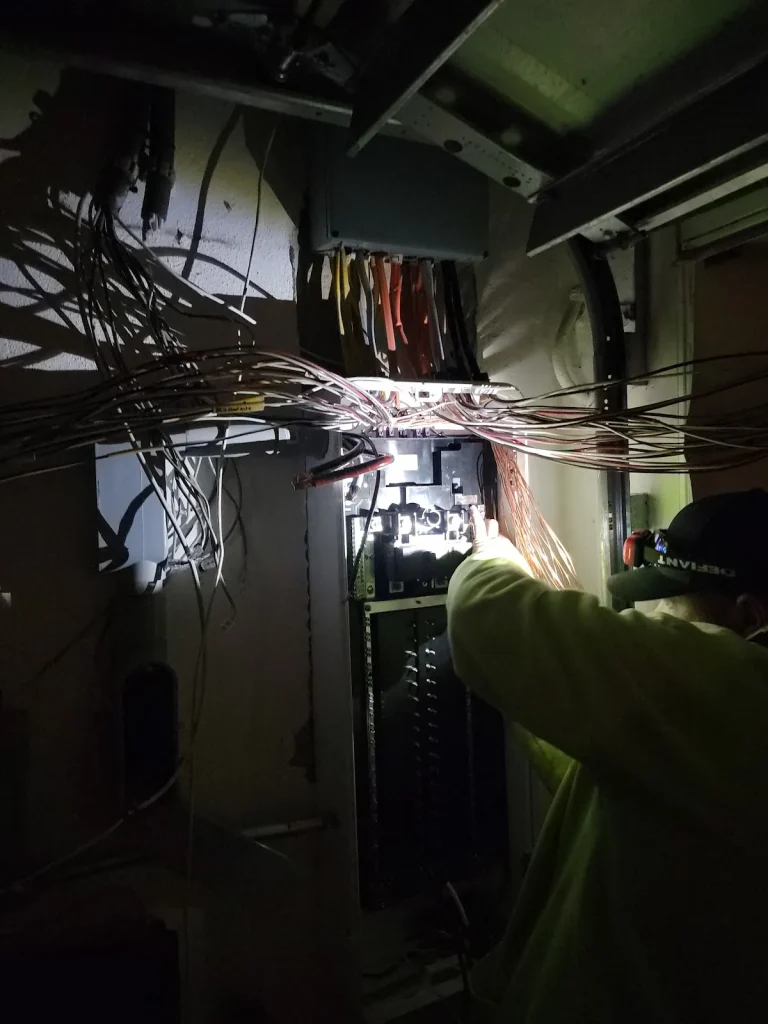
Most electrical problems in a home don’t announce themselves with sparks. They show up as small annoyances: a bedroom outlet that quietly stopped working, a breaker that trips every time the microwave and the air conditioner run together, or kitchen lights that flicker when the dishwasher kicks on. It’s easy to live with them for months. But each of those symptoms has a cause, and some of those causes get worse over time.
This guide is for homeowners in Seminole, Largo, Clearwater, St. Petersburg, Pinellas Park, Dunedin and the beach communities who want to know what they can safely check on their own, which warning signs mean it’s time to stop and call, and what a licensed electrician actually does on a troubleshooting call.
Request a quote
Tell us what you need and where you are. A licensed electrician will call or text you back to set a time. For an emergency, call (727) 476-7079, 24/7.
What you can safely check first
A few common problems have simple fixes that don’t involve opening anything up.
Look for a tripped GFCI outlet. Ground-fault (GFCI) outlets are the ones with Test and Reset buttons. One GFCI often protects several other outlets down the line, and they aren’t always in the same room. A tripped GFCI in a garage, bathroom, kitchen or on an outside wall can leave outlets in another part of the house dead. Press Reset firmly on every GFCI you can find, including the outdoor ones.
Check the panel for a tripped breaker. A tripped breaker usually sits in the middle position, neither fully on nor fully off. To reset it, push it all the way to Off, then back to On. If it trips again right away, or trips again within a few days, leave it off and call. A breaker that keeps tripping is doing its job, and it’s telling you something on that circuit needs attention.
Try a different bulb or a different lamp. It sounds obvious, but a loose bulb, a failing LED or a worn-out lamp cord accounts for a lot of “the outlet is dead” calls.
Unplug and try again. If a breaker trips only when one specific appliance runs, try that appliance on a different circuit. If the trips follow the appliance, the appliance may be the problem rather than your wiring.
That’s where homeowner troubleshooting should stop. Removing cover plates, pulling outlets out of the wall or working inside the panel is where people get hurt, and the panel stays energized even with the main breaker off. If you would rather have a licensed electrician check the whole house, see our home electrical safety checkup guide.
Warning signs that shouldn’t wait
Call an electrician right away (our emergency electrician line is (727) 476-7079), and turn off the affected breaker if you can do it safely, if you notice any of these:
- An outlet, switch or cover plate that feels warm or hot to the touch
- A burning or melting-plastic smell with no obvious source
- Buzzing, crackling or sizzling from an outlet, switch or the panel
- Scorch marks or discoloration around an outlet or on the panel cover
- Lights that dim sharply or flicker across several rooms at once
- A breaker that won’t stay on, or one that is hot to the touch
- Any shock or tingle from a switch, appliance or fixture
These are signs of heat building up at a connection, and heat is what turns a wiring problem into a fire. If you ever see smoke or flames, leave the house and call 911.
Common causes we find in Tampa Bay homes
Every house is different, but troubleshooting calls around Pinellas County tend to trace back to a handful of causes.
Loose or worn connections. Outlets and switches that were “back-stabbed” (wires pushed into holes on the back instead of wrapped around the screws) can loosen over years of use. A loose connection can make an outlet work one day and not the next, and it can run hot. This is one of the most common reasons we find melted wire at a single outlet.
Overloaded circuits. Many homes around Tampa Bay were wired long before window units, space heaters, home offices, big-screen TVs and EV chargers. When too much runs on one circuit, the breaker trips. The fix might be moving loads around or adding a dedicated circuit, not just swapping the breaker for a bigger one, which can be dangerous.
Corrosion from salt air and humidity. Close to the Gulf and the bay, outdoor outlets, exterior boxes, AC disconnects and outdoor panels see a lot of moisture and salt. Corroded terminals can cause intermittent power, nuisance GFCI trips and heat at connections. If it is the disconnect by your condenser, our guide to AC electrical problems explains what to look for.
Older wiring and panels. If your home dates from the mid-1960s to the mid-1970s, it may have aluminum branch wiring, which needs the right connectors to stay safe. Some older homes also still have panel brands with known problems. Either one is worth having looked at (see our panel upgrade and replacement service), especially if you’re seeing flickering, warm devices or repeat trips.
Failing breakers. Breakers wear out. One that trips at the wrong time, or doesn’t trip when it should, needs to be replaced.
Damage from storms and surges. After a nearby lightning strike or a hurricane season of power blinks, we sometimes find damaged outlets, failed GFCIs or electronics that no longer work. Whole-house surge protection at the panel helps protect what’s plugged in.
What happens on a troubleshooting call
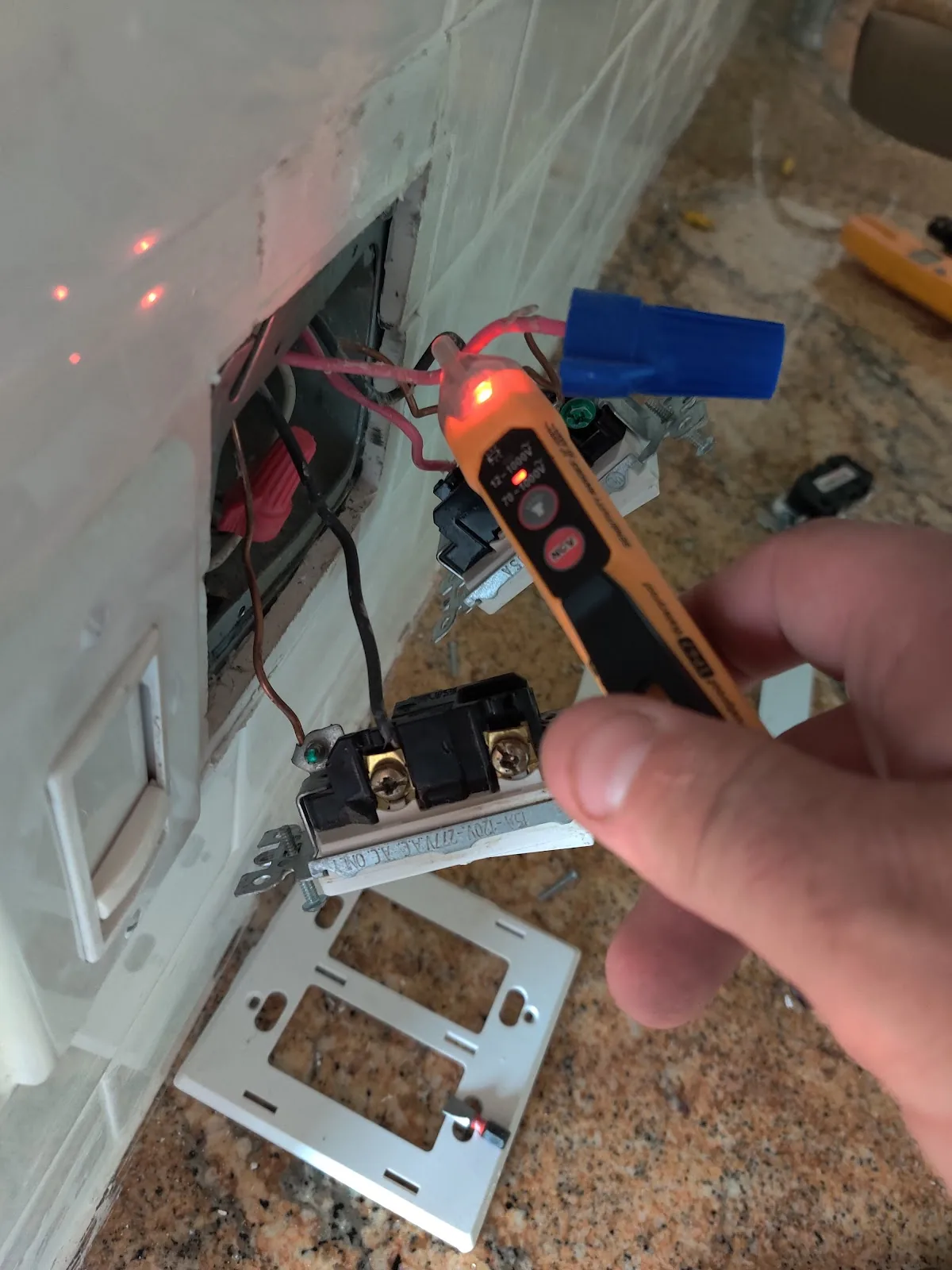
A good troubleshooting visit is methodical, not guesswork. Here’s how we approach it at Keywest Lights & Electric:
- We start with what you’ve noticed. When did it start, which outlets or lights are affected, and does anything make it happen, like a certain appliance running or rain?
- We map the circuit. We find which breaker feeds the problem area and which outlets, switches and fixtures share that circuit. Many homes have incomplete or outdated panel labels, so this step alone often explains a lot.
- We test, not guess. Using meters and testers, we check voltage, look for open or high-resistance connections, and check how the circuit behaves under load.
- We open what needs opening. We pull the devices on the affected run and inspect the connections, the wire and the boxes, and we check the breaker and its connection in the panel.
- We explain what we found before we fix it. You get a plain-language explanation of the cause and the options. Sometimes that’s a single new outlet. Sometimes it’s repairing a damaged run, adding a dedicated circuit, or a bigger conversation about the panel.
- We fix it and test it again. Repairs are done to code, and we confirm the circuit works the way it should before we leave.
If the cause turns out to be an older or overloaded panel, our guide to electrical panel upgrades and replacements in Pinellas walks through what that involves.
Troubleshooting for businesses too
The same approach works for shops, offices, restaurants and warehouses, where a tripping circuit can stop a register, a walk-in cooler or a production line. We troubleshoot commercial lighting, receptacle circuits, equipment feeds and panels for businesses across Pinellas, Pasco, Hillsborough and Manatee counties, and we can schedule work around your hours.
Why homeowners call Keywest Lights & Electric
Keywest Lights & Electric is a licensed and insured electrical contractor, a woman-owned business and a Home Depot preferred contractor. As a full-service residential electrician, we handle everything from a single dead outlet or ceiling fan to panel replacements and full remodels, for homes and businesses in Pinellas, Pasco, Hillsborough and Manatee counties. Every job comes with a 2-year workmanship warranty, and Member Care Plan members get 5 years. Financing is available through Acorn Finance, subject to credit approval, and you can check your options without affecting your credit score.
If you’ve got a dead outlet, a breaker that won’t stay on or lights that won’t stop flickering, call us at (727) 476-7079 or request service at keywestlights.com.
Frequently asked questions
Why did half the outlets in one room stop working?
Often it’s a tripped GFCI outlet somewhere else, such as a bathroom, garage or outdoor outlet, that protects that part of the circuit. Reset every GFCI you can find. If that doesn’t bring power back, there may be a loose or failed connection at one of the outlets on the run, and that should be checked by an electrician.
Is it safe to keep resetting a breaker that trips?
Resetting it once is fine. If it trips again, leave it off and have it checked. Repeated trips mean the circuit is overloaded or there’s a fault, and forcing the breaker back on over and over can damage wiring and the breaker itself.
Why do my lights flicker when the AC or a big appliance turns on?
A brief, slight dip when a large motor starts can be normal. Flickering that is noticeable, happens across several rooms, or is getting worse can point to a loose connection in the panel, at the meter or on the utility side, and it should be looked at soon.
Can I just put in a bigger breaker so it stops tripping?
No. A breaker is sized to protect the wire on that circuit. A bigger breaker on the same wire can let it overheat. The safe fix is to reduce the load or add a properly sized circuit.
Do you handle electrical troubleshooting near the beaches?
Yes. We work in Seminole, Largo, Clearwater, St. Petersburg, Pinellas Park, Dunedin, Madeira Beach, Treasure Island, St. Pete Beach and communities across Pinellas, Pasco, Hillsborough and Manatee counties. Homes near the water often see more corrosion on outdoor outlets and equipment, so it’s worth mentioning when you call.
About the author: Mark Einstein, Florida licensed electrical contractor, Keywest Lights & Electric.