
Most electrical problems in a home don’t announce themselves. A breaker connection can run hot for months, an outlet can lose its ground without anyone noticing, and a GFCI can stop protecting you while it still looks fine. By the time there’s a smell, a scorch mark or a dead circuit, the problem has usually been growing for a while.
A home electrical safety checkup is a simple way to catch those problems early. At Keywest Lights & Electric, a licensed electrician walks through your home in Seminole, Largo, Clearwater, St. Petersburg, Pinellas Park, Dunedin or the beaches, tests the key parts of your electrical system, and gives you a written report. Here’s what to watch for on your own, what we check, and when a checkup makes the most sense.
Request a quote
Tell us what you need and where you are. A licensed electrician will call or text you back to set a time. For an emergency, call (727) 476-7079, 24/7.
Warning signs you can spot yourself
You don’t need tools to notice most early warning signs. Walk through your home and look and listen for these:
- Warm or discolored outlets and switch plates. A faceplate that feels warm, or has a brown or tan tint, can mean a loose or overloaded connection behind it.
- Breakers that trip often. One trip after a storm is normal. A breaker that trips every week is telling you something about the circuit, the breaker or what’s plugged into it.
- Flickering or dimming lights. Especially when a big appliance like the AC or a hair dryer kicks on.
- Buzzing, crackling or a hot plastic smell near an outlet, switch, light or the panel. Treat a burning smell as urgent and call an electrician right away.
- Outlets that don’t hold a plug. Loose contacts can arc and heat up.
- Two-prong outlets in an older home, or three-prong outlets that were swapped in without a ground.
- No GFCI outlets in the kitchen, bathrooms, garage or outside, or GFCIs that won’t reset or don’t trip when you press TEST.
- A rusty or crowded panel, extension cords used as permanent wiring, or a lot of power strips plugged into power strips.
If you see any of these, it’s worth having a licensed electrician take a look before it turns into a repair call at a bad time.
What a licensed electrician checks
A good checkup goes further than a quick look around. Here’s what our electricians look at during an electrical safety checkup:
### The electrical panel
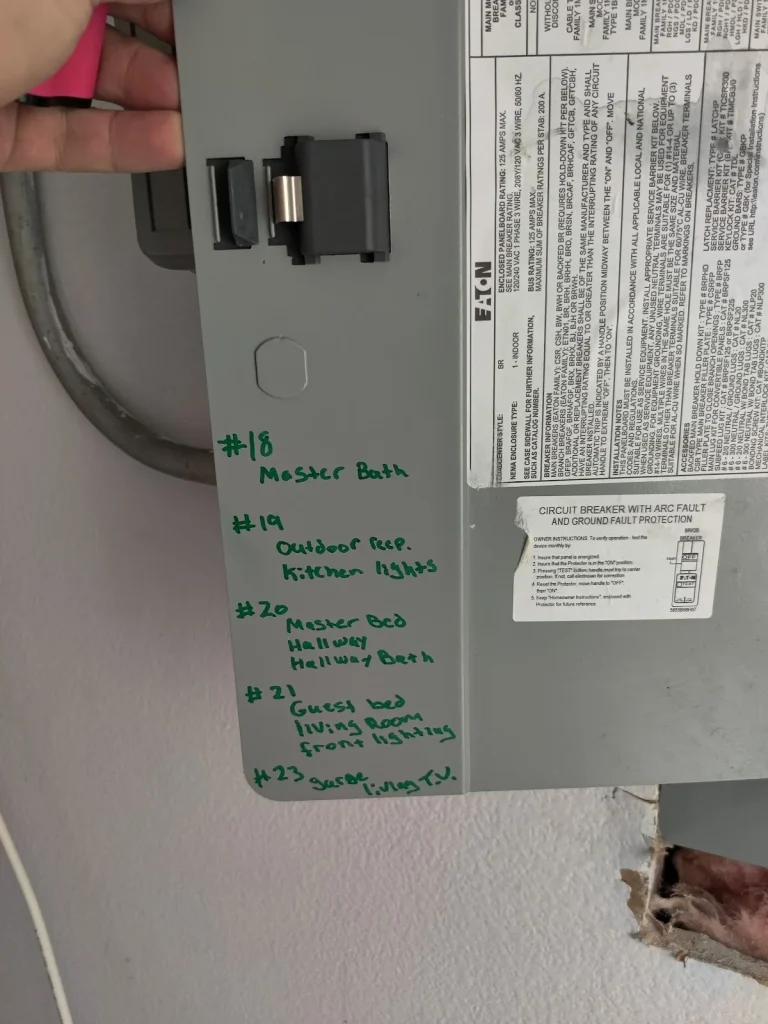
With the cover off, we look for heat damage, corrosion, loose connections and double-tapped breakers (two wires under a screw made for one). We also check the brand. Some older panels, including Federal Pacific and Zinsco, have a known history of problems, and many homeowners don’t know they have one until an electrician opens the door. A panel with a clear, accurate circuit directory, like the one in the photo above, also makes it much easier to shut off the right circuit in an emergency. If your panel is old, crowded or keeps tripping, see our guide to electrical panel upgrades and replacements in Pinellas.
### Breakers and wire size
Each breaker should match the size of the wire it protects. An oversized breaker on a small wire won’t trip when it should, which lets the wire overheat. We also look for breakers that show signs of heat or trip too often.
### GFCI and AFCI protection
GFCI protection guards against shock in wet areas. AFCI protection helps prevent fires caused by arcing in damaged wires and cords. We test the protected outlets and breakers to make sure they actually trip, and give you a list of spots in the kitchen, baths, garage, laundry and outdoors that should have protection.
### Outlets and switches
We test outlets for correct wiring and grounding, and check for loose contacts and warm or scorched faceplates.
### Grounding, bonding and surge protection
We check the grounding electrode connection and the bonding of metal water pipes and other metal systems. We also check whether you have a whole-house surge protector and whether it still shows that it’s protecting. In the Tampa Bay area, where summer lightning is common, surge protection is worth a look in every home.
### Smoke detectors, visible wiring and outdoor circuits
We confirm hardwired smoke detectors have power, and look at wiring in the garage, attic access and other exposed areas for damage, open splices and amateur work. Outside, we check outdoor outlets and in-use covers and the circuits for pool and spa equipment, where salt air and sprinklers cause a lot of corrosion near the coast.
When a checkup makes the most sense
A checkup is useful any time, but it’s especially smart when:
- You just bought an older home, or you’re about to list one. A general home inspection is helpful, but an electrician will open the panel and test circuits in more detail.
- Your home has its original panel or you’re not sure what brand it is.
- You’re adding a big load, such as a new AC system, an EV charger, a hot tub or a workshop. It’s good to know your panel and service have room before you buy the equipment.
- After a storm or a power surge, if water reached outlets, the panel or pool equipment, or things don’t seem right once power comes back. If anything was touched by floodwater, leave that power off until an electrician checks it.
- You’ve noticed any of the warning signs above and want a clear answer instead of guessing.
What happens after the checkup
You get a written report with our recommendations, ranked from “fix now” to “keep an eye on it,” so you can plan repairs on your own schedule. If something needs repair, you get a written price before any work starts, and nothing is done without your OK.
Common fixes after a checkup include adding GFCI and AFCI protection, installing a whole-house surge protector, tightening or replacing damaged connections, and in some cases a panel upgrade or replacement. When a repair needs a permit, we pull the permit and handle the inspection. Our work carries a 2-year workmanship warranty, or 5 years for Member Care Plan members. Member Care Plan members also get 7% off labor and materials.
Financing available through Acorn Finance, subject to credit approval. You can check your options without affecting your credit score.
If you’re dealing with a specific problem right now, like a dead outlet or a breaker that won’t stay on, our guide to electrical troubleshooting in Pinellas walks through what to check first.
Book a home electrical safety checkup
Keywest Lights & Electric is a licensed and insured, woman-owned electrical contractor based in Seminole, serving homes across Pinellas, Pasco, Hillsborough and Manatee counties. Call (727) 476-7079 or book your electrical safety checkup online and a licensed electrician will call or text you back to set a time.
About the author: Mark Einstein, Florida licensed electrical contractor, Keywest Lights & Electric.