
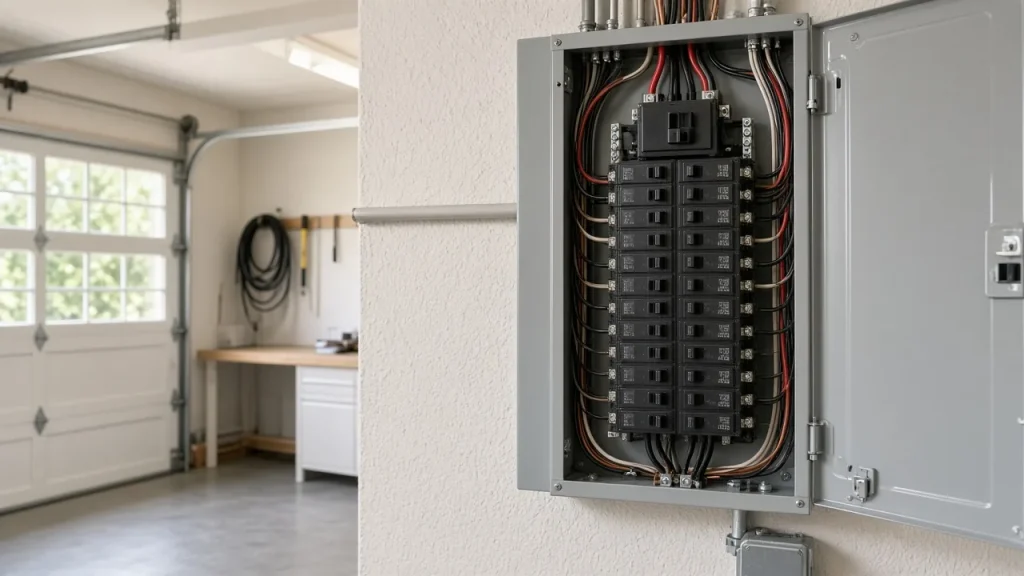
Your electrical panel is the traffic cop for every circuit in the house. When it is undersized, outdated or damaged, breakers trip more often, new appliances won’t fit, and inspectors push back on sales and insurance. Plenty of homes around Seminole, Largo, Clearwater, St. Petersburg, Pinellas Park and the beaches still run on panels that were fine when the house was built and are no longer a good match for how people live now.
Here is how we talk through a panel upgrade or replacement with homeowners before any work starts.
Request a quote
Tell us what you need and where you are. A licensed electrician will call or text you back to set a time. For an emergency, call (727) 476-7079, 24/7.
When a panel upgrade makes sense
You do not need a new panel just because a breaker tripped once. You often do need one when several of these show up:
- Age and space. Older 100-amp or small 150-amp panels with almost no open breaker slots. Adding a circuit means awkward workarounds or double-tapped breakers.
- Rust, corrosion or heat damage. Coastal humidity and salt air are hard on panels. Rust inside the can, burned bus bars or melted insulation are red flags.
- Double-taps and loose neutrals. Two wires under one breaker lug, or neutrals that are not landed properly, show up on inspections and can cause intermittent trips or worse.
- Failed 4-point or insurance inspection. Underwriters and buyers often flag obsolete or unlabeled panels, missing covers, or panels that cannot accept modern AFCI/GFCI breakers.
- New loads. EV chargers, heat pumps, pools, hot tubs and large kitchen remodels frequently push a 100-amp service past its comfort zone. Sometimes the fix is a full service upgrade; sometimes a panel change with careful load calculation is enough.
If you are not sure whether you need a main breaker swap, a panel change or a full utility service upgrade, that is exactly what a site visit is for. We look at the meter, the feeder, the panel and what you plan to add, then tell you the smallest honest scope that solves the problem.
Main breaker vs. full panel replacement
Not every job is a full can swap.
Main breaker replacement can make sense when the panel itself is in good shape, the bus is clean, there is room for the circuits you need, and the main is the weak link (worn, undersized or no longer available). It is a smaller job and often pairs with adding a few circuits or a surge protector.
Full panel replacement is the better call when the enclosure is rusted, the bus is damaged, breakers are obsolete or hard to find, there is no space left, or the panel cannot accept the AFCI/GFCI breakers your local inspector expects. Replacing the panel also gives a clean, labeled layout that is easier to service later.
Occasionally the right answer is a service upgrade (meter and feeder as well as the panel) when the utility service size itself is the bottleneck. See our electrical service upgrade page for that path, and panel upgrades and replacements for the panel-focused work.
Permits and inspections
Panel and service work almost always needs an electrical permit. We pull the permit and handle the inspection, so you are not stuck making the calls yourself. Tell us early if you have HOA rules, a tight closing date, or a rental that cannot sit without power for long.
AFCI, GFCI and surge while the cover is off
A panel change is the best time to bring protection up to current practice:
- AFCI breakers for living areas where the code (and many inspectors) expect arc-fault protection
- GFCI protection for kitchens, baths, garages, outdoors and other wet or outdoor-related locations
- Whole-house surge protection at the panel, which is cheap insurance for electronics, HVAC boards and appliances in a lightning-prone region — more on that at whole-house surge protection
We will say what is required for your scope and what is a smart add-on so the proposal is clear before work starts.
What changeover day looks like
Power will be off for part of the day. A typical residential panel swap runs something like this:
- Confirm the plan and protect floors and walls
- Utility or electrician kills power at the meter
- Old panel comes out; new panel, breakers and grounding are installed and labeled
- Circuits are landed cleanly; AFCI/GFCI and surge (if included) are set
- Power comes back; we walk the house and test key circuits
- Inspection is scheduled; any punch items get closed out
If someone works from home, has medical equipment, or needs fridge and freezer downtime kept short, tell us up front. We can plan temporary power for critical loads when it is safe and practical.
Smart panels as an option
For homeowners who want circuit-by-circuit control from a phone — useful for load management, generators and hurricane prep — a SPAN smart panel is an option. Keywest Lights & Electric is a SPAN Authorized Installer. That is a different product and price path from a standard panel upgrade; ask if you want it explained side by side with a conventional replacement. Details live on our SPAN smart panel installation page.
Who we work with
Keywest Lights & Electric serves homeowners across Pinellas, Pasco, Hillsborough and Manatee counties, including Seminole, Largo, Clearwater, St. Petersburg, Pinellas Park and the beaches. For local details, see our panel work in Pinellas County, Largo and Clearwater. We are a licensed and insured, woman-owned business and a Home Depot preferred contractor. Every job comes with a 2-year workmanship warranty (5 years for Member Care Plan members). Member Care Plan members also get 7% off labor and materials.
Clearwater and Largo panel FAQ
Do you replace electrical panels in Clearwater condos? Yes. Condo panel work usually needs the association’s approval first, and in larger buildings the unit panel is fed from a shared meter room, so we check the building’s rules and the feeder before quoting. See Clearwater panel and breaker box upgrades.
My Clearwater home is near the water. Does that change the panel job? It can. Salt air is hard on outdoor panels and breakers, so we look for rust inside the enclosure and pick a location and box rated for it. If the home is in a flood zone and the repair is part of bigger storm work, the city’s 50% rule may also apply, and we tell you up front.
Do you replace outdoor panels in Largo? Yes. One of our Largo jobs was a corroded outdoor panel below the meter, replaced in one day with a new outdoor breaker box and a whole-home surge protector after a failed 4-point inspection. See the Largo case study.
Can you upgrade the panel in a Largo manufactured home? Often, yes. About a quarter of Largo’s housing is manufactured homes, and the service equipment and feeders have their own code rules. Community rules can also decide who is responsible for the pedestal, so we check that before quoting. See Largo panel repair and upgrades.
How soon can you look at a panel in Clearwater or Largo? Largo is about 5 miles from our Seminole base and Clearwater is a short drive north, so a site visit is usually easy to schedule. We give you an honest time when you call.
Ready to talk through your panel?
Send a photo of the open panel (cover off, breakers visible) and tell us what you are adding — EV, pool, remodel, failed inspection, or just peace of mind. We will walk the site, explain main breaker vs. full panel vs. service upgrade, and give you a clear written proposal.
Call (727) 476-7079 or request service online.
About the author: Mark Einstein, Florida licensed electrical contractor, Keywest Lights & Electric.