
Has a Spring Hill neighbor’s generator pad been offered as a template for your Garden Grove lot? Generator installation in Garden Grove starts from this: lot We will not copy that layout Keywest. We will not copy that layout. Keywest Lights & Electric is a woman-owned shop licensed EC13014717. We measure this pocket lot, open this service, and plan a transfer that fits this property. Call or text (727) 476-7079.
Request a generator quote in Garden Grove
Tell us about the property and what you want to keep running. We reply with next steps and a time for the site visit.
On the same streets, we also handle battery backup installation, and solar installation.
Call or text (727) 476-7079 · open 24/7 for emergencies · request a quote online
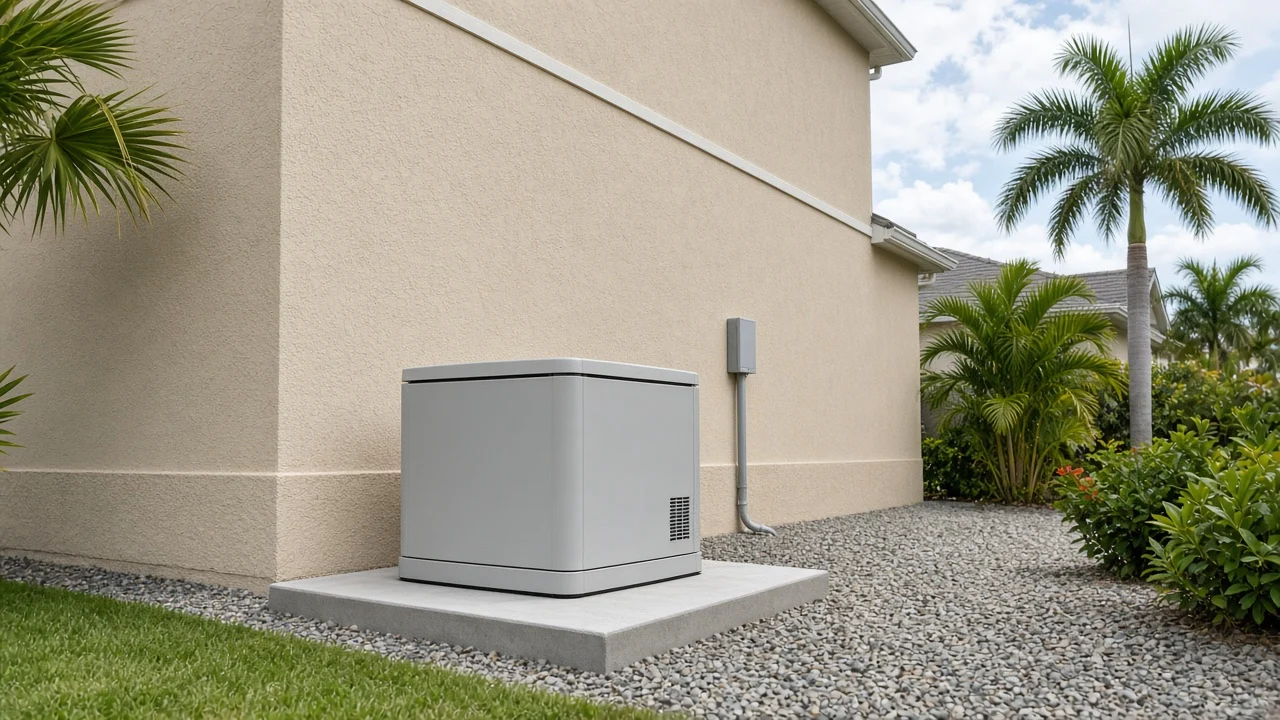
Generator installation in Garden Grove: A copied neighbor pad is the wrong starting point
Garden Grove is a small inland pocket in Hernando County, beside the much larger community of Spring Hill. A pad that works on a wider neighboring lot can sit too close to a window, a property line or a dry well once it is dropped onto a tighter Garden Grove side yard. We walk this lot first. We do not take a photo of a neighbor’s install as a plan.
If a friend already has a set across the line in Spring Hill, we are glad to hear what they like about the exercise hour and the fuel path. We still measure your clearances, your service and your own shutdown plan. The two properties are not interchangeable, even when the streets feel close.
A pocket of 314 homes, built 1998 or earlier
ACS 2020 through 2024 lists about 637 people and 314 housing units in this Census-defined pocket. About 71 percent of units are detached houses, and about 79 percent are owner-occupied. The seasonal share is effectively zero. Median year built is 1998 or earlier. Median age is about 52.0 years, so quiet exercise hours and a visit that does not rush an older household matter here.
A late-1990s builder can is often tidy and still short on spaces after a later pump, a spa, or a charger was added. We open it. If the interior cannot accept a transfer cleanly, we may replace the can or use SPAN so circuits can be chosen during a run. The age of the subdivision look is not a substitute for that check.
Quiet hours on a small inland street
We ask about nap times, shift work and the hour you already think of as “too loud for this street.” The exercise window is written into the plan, not left as a factory default that happens to fire at dawn. On a pocket street of a few hundred homes, one poorly timed weekly run is a long argument. We would rather set the window with you on the first visit.
Fuel path, working space and the route a service truck will use also get written down. A tight side yard can force a different door swing or a different pad orientation than the neighbor used. That is expected. It is not a problem if we measure it early.
- Florida electrical contractor license EC13014717, licensed & insured
- Woman-owned business based at 6248 Seminole Blvd, Seminole FL 33772
- 2-year workmanship warranty, 5 years with a Member Care Plan
- SPAN Authorized Installer and Home Depot preferred contractor
- Open 24/7 for electrical emergencies: call or text (727) 476-7079
- Projects up to $2 million, with bonding up to $1 million
Transfer, permits and a legal landing
We plan a legal transfer, a shutoff and a directory that matches the house. We follow the adopted electrical code and we pull the required permits. We leave model shopping off the first conversation. The electrical plan, the pad and the transfer are what we come to write. Hardware choice stays its own step.
If an irrigation pump, a well or a medical device must stay on, we name it in the scope and we test it at commissioning. Loads you do not name do not get a surprise place on the set.
Commissioning on this lot, not on a memory of another one
We transfer the house, we watch the named loads, and we leave the sleeve on site with the shutoff steps. We stand behind the electrical work for two years, or five years through the Member Care Plan. This pocket sits about 49 miles from 6248 Seminole Blvd. Travel is already in the arrival window, so we do not treat Garden Grove as a quick add-on to a Spring Hill day without its own measurements.
How to begin
Call or text (727) 476-7079 with a photo of the panel, a rough idea of the side yard, and a note if you have been looking at a neighbor’s pad. The request box near the top is another way to reach us. Community figures are ACS 2020–2024, U.S. Census Bureau.
Measuring the fence a copied pad would ignore
A Spring Hill-style pad can assume a side yard that is wider than the one you have. We measure the fence, the window, the setback and the swing of any gate before we talk about concrete. If a copied layout would put the set two feet from a bedroom window, we say so on the first walk, while it is easy to move the landing.
Late-1990s lots in this pocket often have an irrigation clock already sharing a tight can with a later pump or a spa breaker. We photograph the directory as it is, even if the labels are faded, so the transfer plan starts from the real board. A tidy cover is not the same thing as free spaces.
Quiet hours get written with the household, not guessed from a default. A median age of about 52 often means someone is home in the late morning and would rather not have a weekly run at dawn. We set the window on purpose. The sleeve at the end of the job should show that same hour, so a later service visit does not reset it by habit.
Builder-can photos, faded ink, and a pad that respects the lot
We photograph the directory even when the ink has faded to a gray smudge. A late-1990s builder can often still has the original marks for the air handler or the pool under later stickers. Those marks help us decide whether a transfer can land in the existing can or whether a new board or SPAN is the cleaner path. A tidy deadfront is not evidence of free slots.
We also sketch the side yard with measurements a copied neighbor pad never had: fence post to wall, window to proposed pad, gate swing, and the path a service truck would use after a rain. If those numbers kill the first landing you hoped to use, we show you the sketch on site. Moving a pad on paper is easier than moving it after a pour.
The exercise hour is copied into the sleeve in the same words you used: “after 10,” “not at dawn,” “not during a nap.” A later service visit should not have to guess.
A sketch you can keep, and an hour written in your words
We leave a copy of the side-yard sketch, with the measurements that killed or approved the first landing. You should be able to see, months later, why the pad sits where it sits and why it does not sit where a neighbor’s pad sits. The faded-directory photo stays with that sketch in the sleeve, along with the exercise hour in your words.
If a later pump or a spa was crammed into the late-1990s can with tandem breakers, the sketch is not enough. The service notes have to say whether those breakers were cleaned up, whether a new board was used, or whether SPAN now holds the transfer. That sentence belongs in the sleeve too, in plain language, so a later electrician is not guessing under a tidy deadfront.
Nap hours, faded stickers, and a sketch that outlives the pour
Nap hours and shift work are easy to treat as soft preferences. On a pocket street they are part of the design. The exercise window in the sleeve should still make sense if a later tech opens the set two years from now. That is why we copy your words, not a factory default, and why we show you the sketch that placed the pad away from a bedroom window.
Faded stickers in a late-1990s can are a record. We do not peel them off for a cleaner photo and then forget what they said. The directory photograph, even smudged, rides with the sketch and the service note. If tandems were hiding a spa or a later pump, the sleeve says what we did about them.
The pour happens after that paperwork is clear. A pretty pad in the wrong corner is a poor souvenir. The sketch you keep is how we avoid that souvenir on a lot that should not have copied its neighbor.
Dawn, a bedroom window, and stickers we refuse to pretend are blank
Dawn is a common factory hour and a poor hour on a pocket street with a median age over 50. The sleeve should never quietly fall back to dawn after a service visit. Your words stay in the sleeve, and the sketch shows why the pad is not under a bedroom window even if that corner looked convenient from the road.
Stickers in the can, even faded ones, stay in the photograph. We refuse to pretend the board was blank. A later electrician who only sees a new directory still has the photo of what was hiding under it, including a spa or a later pump that had been crammed in with tandems. That photo is part of the history of this lot, not clutter.
Factory defaults, a convenient corner, and a history under the deadfront
A factory default that returns the set to dawn after a later service visit would undo the hour you chose. We write your words in the sleeve so that default has to be ignored on purpose, not followed by habit. The convenient corner under a bedroom window is treated the same way: the sketch shows why we did not use it, even if it looked easy from the road.
History under the deadfront matters. The photograph of faded stickers and tandems is not clutter. It is the record of what this late-1990s can was hiding, including a spa or a later pump, and it rides with the new directory so the next electrician is not starting from a blank board that never was blank.
Ignoring a default on purpose, and a board that was never blank
The sleeve is written so a later tech has to ignore a dawn default on purpose. Habit should not win. The sketch is written so a later owner can see why a convenient corner was refused. The sticker photograph is written so a later electrician can see a board that was never blank, even after a new directory is on the door.
A sleeved crossing, a regulator, and a tank setback
If a fuel path has to cross a walk, we talk about a sleeved crossing and we write it into the plan, rather than leaving a trip hazard or a shallow cover. A regulator and a tank have their own legal setbacks, and those setbacks can kill a corner that looked fine for the engine alone. We measure them on the first walk with the same care we give the bedroom window. Hardware choice still stays a later step. The path, the sleeve, and the setbacks do not.
Trip hazards, a shallow cover, and setbacks that outrank a pretty corner
A trip hazard or a shallow cover over a fuel path is not a finished crossing. A sleeved crossing is. Tank and regulator setbacks outrank a pretty corner if that corner would put a tank too close to a window or a line. We write those setbacks on the first sketch, next to the bedroom-window numbers, so the pour waits on a legal path rather than on a hope.
Measuring the tank like we measure the window
We put the tape on the tank setback the same day we put it on the bedroom window. If the two fight, the tank wins the corner, and the engine moves. A pretty sketch that ignores a regulator or a sleeved walk is not a sketch we will pour from. The first walk is for those fights, while they are still easy to fix on paper.
A wheelbarrow path, a silt fence, and a string line on the setback keep the pour honest once the sketch is approved.
Credits a copied-pad generator cannot claim
A standby generator planned for this Garden Grove lot does not qualify for solar or clean-energy tax treatment. We will not write a credit into a proposal just because a neighbor already has a pad. Consult a tax professional; incentives can change.
Garden Grove generator questions
Can you copy my Spring Hill neighbor’s pad? No. We will listen to what works for them, then we measure this lot. A wider neighboring yard is not a template for a tighter Garden Grove side yard.
The house is from the late 1990s. Is the panel fine? Maybe. We still open it. A tidy builder can can be out of spaces after later additions. A replacement or SPAN may be needed before a transfer lands.
Will you choose a brand for me? No. The walk is for the transfer, the service, the pad and the start-up plan. A brand is not locked on that day.
Can the weekly exercise be set for a quieter hour? Yes. We write the window with you, especially on a small street where a dawn run would be unwelcome.
How far is Garden Grove from the shop? About 49 miles out from the shop at 6248 Seminole Blvd, with that ride already inside the appointment hour.
Do I need to be home for the first walk? Yes, or a person who can show us the side yard, the service and any pump that must stay on. A copied photo of a neighbor’s pad is not a substitute.
What do you leave at the end? After we watch the named loads transfer, we leave a labeled sleeve: directory, shutoff steps, and the exercise hour you agreed to.
Can a generator qualify for solar tax breaks? No. Standby generators do not qualify for those credits. Consult a tax professional; incentives can change.
Related: generator installation across Tampa Bay · SPAN smart panel installation · solar electrical work in Garden Grove · battery backup in Garden Grove. Nearby: generators in Bayport · generators in Weeki Wachee Gardens · generator installation in Mulberry · generator installation in Bradley Junction · generator installation in Kathleen · generator installation in Medulla · generator installation in Fuller Heights.