
Need a standby generator installation in Bayport, a very small coastal hamlet, planned in one careful visit so the crew is not making extra trips for a single pad? That is how we treat this place. Keywest Lights & Electric is woman-owned, licensed EC13014717, and at (727) 476-7079. We measure the lot, the salt-air clearances and the transfer wall, then we set a dated shutoff that already includes the drive from Seminole.
Request a generator quote in Bayport
Tell us about the property and what you want to keep running. We reply with next steps and a time for the site visit.
Alongside this work, see also battery backup installation, and solar installation.
Call or text (727) 476-7079 · open 24/7 for emergencies · request a quote online
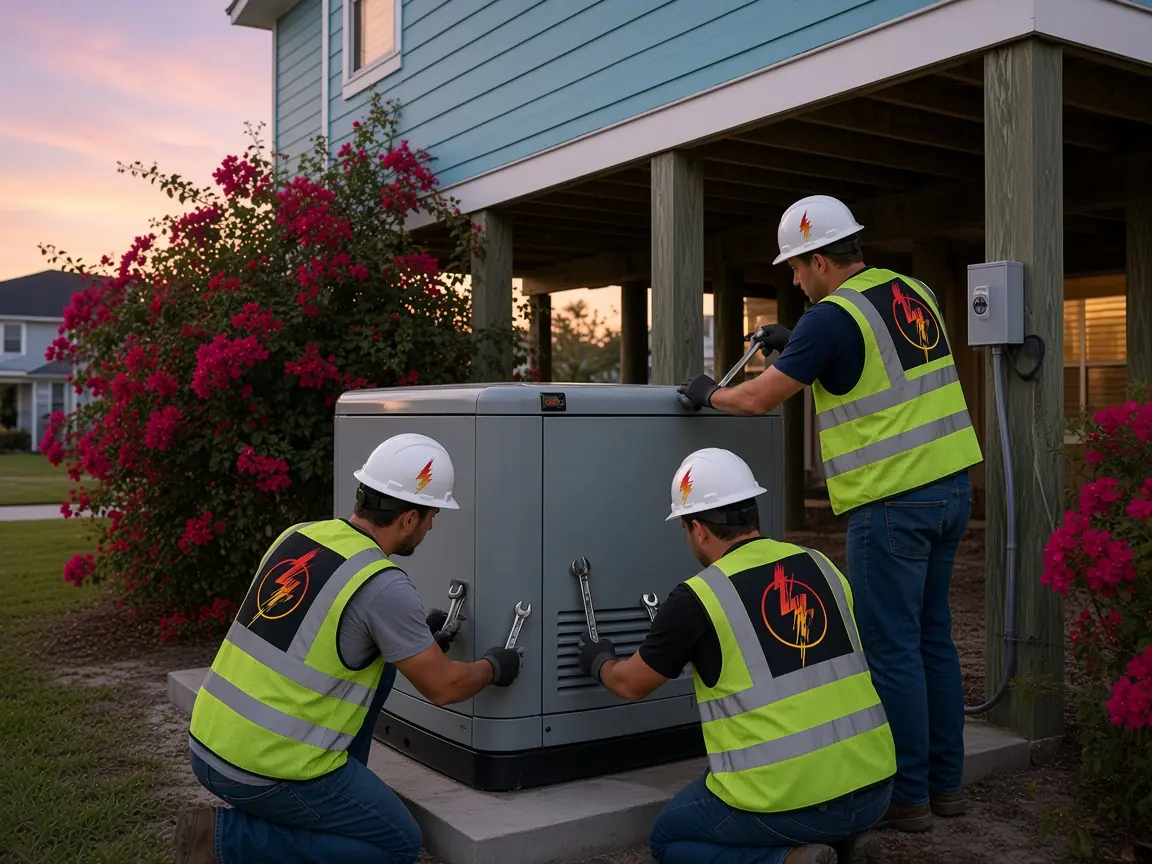
Generator installation in Bayport: A small hamlet, one staged visit
Bayport is a tiny community on the Hernando coast. The 2020–2024 ACS count is how we know the hamlet holds about 189 people and 84 housing units. About 75 percent of those units are detached houses, and about 35 percent are counted as seasonal. There is no room in a plan like this for a sloppy first trip. We gather the panel photo, the load list and the access notes before we roll, so the visit can finish the measurements in one window.
Salt air, not a subdivision setback only
Coastal air is hard on enclosures and lugs. We look at the windward side of the house, pick a more sheltered legal wall or pad when one exists, and specify outdoor ratings that belong in this air. If the only open strip sits in the spray, we say so and we look for another legal landing.
- Florida electrical contractor license EC13014717, licensed & insured
- Woman-owned business based at 6248 Seminole Blvd, Seminole FL 33772
- 2-year workmanship warranty, 5 years with a Member Care Plan
- SPAN Authorized Installer and Home Depot preferred contractor
- Open 24/7 for electrical emergencies: call or text (727) 476-7079
- Projects up to $2 million, with bonding up to $1 million
Transfer, SPAN and the shutoff
We open the panel and read the main and the bus. The median home dates from 1984 or earlier. If the interior is tight, a SPAN smart panel can name each circuit and shed a water heater or a lift first. We file for local permitting and we meet the inspector. The fuel path is drawn with your fuel vendor so both trades use the same sheet. Service is cut only in a window we have already agreed on. We follow the adopted electrical code, torque the lugs, test the ground path and leave labels a seasonal guest can follow.
Distance and coverage
From 6248 Seminole Blvd out to this coastal hamlet is about 50 miles, and that fact is already in the start hour we send, not a surprise on the morning of the job. Our workmanship on the electrical portion lasts two years, or five when a Member Care Plan is in force. The maker covers the machine.
Call before we roll
Send a panel photo and access notes to (727) 476-7079. Written notes in the form on this page are welcome too. We will set one careful visit.
Why the first trip has to be complete
With about 84 housing units and a long coastal drive, a second “just to measure” visit wastes a day. Before we roll we want a panel photo, a load list, access notes and, if the house is seasonal, the name of a person who can meet us. On site we finish the pad sketch, the transfer plan and the fuel path in the same window when the lot allows it. If something still cannot be finished, we say so before we leave and we schedule the follow-up in writing, not as a vague later trip.
Wind, spray and a sheltered legal landing
We walk the windward side and the more sheltered side. Enclosures, lugs and labels take a beating in this air. We specify ratings that belong here and we pick the more sheltered legal wall or pad when one exists. If the only open strip sits in the spray, we look for another landing or we tell you the spot will not work. A guest start-up card is written in short steps, because a seasonal visitor may never have seen the set.
Staging on a small road
Access can be tight. The confirmation lists a start hour, a parking plan and how we will keep a neighbor’s only turnout clear. Fuel routing is drawn on the same page as the pad. We handle local permitting and we meet the inspector. The weekly test timer is set on commissioning day so a set that sits quiet for months still runs on a schedule.
What we will not do
We will not pretend the drive is short. We will not size the job from a brand flyer. We will not mix solar tax topics with a standby set, and we will not put that talk here. If the set fails to transfer later, the start-up card names (727) 476-7079.
<!–kwle-pack2–>
Salt, wind, a small road and a set that may sit quiet
We walk the windward side and the leeward side and we talk about both. Hinges, gaskets, lugs and labels fail sooner in this air if the enclosure is under-specified or if it sits in the spray. Stainless or other coastal-rated hardware is a specification, not a nicety. We would rather name that on the first visit than replace rusted parts after a season.
A flood-prone grass strip is not a pad. We look at grade, at how water leaves the lot and at whether a slightly higher landing is possible within the legal setbacks. If it is not, we say the spot will not work. A seasonal house does not get a weaker plan just because it is empty in summer. The next guest still has to start the set in a storm.
Boat trailers, crab traps and a neighbor’s only turnout can all sit in the way of a truck. The confirmation is specific: where we park, how we keep that turnout clear and what hour we will arrive. A vague “sometime Tuesday” is not a plan on a road this small.
Because the set may sit quiet for months, the weekly exercise timer is not optional. We set it on commissioning day and we write a short pre-storm list: look at the enclosure, confirm the test ran, and call us if a fault is on the screen. The start-up card is written for a guest, in short steps, and it lives with the inspection papers so it is not lost in a drawer.
<!–kwle-pack3–>
Gaskets, hinges, a guest card and a road that has no room to improvise
Coastal air attacks the small parts first: a hinge that binds, a gasket that shrinks, a label that fades, a lug that films with salt. We specify hardware that belongs in this air, and we pick a landing that is as sheltered as the lot allows. A pretty view of the water is not a reason to put an enclosure in the spray. A slightly less pretty wall that lasts is the better plan, and we will say so.
The start-up card is written for a person who may have arrived that afternoon. Short steps, large type, no slang. We walk through it once on commissioning day, even if the owner already knows the set, because the next person may not. The card lives with the inspection papers, not in a kitchen drawer that a guest will never open.
On a road this narrow, improvisation is how driveways get blocked and tempers get short. The confirmation names the hour, the parking, the turnout we will keep clear and the person who will meet us. If a boat trailer will be gone that morning, we note that too. We would rather change the hour than force a second trip because a truck could not turn around.
<!–kwle-pack4–>
Extra notes in salt air
We note a frozen hinge, a chalky gasket, a faded phenolic label and a white film on a lug. We note a rust bloom on a hasp, a missing screw in an enclosure door, a cracked sight glass and a stiff breaker handle. We note a barnacle-stained piling, a coiled wash-down hose, a cracked dock box and a loose mooring whip if they sit on the windward side we were asked to use.
We note a flood wrack line in the grass, a sandy berm, a crushed shell shoulder and a puddle that does not drain. We note a crab trap, a mop, a bucket of zincs and a spare prop leaned where a truck would need to turn. The notes decide whether the landing is honest in this air, or whether we must pick a more sheltered wall.
<!–kwle-pack5q–>
A guest who arrived that afternoon
We write the start-up card as if the person reading it drove in that day and has never seen the set. Short steps. Large type. No slang. We walk the card once, even with an owner who already knows the machine, because the next hands may be new. The card lives with the inspection papers, not in a kitchen drawer a guest will never open.
We also take a last look at gaskets, hinges, the hasp and the labels before we leave. If a gasket is already chalky, or a hinge is stiff, we would rather deal with it now than hear about it after a month of salt air. The landing should be the more sheltered legal wall, and the hardware should belong in this air. A pretty view is not a reason to leave an enclosure in the spray.
Because the road is small, close-out includes a check that the turnout is still clear and that a neighbor can pass. We do not leave a hose, a crate or a cone in that path. If a later weekly test fails, the card already names (727) 476-7079. You, or a guest, can call from the wording on that card alone.
<!–kwle-pack6–>
Coastal fittings we actually specify
A Bayport bag is built for salt, not for a generic inland pad. We bring a weatherhead boot only if a mast is in play, which it often is not, and we bring drip-loop notes, a Myers hub, a chase nipple and a close nipple when a wall penetration has to stay dry. We bring a running thread, a coupling, an expansion joint and a deflection fitting if the landing may move a little in this soil. A box extension, a raised cover, a blank plate and a weatherproof in-use cover are the small lids that fail first in this air, so we specify them on purpose.
A bubble cover, a gasketed cover, silicone, butyl and a stainless fastener kit belong here more than they belong on a mid-block inland lot. A ground bar, a bonding bushing, a knockout seal, an offset and a saddle are how a short, sheltered run stays neat. We also bring a silver marker for wet labels and an alignment sticker for a door that must still shut after a season of spray. If we left those choices to a generic kit, the small parts would be the first to go.
What a generator does not qualify for
A standby set in this coastal hamlet does not qualify for solar tax breaks or clean-energy credits. Those rules are written for solar equipment, not a fuel-burning unit on a pad. Consult a tax professional; incentives can change.
Bayport generator FAQ
Why do you ask for photos before the visit? Bayport is small and the drive is long. Photos and a load list let us finish the measurements in one trip when we can.
Does salt air change the equipment plan? Yes. We look for a sheltered legal landing and specify ratings that belong in this air.
Can a seasonal guest start the set? We leave a paper start-up card in the pack, written in plain steps.
Do you choose a generator brand in advance? No. We size the work from the lot and the service we open.
How far is Bayport from the shop? From 6248 Seminole Blvd out to Bayport is about 50 miles.
Why write the card for a new guest? Because a seasonal house often has a new person at the worst hour. The card has to work without a briefing.
What do you check at the very end? Gaskets, hinges, labels, the sheltered landing and a turnout that is still clear for a neighbor.
Do generators qualify for a tax credit? No. A fuel-burning standby set does not qualify for solar tax breaks. Consult a tax professional; incentives can change.
Related: generator installation across Tampa Bay · SPAN smart panel installation. Nearby: generators in Weeki Wachee Gardens · generator installation in Medulla · generator installation in Kathleen · generator installation in Bradley Junction.