
Need a standby generator planned for a Weeki Wachee Gardens river lot, including the lift and the well, while the house may sit empty for months? Generator installation in Weeki Wachee Gardens starts from this: river lot including the lift and the well. That is the job we come to do. Keywest Lights & Electric is a woman-owned shop, license EC13014717, and we answer at (727) 476-7079. We measure the pad, the transfer switch and the loads you want to keep, then we write a dated shutoff window that already includes the drive from Seminole.
Request a generator quote in Weeki Wachee Gardens
Tell us about the property and what you want to keep running. We reply with next steps and a time for the site visit.
Other licensed work we already do here includes battery backup installation, and solar installation.
Call or text (727) 476-7079 · open 24/7 for emergencies · request a quote online
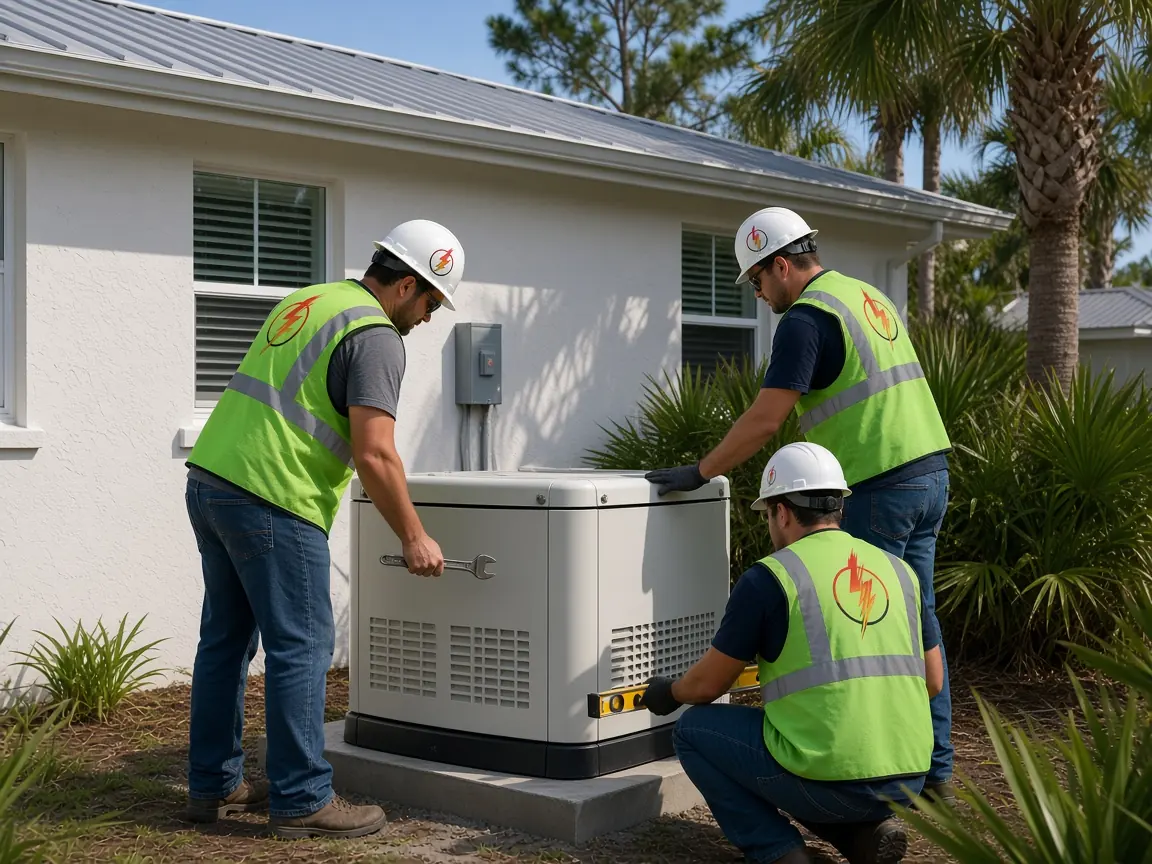
Generator installation in Weeki Wachee Gardens: A river lot is not a subdivision pad
Weeki Wachee Gardens sits along the Weeki Wachee River. Many lots have a lift, a dock receptacle and a well or irrigation pump close to the water. Those loads matter when we size a standby set. We walk the bank, the side yard and the panel wall before anyone orders a unit. If the only open strip crowds a neighbor path or sits too close to the water, we move the pad or we tell you that spot will not work.
What the census helps us expect
The median home here dates from 1986 or earlier, and about 74 percent of housing units are detached houses, Those shares come from the American Community Survey for 2020 through 2024. About half of the units are counted as seasonal. That last figure changes the job. A house that sits quiet for months still needs a weekly exercise plan and a clear start-up card for a guest or a caretaker. We leave that card in the permit pack, not in an app that a visitor cannot open.
- Florida electrical contractor license EC13014717, licensed & insured
- Woman-owned business based at 6248 Seminole Blvd, Seminole FL 33772
- 2-year workmanship warranty, 5 years with a Member Care Plan
- SPAN Authorized Installer and Home Depot preferred contractor
- Open 24/7 for electrical emergencies: call or text (727) 476-7079
- Projects up to $2 million, with bonding up to $1 million
How we plan the transfer
We open the panel and read the main, the bus and the free slots. Some 1980s services are already full. If a transfer switch will not land cleanly, we may pair the generator with a panel change or a SPAN smart panel. SPAN can drop a lift or a water heater when the set is near its limit, so a modest unit can still carry the fridge and the well.
Permits, fuel and the shutoff
We handle local permitting and inspections. The fuel route is planned with your fuel vendor, including any sleeve under a walk. We do not guess a runtime from a brochure. The proposal names the fuel, the pad and the transfer landing. Power goes off for one agreed window. We do not promise a length until we have seen the work.
Above the adopted code
We treat the adopted electrical code as a starting point, then add wet-location fittings and clear labels. Lugs are torqued and logged. Grounding is tested. Outdoor fittings are rated for wet places. Labels are clear enough for a guest who has never seen the set.
Labor coverage and distance
Our workmanship term is two years, and it becomes five when Member Care is added. Parts coverage stays with the maker of the set. Plan the visit around about 50 miles of travel from 6248 Seminole Blvd, including weekend traffic near the attraction.
Ready to walk the lot
Phone (727) 476-7079 and send a photo of the panel label, plus a note about the lift or the well. The request form at the top of this page is another way to start. We reply with next steps and a time for the site visit.
How a typical visit runs here
We start at the panel wall, then walk toward the river, not the other way around. The lift circuit, any dock receptacle and the well or irrigation pump are photographed and named. We measure the side yard, the setback to the neighbor path and the height above the bank. If a boat trailer or a guest truck usually parks in the only legal pad strip, we note that and pick another landing. The confirmation that follows lists a start hour, a parking plan and who will be on site, because seasonal houses often have a caretaker instead of the owner.
What we bring and what we leave
We bring a written load list, a pad sketch and a transfer-switch or SPAN option, not a brand flyer. After the job we leave a paper start-up card, a typed directory, photos of the finished landing and the inspection record in one pack. A guest who arrives during a later storm should be able to follow the card without a phone call. If the set fails to transfer, the card also names (727) 476-7079 as the number to call.
Fuel, access and tight streets
Some gardens streets are narrow and end near the water. We plan truck access and a hose or fuel path that does not block a neighbor’s only turnout. Any sleeve under a walk is drawn on the same page as the pad. We coordinate the fuel route with your fuel vendor and write that route into the proposal so the plumber and the electrician are not working from two sketches.
Storm season habits
A set that sits quiet for months still has to run on a schedule. We set the weekly test timer on commissioning day and write a short pre-storm checklist: look at the enclosure, confirm the test ran, and call us if the controller shows a fault. We keep generator work and solar tax talk on separate pages, because the two are not the same.
<!–kwle-pack2–>
River-lot details we actually record
We sketch the bank, not just the house wall. Cypress knees, a low hammock and a narrow grass strip can all steal the only legal pad. A davit, a piling line or a short gangway may sit closer than it first appears, so we measure to those too. Outdoor showers and hose bibs are checked for GFCI protection while we are already on that side of the house. If a kayak rack or a bait cooler shares the landing we wanted, we pick another strip rather than asking you to live around the set.
Mosquito season and deep shade can hide rust at a knockout or at a ground clamp. We look with a flashlight and we wipe the area before we photograph it. Exhaust must clear a window, a lanai screen and any outdoor seating. Intake air needs a path that will not suck in leaves after a storm. We write those clearances on the same sheet as the pad sketch.
Fuel hose routing gets a second look on a river lot. We will not drag a hose across the only walkway a guest uses at night. A sleeve under that walk, a clipped path along a fence, or a different tank location are the usual options. Your fuel vendor stays in that conversation so our drawing and theirs match.
A golf cart or a small trailer often lives in the side yard. We mark that parking on the plan so commissioning day is not a surprise shuffle. Narrow lanes and dead-end turns are written into the confirmation, including which direction the truck should face when it leaves.
<!–kwle-pack3–>
Tools, notes and a quiet close-out
The bag we carry on this street is a little different from an inland job. We bring a flashlight that still works in deep shade, a tape that can reach from a piling to a wall, a notepad that will not melt in a damp pocket and a camera with a dry bag. We photograph the panel directory, the well switch if there is one, the lift disconnect and any cracked conduit body we find along the bank. Those pictures go into the proposal so you are not relying on memory after we have driven back to Seminole.
Leaves, pollen and a film of river silt collect on an enclosure that sits under trees. We talk about a small clearance ring around the intake and a path for a broom, not because we want the lot tidy for its own sake, but because a blocked intake is a real fault. We also look at where a downspout dumps water and whether that stream would cut under a new pad.
Close-out is quiet on purpose. We do not leave with a stack of loose sheets in a windy carport. The start-up card, the directory, the inspection record and the photo log go in one sleeve, clipped where a guest will see it. If a later fault appears, that sleeve and a short call are enough for us to know what to bring on the next trip.
<!–kwle-pack4–>
Extra notes at the water and the can
We jot a cracked piling cap, a loose cleat, a splintered bumper and a rusty davit winch, not because we repair boats, but because they steal clearance. We jot a mullet bucket, a crab net, a casting rod and a tackle tray if they hang on the wall we wanted. We jot a cracked GFCI cover, a missing knockout plug, a burred conduit end and a paint-over that hides a heat stain in the can.
We jot a palmetto spike in the only pad strip, a cypress knee in the way of a sleeve, and a soft shoulder that would swallow a loaded dolly. We jot a lantern hook, a wind chime and a hanging basket that will have to move for exhaust clearance. The jot list is short, dated and clipped to the pad sketch.
<!–kwle-pack5q–>
A quiet close-out on a windy lot
Loose papers on a river lot do not stay a set for long. We clip the start-up card, the directory, the inspection record and the photo log into one sleeve, then we put that sleeve where a guest will actually see it, not under a tackle tray. We also take a photo of the sleeve in place so we know what we left and where.
Before that close-out we walk the exhaust path once more. A hanging basket, a lantern hook or a new chair can creep into a clearance we measured on the first visit. If something has moved, we move it or we adjust, and we do not leave until the path is open. Intake air gets the same last look, including leaves and silt that may have collected since the pad was formed.
The weekly test timer is set, and the pre-storm list is on the card: look at the enclosure, confirm the test ran, and call (727) 476-7079 if a fault is on the screen. A set that sits quiet for a vacant season still has to exercise. That is not an extra favor. It is how the machine stays ready for a guest who has never seen it.
Credits a river-lot generator cannot claim
A fuel-burning set on a Weeki Wachee Gardens river lot does not qualify for solar tax breaks. We will not write one into a seasonal-house proposal. Consult a tax professional; incentives can change.
Weeki Wachee Gardens generator FAQ
Can a standby set also cover a boat lift? Yes, if we count that load on the visit and write it into the transfer plan. We may shed the lift first if the set is near its limit.
The house is empty much of the year. Does that change the install? We still plan a weekly exercise and leave a paper start-up card for a guest or a caretaker.
Do you install the generator machine as well as the wiring? We do the electrical work, the transfer gear and the shutdown. The unit is set on the pad we planned with you.
Will you name a specific generator brand? No. We size the job from the loads and the panel we open, not from a brand flyer.
How far is the shop? Plan on about 50 miles of travel from 6248 Seminole Blvd, including weekend traffic.
Why photograph the sleeve in place? So we know what you were left, and where, if a later guest cannot find the card.
What is the pre-storm list? Look at the enclosure, confirm the weekly test ran, and call us if a fault is on the screen.
Do generators qualify for tax credits? No. They do not qualify for solar tax breaks. Consult a tax professional; incentives can change.
Related: generator installation across Tampa Bay · SPAN smart panel installation · solar electrical work in Weeki Wachee Gardens · battery backup in Weeki Wachee Gardens. Nearby: generators in Bayport · generator installation in Medulla · generator installation in Kathleen · generator installation in Bradley Junction.