
Is your Mulberry lot a tight downtown parcel, or a quieter side street a few blocks away? Generator installation in Mulberry starts from this: lot a tight downtown parcel or a quieter. Those two jobs in this small city are not the same pad. Keywest Lights & Electric is a woman-owned shop licensed EC13014717. We plan the transfer and the landing for the lot you actually have. Call or text (727) 476-7079.
Request a generator quote in Mulberry
Tell us about the property and what you want to keep running. We reply with next steps and a time for the site visit.
Other licensed work we already do here includes battery backup installation.
Other licensed work we already do here includes solar installation.
Call or text (727) 476-7079 · open 24/7 for emergencies · request a quote online
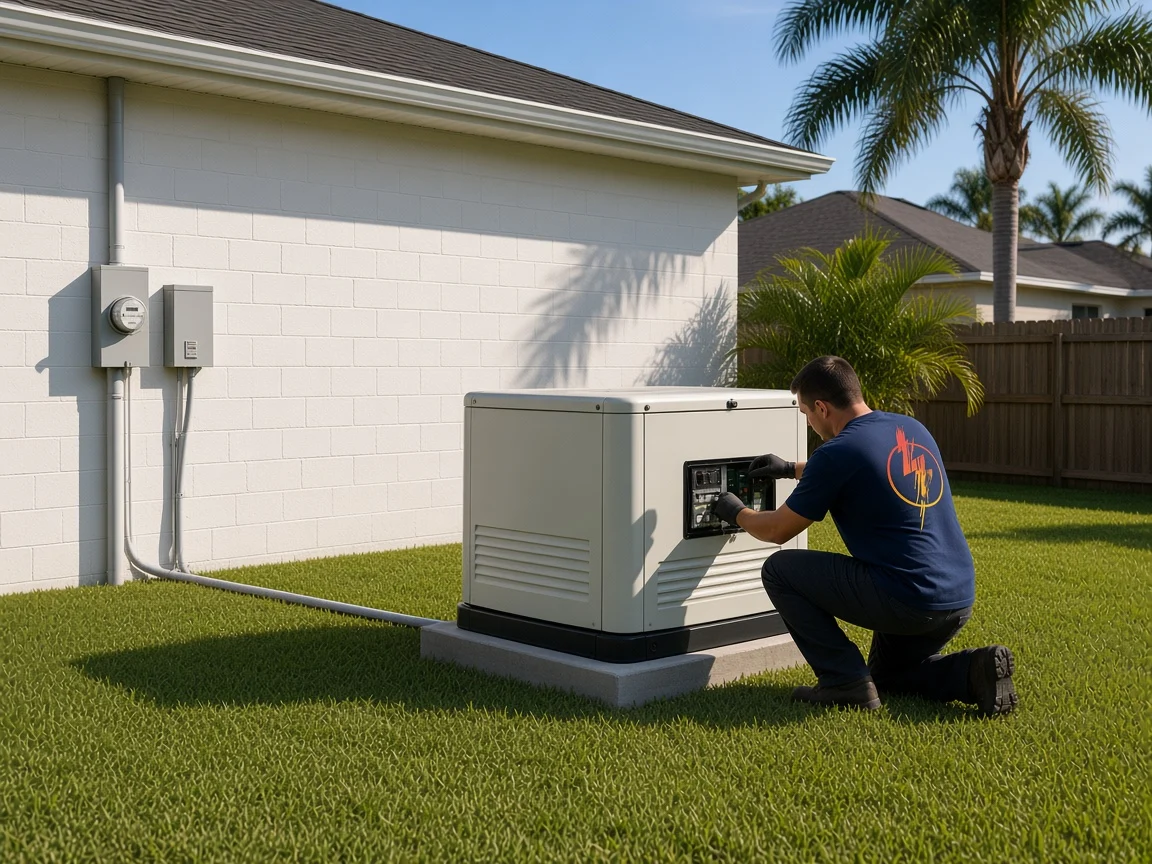
Generator installation in Mulberry: Downtown alley or side street, named on the first call
Mulberry is an incorporated city in Polk County, not a loose rural cluster. Downtown parcels can back up to an alley, a shared wall, or a short driveway that already hosts trash days and museum-weekend parking. A residential side street a few blocks off the main crossing usually has more room, but it may still sit close to a neighbor’s window. We ask which kind of lot you have before we talk about a pad.
The phosphate museum downtown is a real local landmark, and event days can fill curb space we would have used to unload. If you live near that core, we plan the visit around a quieter weekday hour. If you live on a side street, we still write a parking plan, just a simpler one. The two confirmations do not look the same, and that is the point.
A small city of just over 4,000 people, with mixed building types
Census ACS 2020 through 2024 lists about 4,188 residents and 2,066 housing units in the city. Only about 42 percent of those units are detached houses, so a Mulberry job may be a detached house, an attached home, or another residential form. We do not arrive with a one-pad script. About 79 percent of occupied units are owner-occupied. About 6 percent of units are seasonal. Median year built is 1989 or earlier. Median age is about 51.4. About 98 percent of homes use electricity as a heating fuel in those tables.
Those figures tell us the city is mixed and mostly lived in year-round, with some seasonal use. They do not tell us what your service can accept. We open the can. A 1989-or-earlier board may be honest and tight, or already replaced and still short on spaces after a later pump or charger. If the interior cannot accept a transfer, we may replace the can or use SPAN so you can choose circuits during a run.
What we measure that a generic city pad would miss
On a downtown lot we measure alley width, door swing, overhead lines, and whether a fuel truck can reach the pad without blocking a one-way lane. On a side street we measure window distance, the neighbor’s bedroom wall, and the path a service truck will use after a rain. We will not drop a pad “where the last city job went.” Each address gets its own landing.
We do not start by picking a brand out of a brochure. We write the transfer, the service work, the pad and the start-up. Choosing hardware stays a later, separate step.
- Florida electrical contractor license EC13014717, licensed & insured
- Woman-owned business based at 6248 Seminole Blvd, Seminole FL 33772
- 2-year workmanship warranty, 5 years with a Member Care Plan
- SPAN Authorized Installer and Home Depot preferred contractor
- Open 24/7 for electrical emergencies: call or text (727) 476-7079
- Projects up to $2 million, with bonding up to $1 million
Transfer, permits and a shutdown you can plan around
We follow the adopted electrical code, pull the required permits, and agree on a shutdown window before the cutover. We do not quote a set duration until we have seen the work. If a shop, a well or a medical device must stay on, we name it in the scope and we test it. Irrigation clocks and garage openers get named too, or they stay off the set on purpose.
Commissioning in the city, then the sleeve
We transfer the house, we watch the named loads, and we leave a labeled sleeve with the directory, the shutoff steps and the exercise window. On a downtown street we set that window with the alley and the neighbors in mind. On a side street we still write the hour down, especially with a median age over 50, when a dawn run is often unwelcome. Our workmanship on the electrical side runs two years, or five years if you enroll in the Member Care Plan.
From 6248 Seminole Blvd the city is about 49 miles. That ride is already in the appointment, which is why we ask for lot type, a panel photo and access notes first, so the opening visit is a real walk of your property rather than a scouting trip we have to repeat.
How to begin
Call or text (727) 476-7079 and tell us whether the lot is downtown or on a side street, and send a photo of the service. The request box near the top of this page is open as well. City housing figures come from the U.S. Census Bureau ACS, 2020–2024 5-year estimates.
Dumpster day, a museum weekend, and two kinds of frontage
A downtown alley has its own calendar. Trash pickup, a delivery van, and a weekend when the phosphate museum draws visitors can each close the curb we would have used. We ask about those days on the first call, and we write a weekday hour that does not fight them. A side-street lot usually skips that museum traffic, but it may still have a trash day and a school-hour pinch. Each confirmation gets the calendar that belongs to that address.
We also walk the frontage with mixed building types in mind. A detached house on a larger city lot may have a clear side yard. An attached home may have a short shared wall and a tighter swing for a door or a gate. We name that type in the notes so the pad and the fuel path are drawn for the building, not for a generic “Mulberry job.”
The exercise window follows the same split. Downtown, a dawn run can echo off masonry and an alley. On a side street, it can sit under a bedroom window. We set the hour with you, then we put that hour in the sleeve so a later visit does not reset it.
Two field sheets, one city
For a downtown lot we fill a field sheet that starts with alley width, dumpster day, overhead lines and whether a fuel truck can turn around without backing into a storefront. For a side-street lot the sheet starts with window distance, bedroom walls, a driveway gate and the path after rain. We keep both sheets in our templates, and we use only the one that matches the address. Mixing them is how a generic “city pad” gets dropped in the wrong place.
Mixed building types get a line at the top of the sheet: detached, attached, or other. That line changes clearances and it can change how a directory is written if a small shop or a second living space shares the parcel. We would rather spend five minutes on that line than discover a hidden load after the transfer is already built.
The sleeve at the end includes a copy of the field sheet. A later crew, standing in an alley or on a quiet side street, should be able to see why the pad, the exercise hour and the fuel path were drawn that way.
Which sheet rides in the sleeve
The sleeve does not get both field sheets. It gets the one we used: alley or side street. That sounds obvious, and it is the step that gets skipped when a city is treated as one pad type. Downtown, the sheet’s alley width and dumpster day stay in the packet. On a side street, the bedroom-wall distance and the rain path stay instead. The building-type line stays on either sheet.
If a small shop shares the parcel, the sleeve also gets a short shop directory, even if it has only a few circuits. A hidden freezer or a compressor should not depend on someone’s memory of a walk from years ago. The exercise hour, the fuel path and the shutoff steps sit with that directory, written for the lot you actually have in this small city.
Masonry echo, trash day, and a shop that must be named
Downtown masonry can throw sound. A weekly run that would be mild on a side street can echo in an alley and travel farther than you expect. That is one more reason the exercise hour is set with the lot type, not with a city-wide habit. If you already know a quiet hour that the alley can live with, we start there.
Trash day is just as local. We will not book an unload against a dumpster pull or a museum weekend if you tell us those dates. The field sheet’s calendar line is for that. The sleeve keeps it so a later fuel delivery is not planned on the worst morning of the week.
If a shop shares the parcel, it must be named on the sheet and in the directory, even if it is only a few circuits. A compressor that starts on a transfer can surprise a small set. Naming it early is simpler than discovering it after the transfer is built.
Echo, dumpsters, and a compressor that cannot be a surprise
Sound in an alley is a design fact. If you have already had a complaint about a truck, a gate, or a radio in that alley, tell us. The exercise hour can work around a known echo just as it works around a bedroom wall on a side street. We would rather hear the history than discover it after the first weekly run.
Dumpsters have hinges and a morning of their own. The field sheet’s trash-day line is how we keep an unload and a later fuel stop off that morning. A compressor, if one exists on the parcel, is named for the same reason: it should not be a surprise the first time the transfer works. The shop directory, even a short one, is where that name lives.
A known alley complaint, a radio, and a hinge morning
If this alley already has a known complaint about a truck, a gate, or a radio, that history belongs in the exercise-hour decision. Echo off masonry will not surprise us if you tell us first. A mild side-street hour can be a loud downtown hour, and the sleeve should record the hour that this lot can actually live with.
A hinge morning is a trash-day morning, when dumpsters swing and a fuel stop would be a bad idea. The field sheet keeps that morning off the unload and off a later delivery. The short shop directory, if a compressor lives on the parcel, keeps another kind of surprise off the first transfer.
We also note awnings, a shared stair, and whether a display window sits close enough that a pad would look into a store. Those downtown details do not appear on a side-street sheet, and they should not be invented later from memory. If the parcel is an attached home, a shared stair can also change how we carry tools and how we stage a tank. The building-type line at the top of the sheet is where that starts.
Awnings, a shared stair, and a display window
Awnings, a shared stair, and a display window that would look onto a pad are downtown notes. They do not belong on a side-street sheet, and they should not be invented later from memory. If the parcel is an attached home, a shared stair can change how we carry tools and how we stage a tank. The building-type line is where those facts start, and the sleeve is where they remain.
A service drop, a guy wire, and a bollard
A low service drop or a guy wire can limit a boom or a delivery in a downtown alley. We note the height and we plan the unload under it, or we pick a different hour and a different angle. A bollard, a loading-zone stripe, or a meter socket that sits higher than a side-street house would also go on the downtown sheet. Those are city facts. They do not appear on a quiet residential frontage, and they should not be forgotten when the pad is drawn.
Boom height, a stripe, and a socket taller than a side-street house
Boom height under a drop or a guy wire is a downtown measurement, and a loading-zone stripe is a downtown calendar. A meter socket taller than the ones we see on a side-street house is a downtown dimension. All three go on the alley sheet. They tell us how to unload, when to unload, and how the service actually sits, so the pad is not drawn as if this were a quiet residential frontage.
Unload angle, a calendar stripe, and a taller socket
The unload angle under a drop, the calendar of a loading-zone stripe, and the height of a taller meter socket are three downtown numbers. We write them on the alley sheet so the pad is not drawn as if this were a quiet lawn. A side-street house rarely needs all three. A core parcel often does.
Chalk on the alley pavement, a cone, and a height stick under the drop are how we mark that unload before a truck rolls.
What a downtown generator does not qualify for
Whether the lot is a downtown alley or a side street, a fuel-burning standby set in Mulberry does not qualify for solar tax breaks. We will not treat a credit as part of the city-lot plan. Consult a tax professional; incentives can change.
Mulberry generator questions
Why do you ask if the lot is downtown or on a side street? A tight alley parcel and a residential side street need different staging, different pad clearances and sometimes a different exercise hour. We will not use one city template for both.
Only 42 percent of units here are detached houses. Does that change the work? It changes how we start. We name the building type first, then we open the service and measure the landing that type actually has. We do not arrive with a one-pad script.
Will you choose a generator brand? No. The first visit is for the transfer path, the service, the pad and the start-up, not for locking a brand.
Can a small shop on the same parcel be on the set? Often, if we can trace the feeder and name the loads. A shop that was never in the original plan does not get a surprise place on the set.
Do event days downtown change the schedule? They can. Museum-weekend parking can fill the curb we would use to unload. We pick a quieter weekday hour when the lot sits near that core.
How far is Mulberry from the shop? The city sits about 49 miles from 6248 Seminole Blvd, and the arrival window already holds that ride.
What do you leave when the job is done? Once the named loads have transferred in front of us, you get a labeled sleeve: the directory, shutoff steps, and the exercise hour.
Do generators qualify for tax credits? No. They do not qualify for solar tax breaks. Consult a tax professional; incentives can change.
Related: generator installation across Tampa Bay · SPAN smart panel installation · solar electrical work in Mulberry. Nearby: generators in Bradley Junction · generators in Medulla · generator installation in Garden Grove · generator installation in Kathleen · generator installation in Fuller Heights.