
Want a Garden Grove battery plan that starts at the kitchen table, with a written list a household can actually live with? Battery backup installation in Garden Grove starts from this: battery plan that starts at the kitchen table. That is how we begin. Keywest Lights & Electric is a woman-owned shop licensed EC13014717. The cabinet is furnished by a licensed partner. Our electricians check the service, add SPAN when it belongs, and test the list before we leave this inland pocket. Call or text (727) 476-7079.
Request a battery backup quote in Garden Grove
Tell us about the property and what you want to keep running. We reply with next steps and a time for the site visit.
On the same streets, we also handle generator installation, and solar installation.
Call or text (727) 476-7079 · open 24/7 for emergencies · request a quote online
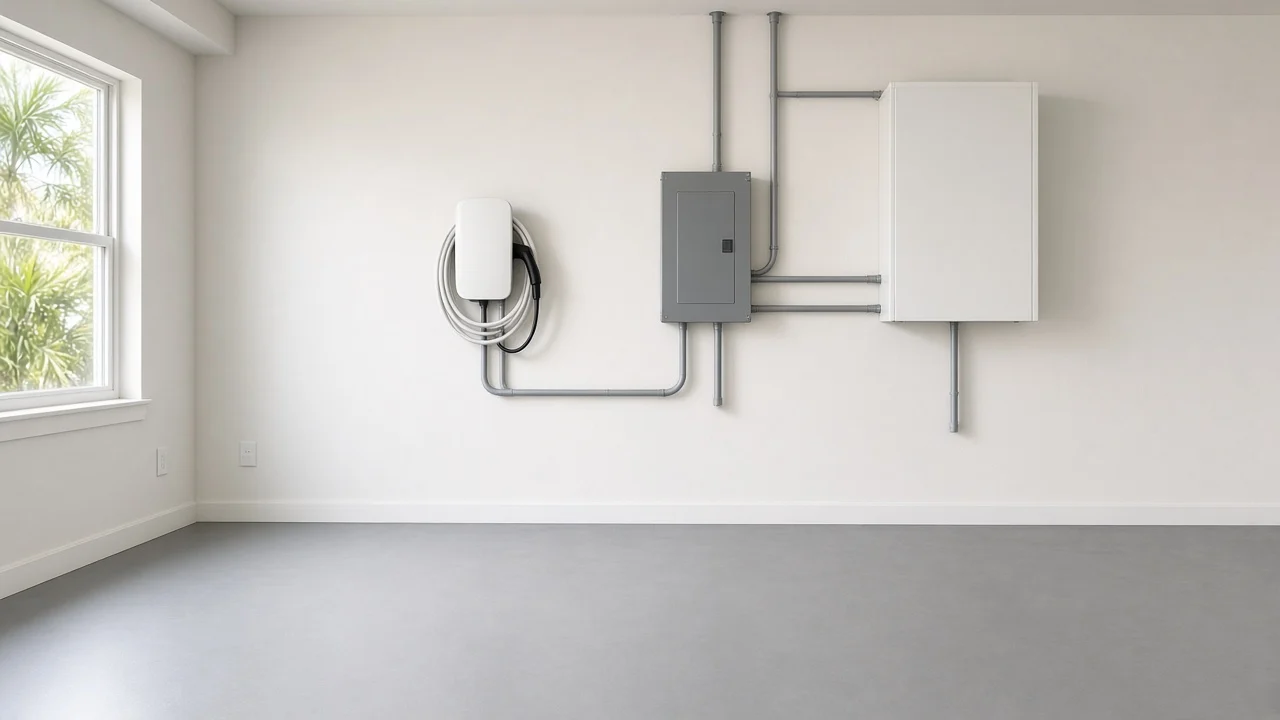
Battery backup installation in Garden Grove: A list written at the kitchen table
Median age in Garden Grove is about 52.0 years. ACS 2020 through 2024 puts the pocket at about 637 people and 314 housing units. About 79 percent of occupied units are owner-occupied, and almost none sit empty as seasonal stock. This is a year-round pocket, often with households that want a calm, written plan, not an app they have to relearn during an outage.
We sit at the table, or we build the list by phone and mail a draft back, and we write what must stay on in the words you already use: fridge, bedroom lamp, medical device, internet, garage opener if it matters. Comfort loads come last. The printed list stays on the fridge or in a drawer by the door. SPAN, if it is in the plan, follows that same order when it sheds.
Inland garage heat, and a late-1990s can
This pocket is inland, not on the Gulf. A garage wall can still run hot, and a cabinet needs shade, working space and a door that can open without hitting a freezer or a lawn mower. We measure that before the cabinet is sent out. Median year built is 1998 or earlier. A builder can from that period may look orderly and still have no free space after a later addition. We open it. If the can has no legal room for the landing, we may install a new board or SPAN.
Census tables show electricity as the heat source in about 93 percent of homes here. That fact belongs in the year-round list. It does not mean the cabinet can heat the whole house. We will say what the list can honestly carry.
Who does which part
Battery hardware comes from a licensed partner. Our electricians choose the landing, install the electrical path, set SPAN if the job includes it, mark the circuits and run the test at an hour the household is actually home. You approve one scope. The work follows the adopted electrical code. Workmanship coverage on the landing we install is two years, or five years with Member Care.
The pocket is about 49 miles from the shop on Seminole Blvd, and the visit hour already includes the ride.
- Florida electrical contractor license EC13014717, licensed & insured
- Woman-owned business based at 6248 Seminole Blvd, Seminole FL 33772
- 2-year workmanship warranty, 5 years with a Member Care Plan
- SPAN Authorized Installer and Home Depot preferred contractor
- Open 24/7 for electrical emergencies: call or text (727) 476-7079
- Projects up to $2 million, with bonding up to $1 million
Credits are a review topic, not the list
A credit, if anyone asks, is a review item. It is not a reason to rewrite the must-run list. We are not the ones who file the return. Consult a tax professional; incentives can change.
Commissioning when someone is actually home
We do not prefer a midday test that the household will miss. We set an hour when the people who live with the list can walk through it, flip the named circuits, and see what stays on. The printed list is checked against the panel directory before we leave, so the words on the fridge match the breakers in the can.
How to begin
Phone (727) 476-7079 with a panel photo and a first draft of what must stay on. Prefer the request box up on this page? That message comes to the same shop. Housing figures are ACS 2020–2024 from the Census Bureau.
Large type, a mower, and a supper-hour test
The printed must-run list is often set in a large, plain type on purpose. It should be readable in a dim kitchen during an outage, without a phone flashlight and without a login. We match each line to a breaker name before we leave, so the fridge line on the paper is the fridge breaker in the can.
In the garage we measure more than heat. A mower, a freezer or a shelf can block a cabinet door on a tight inland wall. If the landing you hoped to use is already a storage wall, we say so and we pick a legal alternative with working space. The partner does not ship a box to a wall that cannot open.
The test hour is set for when the household is actually home, often near supper, so the people who will use the list can walk it with us. We would rather wait an hour than run a noon drill that no one can judge. After the test, the list stays on the fridge or in the drawer you chose, not only in our file.
Matching the fridge list to the can, line by line
Before we leave, we stand in the kitchen with the printed list and we stand at the can with the directory. Each line is read out loud. “Fridge” on the paper has to be the fridge breaker in the can. “Bedroom lamp” has to be the right lighting circuit, not a living-room res that also happens to be on. If SPAN is in the job, the shed order is read the same way, so the cabinet does not quietly keep a comfort load and drop a medical device.
Garage storage is a second walk, not an afterthought. We move a mower on paper, not with our hands, by asking what can be shifted for the month of the work and what must stay. If the only wall with space is also the wall with the hot afternoon sun, we look for shade or a baffle before the cabinet is sent out. Inland heat is enough of a problem without adding a blocked door.
The supper-hour test is written on the confirmation. If plans change, we move the hour. We do not convert it to a noon test just because we arrived early. The people who live with the list should be the ones who watch it work.
Dusk in the kitchen, and a door that must actually open
We like to finish the read-through before the kitchen gets dark, but we will wait for dusk if that is when everyone is home. The point is not our daylight. The point is that each line on the paper is matched to a breaker while the people who live there can still see and can still object. “That lamp is the hall, not the bedroom” is an easy fix at the can. It is a hard surprise during an outage.
The cabinet door is tested with whatever already lives in the garage: a mower parked where it always is, a shelf that no one wants to move, a freezer that must stay. If the door hits an object, the landing is wrong. We change the landing, or we get a clear plan for what will be shifted during the work month, before the hardware leaves the partner. Inland afternoon heat is noted too, because a metal door in full sun is a poor place to learn a system during a later outage.
A medical device, if you name one, is written with the same care as the fridge line, and it is tested. Comfort loads do not sneak ahead of it in the shed order. The supper-hour test exists so you can watch that order, not so we can leave early.
A walk from the porch chair to the garage latch
A typical first visit here starts on the porch, not in the truck. We sit long enough to hear how the house actually runs after dark: which night-light stays on in the hall, which stair lamp someone wants, whether a ceiling fan is comfort or a medical need, and whether the washer or dryer is ever essential. Those answers go on the paper in the same plain words you used, not in our shorthand.
From the kitchen we go to the thermostat, then to the garage latch. Inland afternoon sun can turn that latch too hot to hold, which is one more reason the cabinet should not live on a bare western wall if another legal wall exists. We note a spice shelf or a cookbook ledge only if that is where you want the printed list taped. We do not invent a spot. We use the one you already glance at every day.
If a hearing of rain on the metal garage door is how you already know a storm has arrived, say so. That habit can remind a household to check the printed list when the lights flicker. It is not equipment we install. It is a cue we can write into the packet in one sentence, next to the shop number (727) 476-7079.
Hall night-lights, a cookbook ledge, and a latch too hot to hold
A hall night-light can matter more than a living-room lamp in this pocket, especially in a household that is up at odd hours. If you name it, it goes on the paper. The cookbook ledge, if that is where the list will be taped, is measured only so the sheet will actually fit and will not droop into a burner or a kettle. We are not rearranging the kitchen. We are giving the list a home you already look at.
A garage latch that is too hot to hold at 4 p.m. is a clue about the wall. If that is the wall someone wanted for the cabinet, we say why a shadier legal wall is kinder to hands and to the hardware. The supper-hour test, the printed type, and that cooler latch should all be easy to live with later, not only impressive on install day.
Odd hours, a kettle, and a shadier legal wall
Odd hours in a household change the list. A night-light in the hall may matter more than a lamp in the living room, and a ceiling fan may be comfort or a real need. We write the difference in your words. A kettle on the cookbook ledge is why we measure the sheet, so the paper does not droop into a burner. The list should live where you already glance, and it should not become a fire hazard.
A shadier legal wall is kinder to hands when a garage latch is too hot at 4 p.m. If that cooler wall also has working space and a door that clears the mower, we take it. The cabinet should be something you can open during a later outage without flinching from the metal.
We also ask about a porch step that gets slick in rain, a dog run that crosses the garage, and a freezer already humming in the corner. Each of those can change the landing or the list. A slick step is a courtesy note for the test hour. A dog run may mean we stage tools on the other side of the drive. A humming freezer may be a comfort load or a must-run, and we will not guess which.
A dog run, a slick porch step, and a humming corner freezer
A dog run that crosses the garage may push tool staging to the other side of the drive, and a porch step that gets slick in rain may move the test hour to a drier window. We write both if they are real. A freezer already humming in the corner is named as must-run or as comfort, never as a guess. The printed list, the cooler wall, and those three lot notes should make the later outage feel planned, not improvised.
We also ask whether a folding chair on the porch is where someone will sit with the list during a long outage. If it is, we make sure the type is large enough to read there at dusk, and we make sure the packet is not locked in a truck when that chair is the workstation.
Paint cans, a bicycle, and a softener brine tank
Paint cans stacked near a hoped-for landing are a fire and a space problem. We ask them to be moved for the work month, and we will not set a cabinet in a cluster of solvents. A bicycle, a set of golf clubs, or a brine tank for a water softener can also steal the door swing. If those objects live there every day, the landing is wrong unless there is a written plan to park them elsewhere. We would rather change the wall than pretend the garage will stay empty after we leave.
Garden Grove battery questions
Why start at the kitchen table instead of in the garage? The list has to be written in words the household already uses. The garage comes next, once the list is on paper and we can match it to a legal landing.
Who supplies the cabinet? The hardware is furnished by a licensed partner. Our electricians land the path, set SPAN when it is in the plan, and test the list.
Can SPAN follow the written order during an outage? Yes, when SPAN is part of the job. We set the shed order from the kitchen-table list and we test it with you watching.
Will the cabinet heat the whole house? Not by default, even though many homes here use electricity for heat. We say what the list can carry, and we will not promise whole-house heat the cabinet cannot support.
Do incentives change the must-run list? No. The written list is not rewritten to chase a credit. Consult a tax professional; incentives can change.
When do you run the test? At an hour the household is actually home, so the people who will use the list can walk through it with us.
How far is the pocket from Seminole? Count about 49 miles from 6248 Seminole Blvd; the arrival window already has that ride in it.
Related: home battery backup across Tampa Bay · SPAN smart panel installation · solar electrical work in Garden Grove · generators in Garden Grove. Nearby: battery backup in Bayport · battery backup in Weeki Wachee Gardens · battery backup installation in Bradley Junction · battery backup installation in Kathleen · battery backup installation in Medulla · battery backup installation in Mulberry · battery backup installation in Fuller Heights.