
Tired of rolling a portable down a Bradley Junction drive every week just so the neighbors can hear it exercise? Generator installation in Bradley Junction starts from this: drive every week just so the neighbors can. That weekly ritual is often how this conversation starts. Keywest Lights & Electric is a woman-owned shop licensed EC13014717. We look at the portable you already use, open the service, and plan a legal transfer and a pad that fits this small Polk hamlet. Call or text (727) 476-7079.
Request a generator quote in Bradley Junction
Tell us about the property and what you want to keep running. We reply with next steps and a time for the site visit.
Alongside this work, see also battery backup installation, and solar installation.
Call or text (727) 476-7079 · open 24/7 for emergencies · request a quote online
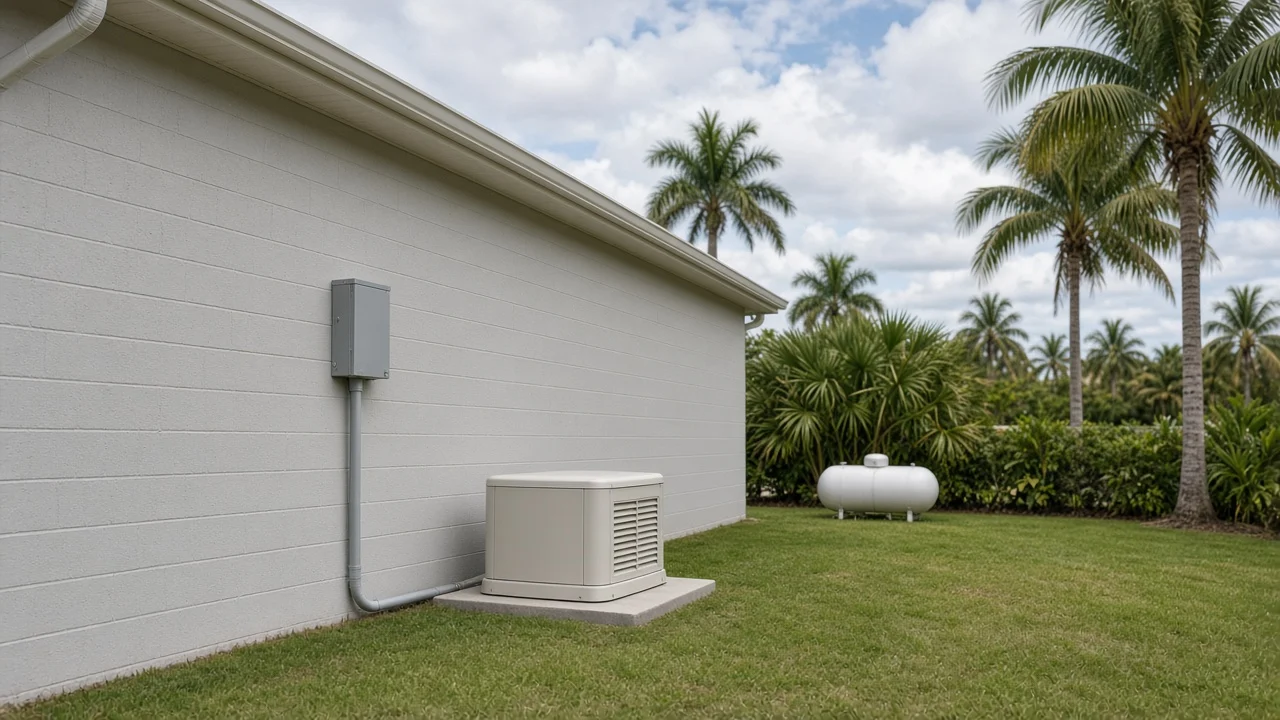
Generator installation in Bradley Junction: The weekly portable, heard over the fence
Owners here often already have a way to cope. A portable comes out on a schedule, a cord snakes to a dryer outlet, and the weekly run tells the whole street that the engine still starts. That habit tells us what you are trying to keep on: a fridge, a well, maybe a window unit. It also tells us what is not safe yet. A dryer outlet is not a transfer. A cord across a yard is not a plan we will leave in place.
We start by watching how you already handle an outage, or by walking through that routine with you. Then we open the can. The standby set, the transfer and the pad have to replace the routine, not copy its shortcuts.
A 1970-or-earlier service in a 631-person hamlet
Bradley Junction is a Census-defined community in Polk County. ACS 2020 through 2024 lists about 631 people and 276 housing units. About 82 percent of those units are detached houses, and about 86 percent are owner-occupied. The seasonal share is effectively zero, so this is a year-round hamlet, not a cottage town. Median year built is 1970 or earlier. Median age is about 36.6 years, which often means households that are at work during a weekday visit.
A service from 1970 or earlier may be tight, mislabeled or already full of tandems. We still open it. Some older boards have been kept clean and can accept a transfer with room to spare. Some cannot. If the interior is too tight, we may replace the can or use SPAN so the transfer and later circuit control have a legal home. The look of the house from State Road 37 does not decide that.
Arrival on State Road 37
The hamlet sits along State Road 37, south of Lakeland and near Fort Meade, in a part of Polk County long shaped by phosphate work. We do not need a company name to plan the visit. What we need is a shoulder that can hold a truck and a path that does not cross a drain field or a septic lid. The confirmation names where we will park and how we will keep the narrow frontage clear.
Because many households here are out during school and work hours, we ask whether a mid-morning arrival actually has someone home to show us the well, the shop and the portable’s usual spot. If the only person who knows the routine is back after 5, we would rather set that hour than guess at a pad location.
- Florida electrical contractor license EC13014717, licensed & insured
- Woman-owned business based at 6248 Seminole Blvd, Seminole FL 33772
- 2-year workmanship warranty, 5 years with a Member Care Plan
- SPAN Authorized Installer and Home Depot preferred contractor
- Open 24/7 for electrical emergencies: call or text (727) 476-7079
- Projects up to $2 million, with bonding up to $1 million
Drain fields, setbacks and a legal pad
A legal pad is not “wherever the portable already sits.” We measure clearances, look at the fuel path, and stay off drain fields, lids and the dry well you may not have marked. If the usual portable spot is too close to a window, a property line or a lid, we pick a different landing and we write down why. The set has to be able to exercise without becoming a new weekly complaint over the fence.
Brand choice stays off the first clipboard. We design the transfer, the service work, the pad and the start-up. You are not asked to accept a model name just to book the walk.
Transfer, SPAN and what the portable never had
A standby plan needs a legal transfer, a shutoff and a directory that matches the house. If a well or a small shop sits on a long feeder, we trace that run and we say whether it can be on the set. A portable cord never did that work. SPAN is useful when you want to choose which circuits stay on during a run, or when the existing can is already out of spaces. It is not required on every Bradley Junction job.
We follow the adopted electrical code, pull the required permits, and meet the inspection. Fuel lines, clearances and the exercise schedule are part of the same packet, not an afterthought on the last day.
Commissioning that includes the well, if you have one
We do not call the job finished when the engine starts. We transfer the house, we watch the fridge, and we watch the well or the shop circuit if those were in the plan. We set an exercise window you can live with on a small street, and we leave the directory and the shutoff steps in a labeled sleeve. Labor on our electrical portion is warranted two years, and five years if you add Member Care.
The shop at 6248 Seminole Blvd sits about 49 miles from this hamlet. We fold that ride into the hour on the card, and we try to finish the walk and, on a later date, the commissioning so a loose end does not force an extra trip.
How to start
Call or text (727) 476-7079 with a photo of the panel, a note about the portable you already use, and whether a well or a shop needs to stay on. If you prefer a web form, use the request box near the top. Head counts and housing stock are ACS 2020–2024 figures from the Census Bureau.
Oil stains, sandy shoulders and a better pad
The weekly portable often leaves a faint oil stain or a worn patch of grass. That mark is a clue, not a final landing. If the stain sits on a drain-field line, too close to a window, or in a place where State Road 37 traffic would pin a service truck, we pick a different pad and we explain the move. A legal landing that is ten steps farther from the old portable spot is still the right landing.
Sandy shoulders along this part of Polk County can look firm in a dry week and soft after rain. We note that in the first walk so a later pour or a pad setting is not a surprise. We also note culverts, a mail truck’s usual pull-off, and whether a school-hour bus makes a mid-afternoon arrival wiser than a late-morning one.
The exercise window should not recreate the old weekly complaint over the fence. If the portable was always run on Saturday morning, and that already bothers a neighbor, we do not copy that hour just because it is familiar. We set a window you can live with on a 276-unit hamlet street, and we write it into the sleeve.
What we write after the first walk on State Road 37
The first walk produces a short field sheet: where the portable now lives, where the stain is, where the drain-field lids are, and where a truck can sit without slipping off a sandy shoulder. We also write who knows the well and who will be home for commissioning. That sheet is what the later pad plan is built from, not a memory of the visit.
If a shop or a well house has its own small can, we open that too. A mislabeled spare in a shop can hide a freezer or a compressor. Those loads either belong in the transfer plan by name, or they stay off the set on purpose. We will not discover them after the pad is already poured.
The sleeve at the end holds the directory, the shutoff steps, the exercise window and a copy of that field sheet. If a later visit happens years from now, the next crew should be able to see why the pad sits where it sits, even if the old portable stain is long gone.
Commissioning notes that stay with the pad
On commissioning day we record the exercise window, the fuel-path clearances, and whether the well or the shop actually came up on the first transfer. If the well needed a second start, that fact goes in the notes. A later visitor should not have to rediscover it. We also record where the service truck sat on State Road 37 frontage, because a soft shoulder after rain may force a different angle next time.
The old portable can be unhooked and stored only after the standby path has been tested. We will not leave a house between two half-finished systems. If the portable has to remain as a temporary backup for one more night, we say how it may be used and how it may not, then we come back to finish. The field sheet, the sleeve and the pad belong together when we close the job.
School-bus hours, culverts, and a portable that stays parked until the test is done
School-bus hours on State Road 37 can pinch a mid-afternoon arrival or help it, depending on the stop. We ask. Culverts and mail-truck pull-offs also belong on the first field sheet, because a service truck that slips off a sandy shoulder is a delay we can avoid with one sentence. The commissioning notes record which pull-off actually worked.
The portable stays parked, or stays clearly temporary, until the standby path has transferred and the named loads have been watched. We will not leave a half-finished house that could be run two ways by mistake. If one more night on the portable is truly needed, the limits are written, and the return visit is set before we leave the hamlet.
Mail trucks, bus stops, and one more night on the portable
A mail truck already has a favorite pull-off on some of these frontages. We do not take it if we can help it, and we do not block it if we must share the shoulder. A bus stop works the same way. The field sheet’s note about school-bus hours is for courtesy as much as for our arrival. Commissioning should not turn a hamlet morning into a jam.
If the portable is allowed one more night, the written limits are simple: where it may sit, what it may feed, and when we return. We do not leave a verbal exception. The standby path is the path we want in use, and the portable is a short, named exception or it is parked for good.
A jammed shoulder, a verbal exception we will not allow, and a parked portable
A jammed shoulder at bus time is a courtesy problem and a safety problem. The field sheet’s note about the mail truck and the bus stop is there so commissioning does not create that jam. If we must share the pull-off, we share it briefly and we leave it clear.
A verbal exception for the portable is not an exception we will allow. One more night, if it is truly needed, is written: where the portable may sit, what it may feed, and when we return. Otherwise it is parked for good, and the standby path is the only path in use when we close the hamlet visit.
Sharing the pull-off, briefly, then leaving it clear
If we must share a mail-truck pull-off, we share it briefly and we leave it clear. Commissioning is not an excuse to occupy a hamlet shoulder through a bus run. The written portable exception, if there is one, ends on a date. After that date the portable is parked, and only the standby path is in use.
Tax breaks a generator will not get
A standby set in this State Road 37 hamlet does not qualify for solar tax breaks or clean-energy credits. Those rules are written for solar equipment, not a fuel-burning unit that replaces a weekly portable. Consult a tax professional; incentives can change.
Bradley Junction generator questions
Can the new plan use the same spot as the portable? Only if that spot is legal for a pad. If it sits on a drain field, too close to a window, or in a neighbor’s ear, we pick a different landing and we write down why.
The panel is from around 1970. Is that a stop? No, but it is a reason to open the can. A tight or mislabeled board may need a replacement or SPAN before a transfer can land legally.
Will you choose a generator brand for me? No. The first visit is for the transfer path, the service, the pad and the start-up plan, not for locking a model name.
Can a well on a long run be on the set? Often, if we can trace the feeder and size the circuit. We will not assume a well is covered just because the portable used to run a nearby outlet.
When is commissioning actually finished? When the house has transferred, the named loads have been watched, the exercise window is set, and the sleeve is on site. A start-up alone is not the end.
How far is the hamlet from the shop? The hamlet is about 49 miles out from 6248 Seminole Blvd, and the hour we send already has that ride inside it.
Why do you ask about weekday work hours? The median age here is about 36.6, and many households are out during a mid-morning window. We would rather meet the person who knows the well and the portable than guess at a pad.
Do generators qualify for a tax credit? No. A fuel-burning standby set does not qualify for solar tax breaks. Consult a tax professional; incentives can change.
Related: generator installation across Tampa Bay · SPAN smart panel installation · solar electrical work in Bradley Junction · battery backup in Bradley Junction. Nearby: generators in Mulberry · generators in Medulla · generator installation in Garden Grove · generator installation in Kathleen.