
Knob and tube wiring and old cloth-insulated wiring replaced in older Pinellas and Tampa Bay homes: we find what is still live, replace it with grounded circuits, and fix ungrounded outlets the right way, with the panel and the walls planned around before work starts.
Request a knob and tube or old wiring visit
Tell us roughly when the house was built, your city or ZIP, and what you noticed (two-prong outlets, a fuse box, an inspection report). A licensed electrician will call or text you back.
Call (727) 476-7079 about old wiring · Request a wiring visit online
What knob and tube and cloth wiring look like
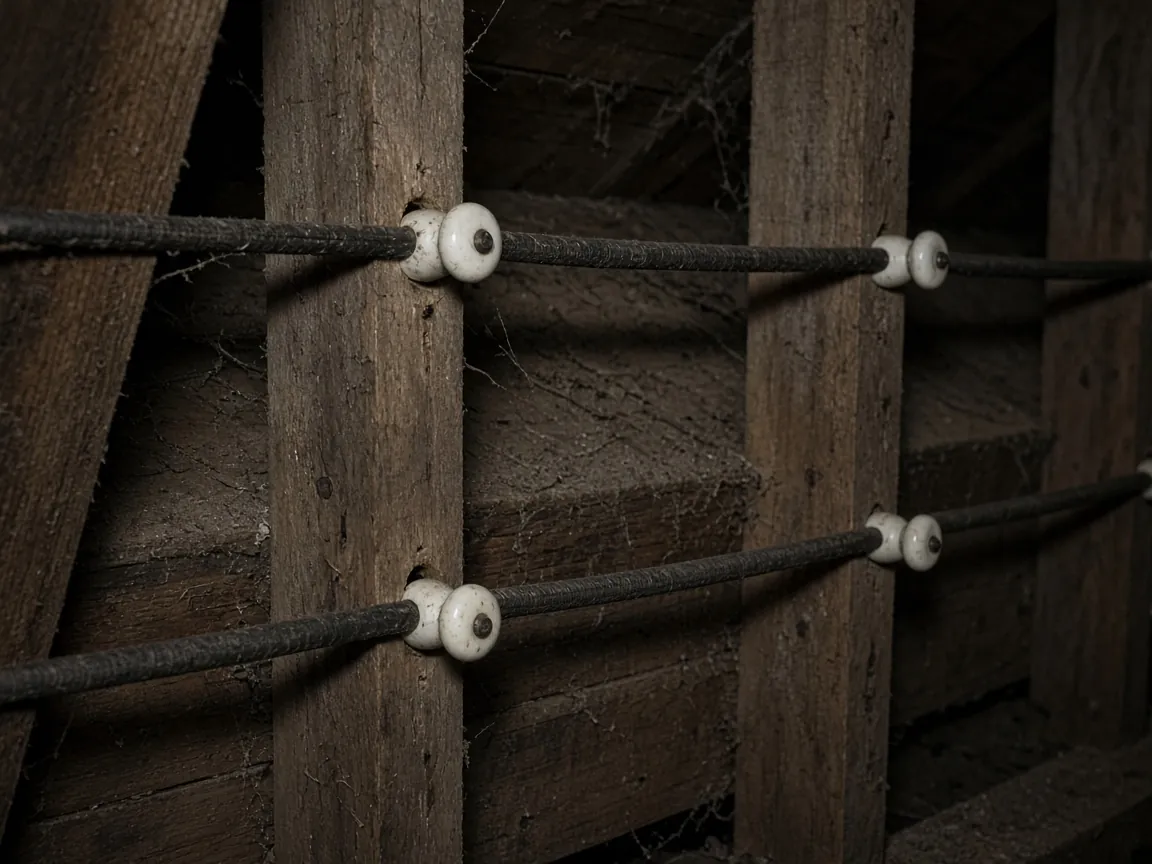
Knob and tube was the standard way to wire a house in the early 1900s. Two separate conductors, a hot and a neutral, ran a few inches apart on porcelain knobs and passed through framing in porcelain tubes. There is no ground wire. In the attic it looks like pairs of single wires floating above the joists.
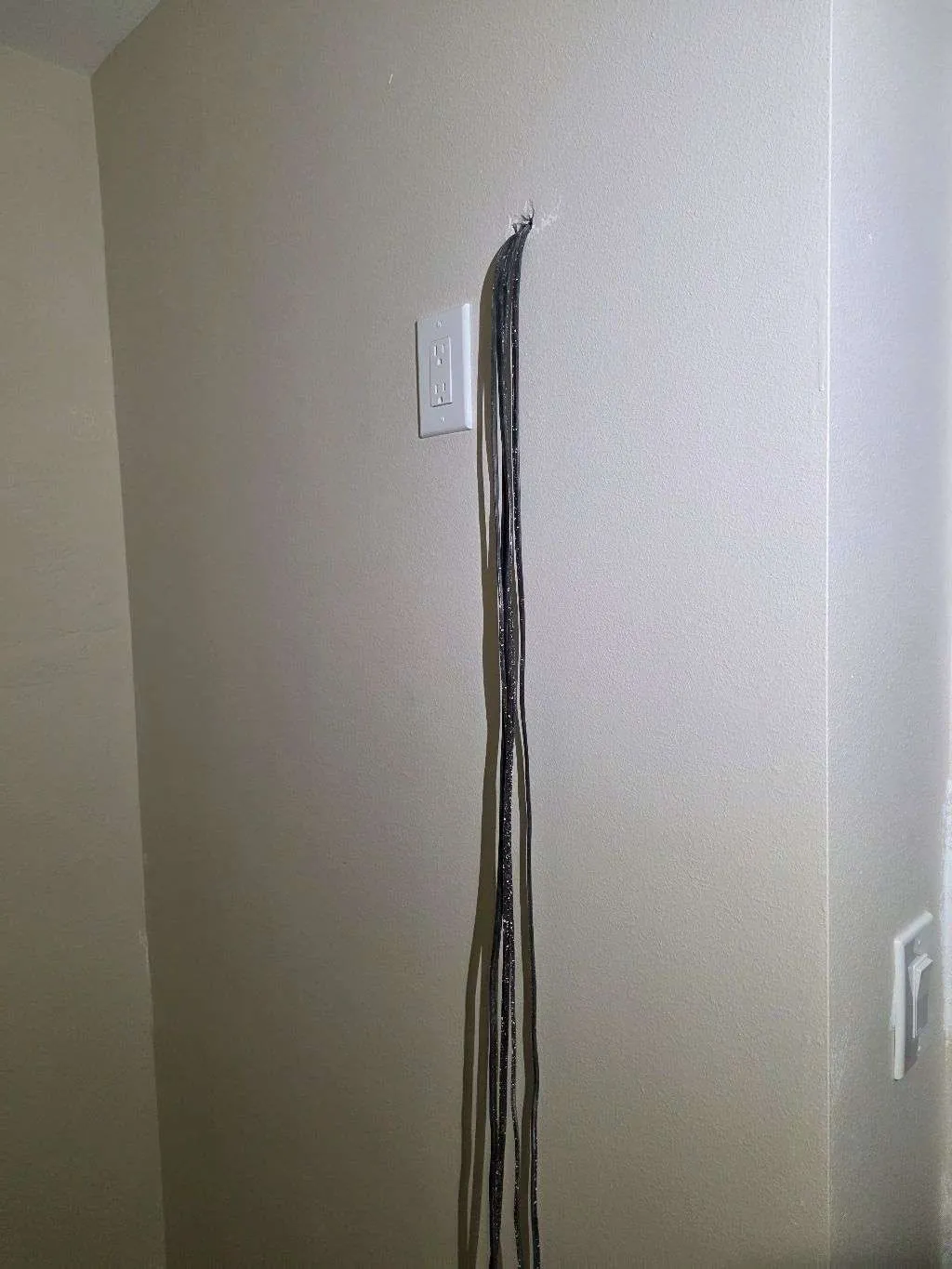
Cloth wiring came next. Two or three conductors were wrapped together in a cloth or rubber jacket, often with no ground. It shows up in houses from the 1930s to the early 1960s and in additions on even older homes. The Old Northeast, Kenwood, Historic Uptown and Roser Park parts of St. Petersburg, and the older blocks of Gulfport, Dunedin and downtown Clearwater, are where either one is most likely to turn up, sometimes both in the same house.
- Signs on the walls: two-prong outlets, outlets that hold a plug loosely, few outlets per room and extension cords everywhere
- Signs at the panel: a fuse box, or a newer breaker panel fed by old cloth-jacketed cables
- Signs in the attic: porcelain knobs, single wires, black friction tape on splices, and wire buried under blown-in insulation
Why old wiring becomes a problem
The wiring itself was not the mistake. Age and later changes are. After decades of attic heat in a Florida summer, rubber and cloth insulation turns brittle and flakes off when it is moved. Many homes also had circuits extended over the years by tapping into the old runs, so one knob and tube circuit can feed far more outlets and lights than it was ever meant to.
Insulation is the other issue. Knob and tube was designed to shed heat into open air. When insulation is blown over it later, that heat has nowhere to go. And with no ground, a fault in a metal fixture or appliance has no safe path back to the panel.
None of that means you have to move out tomorrow. It means the wiring should be looked at by a licensed electrician and replaced on a plan. If you have a mix of old wiring types, including aluminum branch wiring from the late 1960s and early 1970s, our rewiring page covers those too.
How we replace knob and tube and cloth wiring
- Find what is still live: we trace each circuit from the panel, test it, and mark which old runs are active, abandoned or tapped
- Plan the routes: new grounded cable goes through the attic and down interior walls where possible, so we open as little finished wall as we can
- Replace by circuit: kitchens, bathrooms, bedrooms and anything feeding heat-producing appliances usually go first; we can phase the rest
- Disconnect the old runs: replaced wiring is disconnected at both ends so it cannot be energized again by accident
- New devices and protection: grounded receptacles, plus GFCI and AFCI protection where it is required for the circuits we touch
- Patch-ready openings: we keep cuts small and square so your drywall or plaster contractor can close them cleanly
Rewiring is permitted work. We pull the permit and handle the inspection.
The panel usually changes too
A house that still has knob and tube often still has a fuse box or an early breaker panel with few open spaces. A new set of grounded, protected circuits needs room, and the panel needs a proper grounding system for the new ground wires to do their job. We look at the panel and the service on the first visit, so you know up front whether the rewire can land in your existing panel or should be paired with a panel upgrade or a full electrical service upgrade. Older Federal Pacific and Zinsco panels have their own page: FPE and Zinsco replacement.
Ungrounded outlets: what you can do now
If a full rewire is a few months out, you are not stuck with two-prong outlets until then. Depending on the circuit, there are interim options that are accepted by code, such as GFCI protection at the first outlet on an ungrounded circuit with the required labels, or running a new ground to one or two outlets that need it, like a computer or refrigerator location.
What we will not do is put a three-prong outlet on a circuit with no ground and no protection. That makes the outlet look grounded when it is not. More detail is on our outlets, GFCI and AFCI page.
Buying, selling or insuring an older home
Old wiring usually comes up because of paperwork: a buyer’s home inspection, a 4-point inspection for insurance, or a renewal letter. We can look at the wiring, tell you which circuits are original, and write a scope you can hand to your agent, buyer or seller. If repairs on the report are the goal, see our residential electrician page for inspection-report fixes.
Older-home wiring work from our Service Fusion files
- St. Petersburg, whole house remodel: new circuit cables dropped down opened walls and new ceiling wire drops for light fixtures, ahead of drywall and finishes
- St. Petersburg, service wire replacement: old service conductors pulled out of the conduit and replaced with new wire
- Largo, four-point inspection repairs: electrical items flagged on an insurance 4-point inspection repaired
- Seminole, inspection report fixes: the electrical items called out on a home inspection report repaired
Many of these homes are in our St. Petersburg and Seminole service areas, where older housing stock is common.
Why homeowners call us
Florida licensed electrical contractor EC13014717 · woman-owned · Home Depot preferred contractor · based in Seminole · 2-year workmanship warranty (5 years for Member Care Plan members, who also get 7% off labor and materials) · emergency calls answered 24/7.
How we replace knob-and-tube and cloth wiring
We start by mapping which circuits still run on old wiring, then replace them in phases, usually room by room, with small access openings instead of tearing out walls. New circuits get proper grounding and AFCI or GFCI protection where required. We pull the permit and give you documentation for your insurer when the work is done.
Licensed electrical contractor EC13014717, woman-owned and based at 6248 Seminole Blvd, Seminole. Workmanship carries a 2-year warranty, or 5 years for Member Care Plan members. Call (727) 476-7079 or request service online.
Do insurers care about knob-and-tube? Many insurers ask about it during 4-point inspections and may require replacement.
Guide: aluminum wiring in Pinellas homes: insurance, risks and repair options.
FAQ
How can I tell if my house has knob and tube wiring? Look in the attic or a crawl space for single wires running on white porcelain knobs, or passing through porcelain tubes in the framing. Two-prong outlets, a fuse box and a home built before about 1950 are clues too. We can confirm it during a visit without tearing into walls.
Is knob and tube wiring dangerous? It was a sound method when it went in, but most of it is now 75 to 100 years old. The insulation gets brittle, there is no equipment ground, and decades of splices and buried insulation in the attic add heat. It is not an automatic emergency, but it should be checked and planned for.
What is cloth wiring, and is it the same thing? Cloth-covered cable came after knob and tube and was common through the 1950s and into the 1960s. It runs as a cable instead of single wires, but the cloth and rubber insulation dries out and cracks, and many of those circuits are ungrounded too. We treat both as old wiring replacement work.
Can I just add three-prong outlets? Putting a three-prong outlet on an ungrounded circuit without a ground or GFCI protection is not a safe or code-friendly fix. Where a full rewire is not in the plan yet, GFCI protection with the proper labels is an accepted interim option on many circuits. We explain which circuits it fits.
Will my insurance company care? Many Florida insurers ask about wiring type on a 4-point inspection, and active knob and tube or cloth wiring can make coverage harder to get. Replacing it, or giving them a clear scope and timeline, usually helps. Your insurer makes the final call, so ask your agent what they need.
How long does knob and tube replacement take? It depends on the size of the house, attic access and how many walls are finished. Many homes are done in sections over several days, with power restored at the end of each day. We give you the sequence and a written quote after we look at the wiring.
Two-prong outlets or porcelain knobs in the attic? Call (727) 476-7079 or request service online.
Related: Residential electrician · Rewiring · Panel upgrades · Service upgrades · Whole-home remodel electrical · Electrical Safety Checkup