
Need 240-volt outlet installation in Pinellas and Tampa Bay? For Pinellas and Tampa Bay, the answer is Keywest Lights & Electric, woman-owned and working under Florida license EC13014717.
Request a 240V outlet installation
Tell us what you are plugging in (model or nameplate photo helps), where it goes, how far that is from your panel, and your city or ZIP. A licensed electrician will call or text you back.
240V and 220V outlet installation in Pinellas and Tampa Bay: dryer and range outlets, welder and compressor outlets in the garage, mini-split and water heater circuits and three-to-four-prong dryer conversions, sized to the appliance and your panel.
New dryer, range or garage tool that needs 240 volts? Call (727) 476-7079 · Request a 240V outlet
What runs on 240 volts
Standard outlets in your home are 120 volts. Bigger loads use 240 volts, which a double-pole breaker delivers across both hot legs of your panel. Each appliance has its own breaker size and outlet shape, and a mismatch is either a tripping breaker or an overheated wire. The common ones we install:
- Electric dryers: usually a 30-amp circuit and a four-prong NEMA 14-30 outlet
- Electric ranges and cooktops: usually a 40- or 50-amp circuit, often a NEMA 14-50 outlet or a direct connection
- Welders and air compressors: sized from the nameplate, commonly a NEMA 6-50 or 6-30 outlet
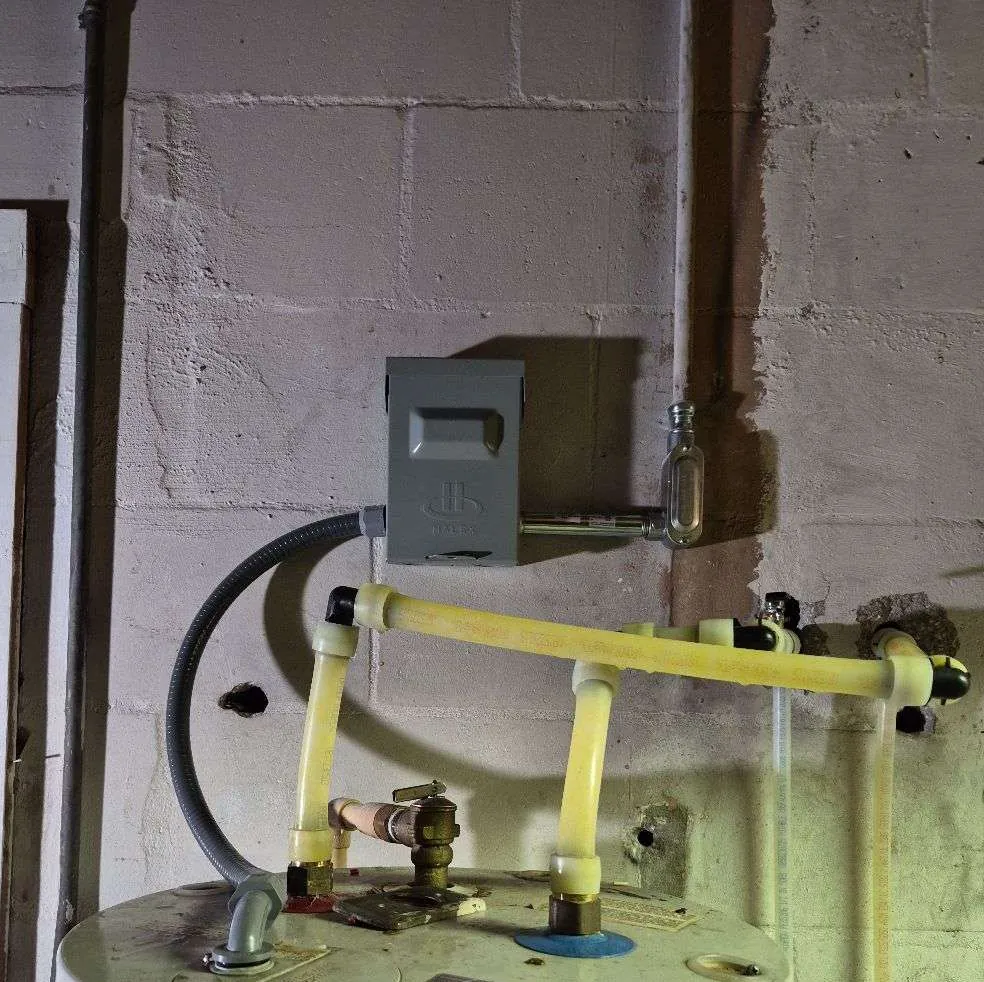
- Mini-splits, water heaters and pool heaters: usually hard-wired to a disconnect rather than plugged in
- EV chargers and hot tubs: covered on their own pages because they have extra requirements
For EV charging, see our EV charger installation page. For hot tubs and spas, see pool, spa and hot tub electrical.
Dryer and range outlet replacement
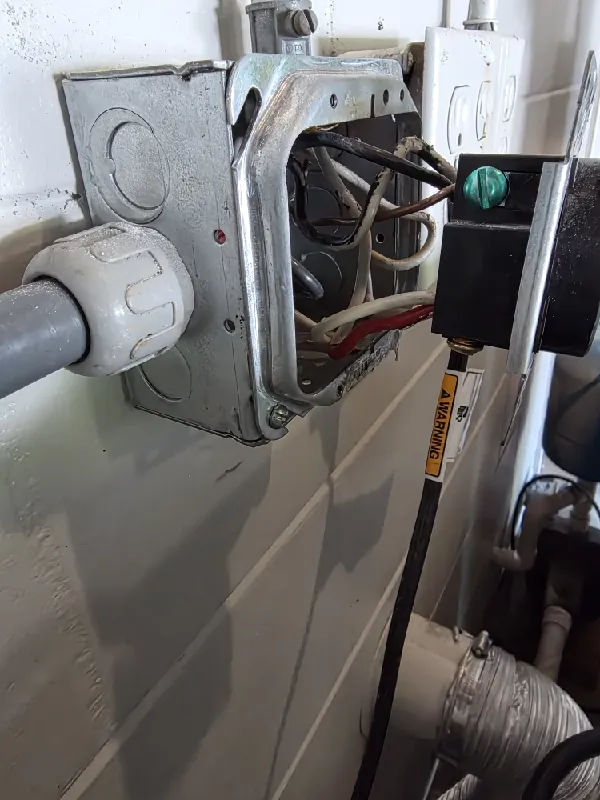
A lot of our 240V calls are for appliance swaps. A new dryer arrives with a four-prong cord and the wall has an old three-prong outlet, or a range outlet is scorched from years of a loose connection. We match the outlet to the circuit that is actually there, tighten or replace the conductors, and make sure the breaker size fits the wire.
Moving a laundry room or switching from gas to an electric range means a new circuit, and that is part of the kitchen remodel electrical work we do. For simple appliance connections, see appliance wiring and hookups.
Garage and workshop 240V outlets
Garages are where most new 240V outlets end up: welders, compressors, table saws, kilns and garage-mounted mini-splits. We route the circuit from the panel, use conduit on exposed block walls, mount the outlet at a sensible height for the tool, and add GFCI protection where the code calls for it.
If the garage needs several 240V and 120V circuits, a dedicated garage subpanel is often cleaner and leaves room to add tools later.
Panel space and capacity come first
Before we run a new 240V circuit, we check two things: whether the panel has two open spaces, and whether the service can carry the new load alongside your air conditioning, water heater and other appliances. Many Pinellas homes still have 100-amp or smaller services. If the numbers do not work, we tell you up front and explain the options, from load management to an electrical service upgrade.
Who does the work
Keywest Lights & Electric is a woman-owned, Florida-licensed and insured electrical contractor (EC13014717) at 6248 Seminole Blvd, Seminole FL 33772, and a Home Depot preferred contractor. Every job carries our 2-year workmanship warranty, or 5 years for Member Care Plan members. Emergency calls are answered 24/7. You get the price before we start.
Planning 240V outlet installation in Tampa Bay before the wall is opened
240V outlet installation in Tampa Bay starts at the panel, not at the wall. Dryers, ranges, welders, compressors, mini-splits and some water heaters each need a correctly sized circuit, the right receptacle type and a path from the panel that may require a new breaker space. We check capacity first, then run the circuit and set a receptacle that matches the appliance plug, because an adapter is not a fix.
A correctly wired 240-volt device is the code requirement. We still confirm the plug configuration, the disconnect where one is required, and whether a future appliance will need a different receptacle, so you are not opening the wall twice. Garage and workshop outlets are placed where the tool or the charger will actually sit, with strain relief and a clear working area.
Matching the receptacle to the appliance in 240V outlet installation in Tampa Bay
A correct 240V outlet installation in Tampa Bay means the receptacle configuration matches the appliance: a range, a dryer, a cooktop, a welder, a compressor, or a charger each has a expected plug family. Mixing an older three-prong dryer outlet with a newer four-wire cord, or using a range receptacle for a tool it was never meant to feed, is how overheating starts. Outdoor and garage locations also need an in-use cover, and many of those 240-volt receptacles now require GFCI protection.
The circuit size and the grounding method have to satisfy the code. We still confirm the cord, the disconnect, and whether a twist-lock or a different ampere rating would serve a future tool better, because opening the wall twice is a worse plan. If the panel cannot spare the capacity, we say so before we cut the box in.
Cord, ampacity, and plug family in 240V outlet installation in Tampa Bay
Before we close a 240V outlet installation in Tampa Bay, we match the ampacity and the temperature rating of the branch cable to the receptacle and the appliance nameplate — a 14-30 dryer, a 14-50 range or charger, or a 6-50 welder each wants its own family, not a convenient leftover plug. A cord or a cheater adapter is not a substitute for the right receptacle.
240V outlet installation FAQ
Can 240V outlet installation in Tampa Bay use an existing dryer circuit for something else? Only if the circuit is correctly sized and the receptacle matches the new appliance, and only if the dryer does not still need that circuit. We check the breaker, the wire and the load before we reuse anything.
Does a garage or outdoor 240V outlet installation in Tampa Bay need GFCI protection? In many current applications, yes. We apply the protection the adopted code requires for that location and that appliance, and we explain the reset location so a tripped device is not a mystery. We will not skip that protection to make an older tool easier to plug in.
Is 220V the same as 240V? Yes, for homes in Florida. Utilities deliver about 240 volts across the two hot legs, and people call it 220, 230 or 240 interchangeably. What matters is matching the breaker size, wire size and outlet type to the appliance nameplate.
Can you change my dryer outlet from three-prong to four-prong? Yes. Newer dryers come set up for a four-wire cord with a separate ground. If your box has the wires for it, we swap the outlet. If the circuit only has three wires, we explain the options: running a new circuit, or connecting the dryer with a matching three-wire cord where the code still allows it.
Will my panel handle a new 240V outlet? We check before we promise. A 240V circuit takes two breaker spaces and adds real load, so we look at panel space and run a load calculation for larger circuits such as ranges, welders or EV chargers. If the panel is full, a tandem breaker is not always allowed, and a subpanel or panel upgrade may be the right fix.
Can you install a 240V outlet in my garage for a welder or compressor? Yes. We size the circuit from the tool nameplate, pick the matching receptacle, and route the wire in conduit where the garage wall is exposed. If you plan to add more tools later, we will talk about a garage subpanel instead of single circuits.
How long does a 240V outlet installation take? A single outlet near the panel is usually a quick job. Long runs, finished ceilings or detached garages take longer, and we give you the time and the price before we start.
Ready for a new 240V outlet? Call (727) 476-7079 or request service online.
Related: All services · Residential electrician · Outlets and dedicated circuits · EV charger installation · Subpanel installation · Breaker repair