
Flickering lights, outlets that barely hold a plug, and rooms that never seem to have enough power are more than daily annoyances. In many St. Petersburg and Tampa Bay homes, they are signs of outdated wiring that has not kept up with modern living. Air conditioners, computers, and kitchen appliances draw far more current than circuits designed decades ago. If you notice these problems, a licensed electrician from Key West Lights and Electric can inspect the system and explain what needs attention before a small issue becomes a safety risk.
Why old wiring still shows up around Tampa Bay
Pinellas County is full of bungalows, mid-century ranches, and waterfront houses built long before today’s electrical loads. Original cloth wire, ungrounded circuits, and small panels were normal when those homes went up. Florida heat, humidity, and salt air can also age insulation and connections faster than in drier climates.
Outdated wiring does not always fail overnight. It often gives warnings first. Learning those warnings helps you decide when to stop using a circuit and when to call a licensed electrician. You should not open the panel, replace service equipment, repair aluminum conductors, or remove knob-and-tube wiring yourself. Those jobs belong to a licensed professional.
10 signs of outdated wiring to watch for
Use this numbered list as a walk-through. You do not need tools. You are looking for patterns, not making repairs.
- Two-prong outlets. Two-prong outlets usually mean the circuit has no equipment ground. Many older homes still have them in bedrooms, hallways, and living rooms. Plug adapters do not add a real ground. A licensed electrician can test whether a ground exists and discuss safe options.
- Cloth wire behind covers or in the attic. Cloth-covered cable was common through the mid-twentieth century. The fabric jacket can dry out, crack, and leave the inner insulation brittle. If you see cloth wire while changing a cover plate or storing items in the attic, treat it as a sign that branch circuits may be past their useful life. Do not pull or splice it yourself.
- Fuses that blow or breakers that trip often. An occasional trip can mean one overloaded cord. Repeated trips on the same circuit, especially when you run a microwave, hair dryer, or window unit, often mean the wiring or the overcurrent device cannot handle today’s loads. Never replace a fuse with a higher rating. Have a licensed electrician find the cause.
- Flickering, dimming, or buzzing lights. Lights that pulse when the air conditioner starts, or fixtures that buzz and glow unevenly, can point to loose connections, undersized circuits, or worn switches. In older homes this is a classic warning, not just a bad bulb.
- Warm, discolored, or loose outlets and switches. Cover plates that feel warm, plastic that has browned, or receptacles that will not hold a plug are warning signs. Heat at a device often means a poor connection. Stop using that outlet and schedule an inspection. Do not keep adding adapters to “tighten” a worn receptacle.
- A burning smell or scorch marks. A hot, plastic, or fishy odor near an outlet, switch, or the electrical panel is not normal. Scorch marks on a plate or wall are even clearer. If a breaker is clearly labeled, you may switch that circuit off without removing the panel cover, then call a licensed electrician. Do not ignore a smell because it comes and goes.
- Extension cords and power strips used as permanent wiring. If every room needs a strip to run lamps, TVs, and chargers, the house likely lacks enough circuits and grounded receptacles. Cords under rugs and daisy-chained strips add fire risk. This is a layout problem that old wiring often creates, not a reason to add more cords.
- Lights that dim when large appliances start. A noticeable dip when the refrigerator or HVAC compressor kicks on can mean weak connections or a system that was never sized for modern equipment. Checking service capacity is not a DIY task. A licensed electrician should evaluate load and connections.
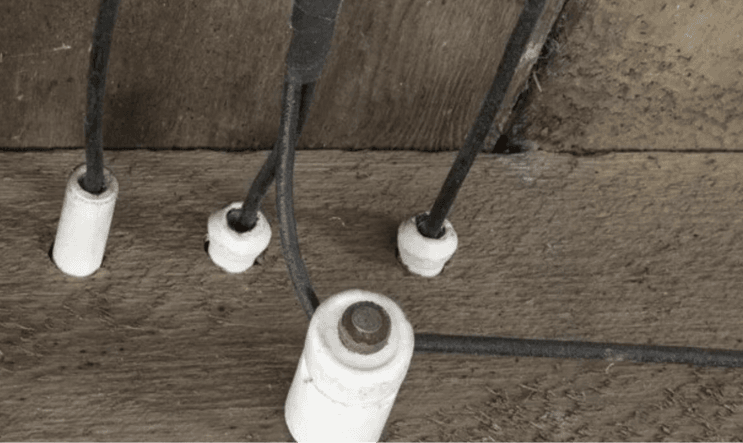
- Visible knob-and-tube or aluminum branch wiring. Knob-and-tube used ceramic knobs and tubes in attics and unfinished spaces. Some later homes used aluminum branch-circuit wire, often with a silver-colored conductor. Both need assessment by a licensed electrician. Do not wrap, splice, or “repair” these systems yourself.
- No GFCI protection in kitchens, baths, garages, and outdoors. Ground-fault protection was not part of older work. If bathroom, kitchen-counter, garage, and exterior outlets lack GFCI devices, the house does not match current safety practice for wet locations. A licensed electrician can add protection. You should not work inside the panel to do this.
A quick homeowner checklist
Before you call, walk the house and jot down what you see. This checklist keeps the conversation clear.
- Which rooms still have two-prong outlets?
- Have you seen cloth wire in the attic, crawl space, or behind a cover?
- Which breakers or fuses trip, and what was running at the time?
- Do any plates feel warm or look discolored?
- Are extension cords filling in for missing outlets?
- Do lights dim when the air conditioner or refrigerator starts?
- Is there a burning smell, buzzing, or scorch marks?
Tip from Key West Lights and Electric
Photograph two-prong outlets, cloth wire, and any discolored plates from a safe distance. Note which rooms lose power together. That information helps a licensed electrician plan testing. Do not remove the panel cover, twist aluminum splices, or disturb knob-and-tube runs while you wait.
What these signs usually mean
One two-prong outlet in a guest room does not automatically mean the whole house is unsafe. Several signs together matter more. Warm devices, odors, repeated trips, and visible cloth wire or aluminum conductors are reasons to stop using the affected circuit and get a professional look.
Old wiring can also limit how you live in the house. Home offices, extra refrigeration, EV chargers, and stronger air conditioning all need capacity and grounding that many original systems never had. An inspection tells you whether the issue is a few devices, a few circuits, or a broader update that only a licensed electrician should plan.
Insurance reviews and home sales often raise the same questions. Buyers and inspectors look for ungrounded receptacles, cloth insulation, and panels that no longer match the home’s load. Getting ahead of those findings is easier than rushing repairs under a contract deadline.
What a licensed electrician looks for
A thorough visit is more than a glance at the breaker door. The electrician will typically test receptacles for grounding and polarity, look at accessible cable in attics or crawl spaces, and note device condition. They may discuss whether GFCI or AFCI protection is missing in areas where it is now standard practice.
They will also look at how the home is used. A garage workshop, a guest suite, or a kitchen full of countertop appliances can overload circuits that were fine for a 1950s household. The goal is a clear picture, not a scare. You should expect plain-language notes about what is urgent, what can wait, and what must be left to licensed work.
Do not ask a handyman to “just swap the panel,” re-terminate aluminum, or take down knob-and-tube. Those tasks require a licensed electrician and, in many cases, permits and inspection. DIY work in those areas can create hidden faults that are harder and more expensive to correct later.
Coastal wear and older Florida houses
Salt air, moisture, and storm season add stress that inland wiring may not see. Exterior outlets, pool equipment, and garage receptacles take a beating. Corrosion at devices and fittings can show up as intermittent power or heat long before a wire is fully open.
After a storm, watch for new flickering, outlets that stopped working, or breakers that will not reset. Water in a device or panel is a licensed-electrician situation. Do not dry equipment with a household hair dryer or reset a breaker that trips immediately if you smell burning.
If you own a rental or manage a small commercial space in the same older building stock, the same signs apply. Tenants who rely on power strips, report warm outlets, or still have two-prong receptacles in living areas are describing the same underlying problem.
When to stop using a circuit
Stop using an outlet or switch that is hot, discolored, buzzing, or giving off an odor. Unplug cords from that device. If the breaker is labeled, you may switch that circuit off. Leave the panel cover in place. If you cannot identify the breaker, leave the area and call a licensed electrician rather than removing dead-front hardware.
Keep people and pets away from scorched plates. Do not cover a warm outlet with furniture and hope it cools down. Those are the moments when waiting overnight is a poor trade for a same-day inspection.
Schedule a calm, professional look
If several items on the list sound familiar, you do not need to guess which wire is at fault. A licensed inspection can confirm what you are seeing, separate urgent hazards from later upgrades, and map a safe path forward for an older Tampa Bay home.
Key West Lights and Electric serves homeowners and property managers in St. Petersburg, Pinellas County, and the Tampa Bay area. Call (727) 776-0718 or visit https://keywestlights.com/ to schedule an inspection or estimate. Bring your notes and photos. We will walk the house with you and explain the next steps in plain language.