
Looking for whole-house surge protection in Greenbriar? Whole-house surge protection in Greenbriar is a listed surge-protective device at the house cabinet on a 1960s or 1970s ranch. It is not a power strip. It is not a panel swap. It is not a generator. We match a listed SPD to the bus, we keep the leads short, we test the status window, and we leave the close-out with you.
Request whole-house surge protection in Greenbriar
Tell us what you need and where the work is. A licensed electrician will reply with next steps and a time to visit.
From the same shop we also handle commercial electrician, commercial generator installation, EV charger installation, generator interlock transfer switch, JellyFish lighting on the eaves, panel upgrades, permanent lighting, a battery backup system, solar wiring support, generator installation, 240v outlet installation, aluminum wiring repair, apartment multifamily electrical and appliance wiring hookup for Greenbriar homes.
Call or text (727) 476-7079 · open 24/7 for emergencies · request a quote online
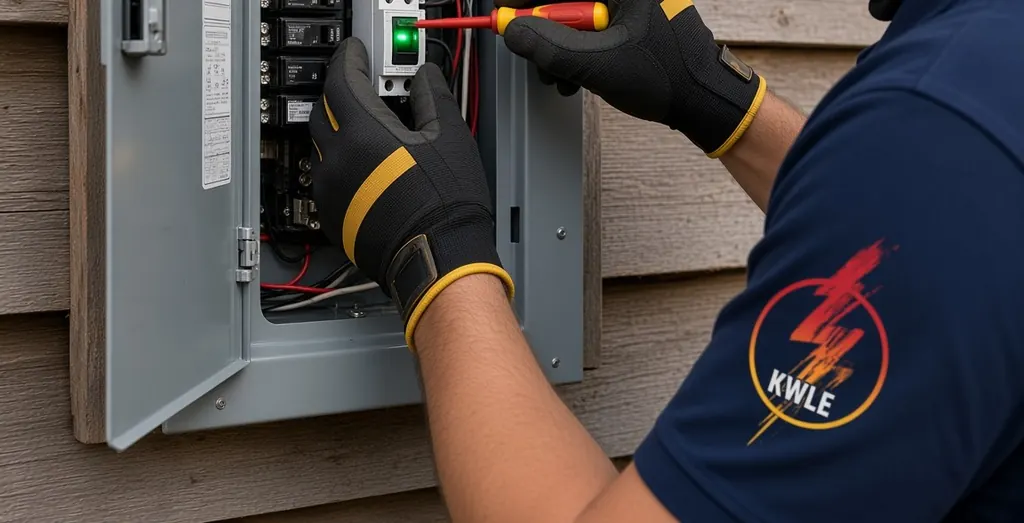
Whole-house surge protection in Greenbriar sits at the cabinet, not on a desk
A Type 2 unit is the usual fit at a finished ranch panel. A Type 1 option, if the product and the cabinet can take that location, is written as a separate item on the proposal. A plug-in strip at a desk is not this page. A tired cabinet that cannot accept the device is a reason to talk about a panel visit, not a reason to force a module onto a weak bus.
What we actually install and test
We photograph the interior only if the area is safe. We confirm the bus type and the space. We land the SPD as the product instructions require, with leads kept short. We check the status window or the indicator before we close the door. We do not invent a clamping number or a joule rating for this product.
After the status window is on
- Florida electrical contractor license EC13014717, licensed & insured
- Woman-owned business based at 6248 Seminole Blvd, Seminole FL 33772
- 2-year workmanship warranty, 5 years with a Member Care Plan
- SPAN Authorized Installer and Home Depot preferred contractor
- Open 24/7 for electrical emergencies: call or text (727) 476-7079
We walk you through the indicator. If a unit we landed loses its status window after the first storm season, call or text (727) 476-7079. Name the cabinet. Labor on the SPD is two years; a Member Care Plan extends that coverage to five.
What helps before we leave Seminole
A picture of the closed cabinet is useful. If you can safely open the door, a second picture of the interior helps. The street. Note whether a cabinet replacement is already on your calendar. Say who can meet us at the can.
A surge counter, when the product includes one, is left readable on the door or the module, not hidden behind a bundle of tails. A bus-adapter kit is used only when the maker lists that kit for this interior. A spare status-window cover and a spare locknut sit in the surge tote so the close-out is not held up by a missing piece.
Lead length is treated as part of the listing, not as a leftover slack loop. A long, coiled lead is not a better install. An unused knockout is closed with a listed plug. A communication or alarm contact, if the product has one, is landed only when you asked for that signal.
A transfer device already in the cabinet is checked so the SPD has a listed landing and room. A new transfer device is a separate conversation. A meter-socket product, if anyone has suggested one, is a different device, and we will say so rather than guess.
A small outdoor disconnect next to the cabinet, when the listing puts the SPD there, is mounted where it stays out of the weather as the product requires. We still write this as an inland ranch job. A spare MOV module of a frequent bus family sits in the surge tote when the maker sells a field-replaceable cartridge.
A listed two-pole breaker, when the SPD uses a dedicated breaker space, is labeled on the directory so a later ticket does not guess at the device. Lug screws on the module are tightened to the published mark and marked after the pass. A refrigerator branch and a condensing-unit branch stay on the directory, because those loads sit behind the SPD with the rest of the house.
A transient event can take out a status window even when the house is still running; we show you how to read that window so a later call is not a guess. A field-replaceable cartridge, when the maker sells one for this bus family, is noted on the close-out. An unused hub on the enclosure is plugged. We still do not invent a let-through figure or a joule number for the install.
A bonding jumper, when the product calls for one at the enclosure, is landed on the ground bar and not on a painted can wall. A directory sticker that says SPD is left next to the breaker or the module. A later service ticket can then find the device without opening every cover. An extra listed two-pole breaker of a frequent bus family sits in the surge tote when the SPD needs its own space.
A compressor or a well-pump branch is left on the paper map so you can see it sits behind the SPD with the rest of the house. A short bonding pigtail, when the enclosure needs one, is green-insulated and landed on the ground bar. An extra enclosure plug and an extra listed locknut stay in the surge tote through the handoff. We photograph the final status window for the close-out folder.
A concentric knockout is fitted with a listed reducer when the SPD nipple does not match the opening. A bushing protects the conductors at that knockout. A visual flag, when the product has one, is left unobstructed so a later glance at the door tells you the unit is still healthy. An extra reducer and an extra insulating bushing stay in the surge tote. The close-out folder gets the model, the bus family, and a date on the torque mark.
A thermal disconnector, when the product includes one, is internal; we do not add a homemade fuse in the SPD leads. A fork terminal or a two-screw lug is used only as the product allows. A window lens that has fogged is wiped so the flag stays readable. A can adapter, when the bus family requires one, is the maker’s kit, not a bent scrap of bus. An extra window lens and an extra fork kit, if the product uses one, stay in the surge tote.
A clamshell of spare ferrules and a small dielectric grease packet sit in the surge tote for lugs that call for them. Knockout edges are chamfered and deburred so the nipple does not cut a lead. A belleville washer, when the product uses one, is stacked as the sheet shows. An emery cloth is used only on a dirty lug face, never on a plated bus. Calipers confirm a nipple size when the stamping is worn. Threadlocker is used only if the maker calls for it. A headlamp stays on so the status flag is not read in shadow. A felt washer or a desiccant pack is not stuffed inside a live enclosure.
Common questions
How does a cabinet SPD differ from a strip or a UPS? Those sit at a desk or a workstation. This page is a listed SPD at the house cabinet that serves the branches from that can.
Can this be added if a cabinet replacement is also on the calendar? Yes, when the new cabinet is the right place for the SPD. If the current can cannot accept the device, we will say so and we will point to the panel write-up.
How do we get the SPD visit on the calendar? Send a picture of the cabinet. If you can safely open the door, a second picture of the interior helps. Call or text (727) 476-7079. Ask about the surge visit.
The drive from our shop at 6248 Seminole Blvd is about 13 miles. In Greenbriar we work along the Clearwater edge of the community, the Safety Harbor side and the Dunedin side. From here we also reach Palm Harbor, Safety Harbor, Clearwater, Oldsmar and Dunedin.
Up: Whole-House Surge Protection across Tampa Bay · For everything we do locally, see Greenbriar electrical service.
Nearby: Surge Protector For House Safety Harbor · Surge Protection Installation Tierra Verde · Whole House Surge Protection Dunedin · Whole House Surge Protector Clearwater
Call or text (727) 476-7079 for whole-house surge protection in Greenbriar, or book online. Business hours 7 AM–5 PM, weekend service, 24/7 emergency calls.