
Want solar installation in Zephyrhills North planned from a year of bills that includes the quiet months, on the building you actually have? That is how we start. Keywest Lights & Electric is a woman-owned shop licensed EC13014717. Our electricians name the building first, review the year of use, and handle the panel and electrical path. A licensed partner places the array. Call or text (727) 476-7079.
Request a solar quote in Zephyrhills North
Tell us about the property and what you want to keep running. We reply with next steps and a time for the site visit.
Alongside this work, see also generator installation, and battery backup installation.
Call or text (727) 476-7079 · open 24/7 for emergencies · request a quote online
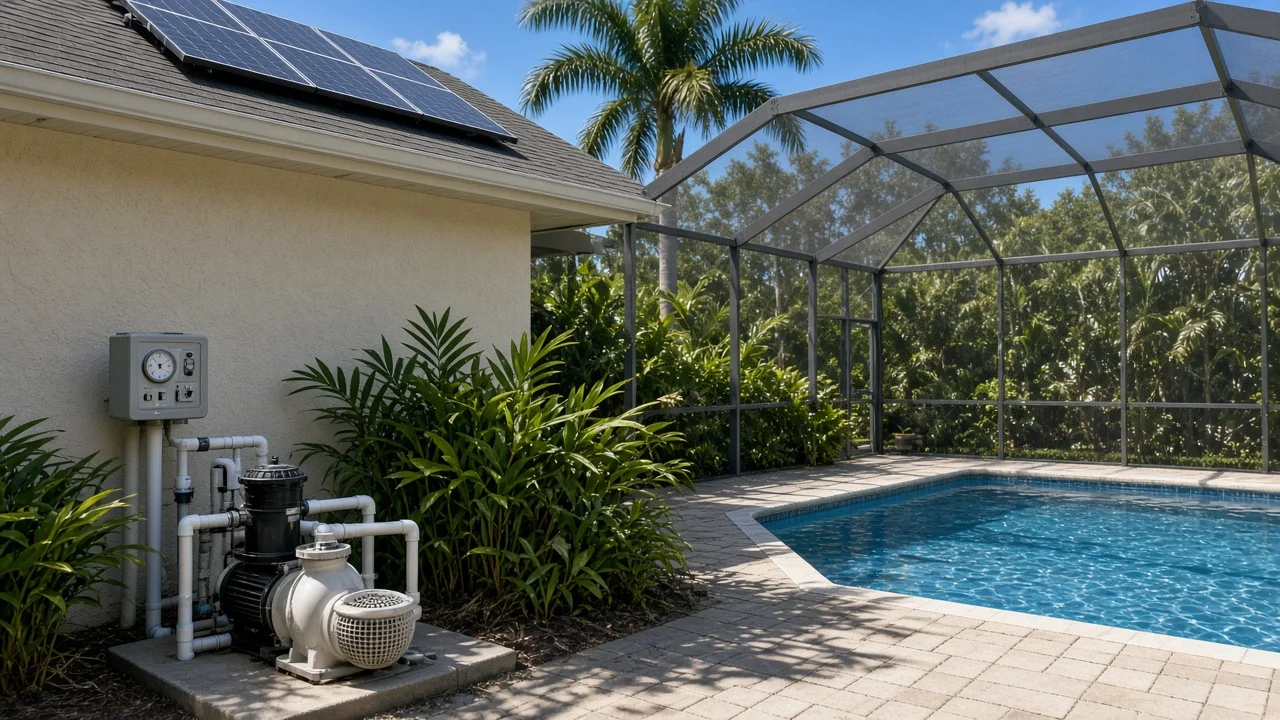
Solar Installation in Zephyrhills North With Quiet Months In The File
Zephyrhills North is a Census-defined community in Pasco County, just north of the city of Zephyrhills, not a copy of that city. ACS 2020 through 2024 lists about 2,831 people and 1,786 housing units. Detached houses account for only about 24 percent of the stock here, so an array drawn for a wide city-lot roof may not drop cleanly onto the building you have. We name the type first, then we talk about module count.
Owner-occupied units make up about 88 percent of the occupied stock. About 21 percent of units are seasonal. Median year built is 1983 or earlier. Median age is about 61.1. Those figures tell us many addresses are lived in by the owners, and that a sizable share sit quiet part of the year. The year file has to say which one you have.
Quiet months belong in the file
Hand us a complete calendar year of use from your electric provider. Dark months, if you have them, stay in that stack so we do not size from a busy week the unit rarely lives. A year-round house should include the milder months too. We will not size from a single mid-summer statement. The partner works from that same stack.
A 1983-or-earlier service, opened on every job
A fresh coat on the enclosure does not close the inspection. We still remove the cover and read the labels. A service from 1983 or earlier may have a legal opening, or it may already be packed after later work and need an upstream tie-in, a fresh load center, or SPAN. Later storage with circuit-level control can bring SPAN into a later plan. That is optional. Naming the building type does not let us skip the panel check.
Census heat-fuel figures put electricity at about 92 percent of homes here. That helps us read the year file. It is not a production promise.
- Florida electrical contractor license EC13014717, licensed & insured
- Woman-owned business based at 6248 Seminole Blvd, Seminole FL 33772
- 2-year workmanship warranty, 5 years with a Member Care Plan
- SPAN Authorized Installer and Home Depot preferred contractor
- Open 24/7 for electrical emergencies: call or text (727) 476-7079
- Projects up to $2 million, with bonding up to $1 million
Access, shade and a layout for this building
We look at how a delivery will reach the work, and we walk the shade on this lot rather than assuming an open city-lot sky. If you intend to keep a tree, say so on the first visit. If a roof face is a poor producer, we say that before anyone orders modules. The confirmation names an unload plan that fits the access this building actually has.
Two parts of the job
A licensed partner studies the surface, draws the layout, and handles the racking, flashing and module placement. Our electricians review the year of use, work the service, set the inverter and disconnects, include SPAN when the scope calls for it, and run conduit, labels and tests. You sign one plan that covers both halves. The electrical path is built to the adopted code.
Our workmanship warranty on the electrical path is two years. Add the Member Care Plan and that term becomes five years. The community is about 48 miles from our Seminole address. Travel time is already built into the appointment.
Credits as a later folder, not a layout tool
Some owners ask about credits or net-metering rules on the first call. We will set that question aside in a review folder and keep the layout tied to this building and to a year that includes quiet months. We do not prepare the filing. Consult a tax professional; incentives can change.
Close-out that still works in a quiet month
When the array is live, you or the person who holds the key get a paper login, a note on how we reached the work, and a flag if the year file includes empty spells. Those papers stay together. They should still make sense in a month when the owner is not here, and they should not start from a city-lot assumption.
How to begin
The shortest start is a message to (727) 476-7079, or the form on this page, that names the building and flags quiet months, with a year of use and a panel photo attached. Figures here are ACS 2020–2024.
Why a city-lot drawing fails here
A drawing made for a wide detached house in the city to the south can ignore a tighter access, a different roof, and a year file that includes vacant weeks. We would rather say that on the first visit than discover it after modules are ordered. The building-type line and the quiet-month flags on the year sheet are how we keep the layout honest.
A packet a key-holder can find
When this unit will be empty for stretches of the year, the packet lists who can unlock the property and records that the array was sized with those empty spells in the year file. Login steps stay on paper, with the shop number (727) 476-7079. A later visit, maybe in a quiet month, should not start with a guess about the building or a hunt through an owner’s inbox.
A last look at labels and the access note
Before we leave we check every label, the inverter walk-through, and the access note in the packet. A lifting label gets replaced before we roll out. If the access path we used should be the path a later crew uses, we write that down in plain words.
Quiet-month flags, a city-lot drawing we will not use, and a key-holder packet
Quiet months get a flag on the year sheet, not a smoothed average. A city-lot drawing from the south is not used when the building type or the access is different, and it is not used when the year file includes vacant weeks. The packet names a key-holder if the unit is seasonal, keeps the login on paper, and states the building type and the access path in plain words so a later visit in a quiet month does not start from a guess.
A camphor crown, a gravel turnaround, and a clothesline pole
Zephyrhills North is not a wide city lot south of the line, and the shade and access show it. A camphor crown, a pecan drop in season, a clothesline pole, and a gravel turnaround can all decide whether a delivery can reach the work and whether a face will produce. We walk those things. We do not drop a city-lot module count onto a roof we have not seen.
A utility easement, if one crosses the only access, is a first-visit fact, not a later surprise. A wood pile or a metal shed lean-to is not a staging pad. If a key-holder will be the person who meets the partner, the packet holds a gate code and a lockbox note in one place, plus the login on paper, plus the building type at the top so no one assumes a detached house when the stock here is mostly something else.
Empty-spell flags stay in the year stack so the array is not sized from a busy week the unit rarely lives. The last look is labels, an access note, and a packet that still makes sense when the owner is away. The shop number stays on that packet. A later visit should be able to start from this property, not from a city drawing.
A spare clothes-pin, a key cup, and a city-lot reflex
A spare clothes-pin on a line and a key cup on a kitchen nail are small, and they often tell us who actually opens this unit in a quiet month. That person should be named in the packet, with the login and the access note, so a later visit does not start from a city-lot reflex. We will not assume a wide detached roof when only about a quarter of the stock here is that form.
If a gravel turnaround is also the only place a partner’s truck can sit, we write a staging hour that does not block a neighbor. If a camphor crown throws shade we cannot trim, we say so before module count is treated as settled. The last papers stay together: building type, year-stack flag, access, and the shop number, in a place a key-holder can find with one try.
A seed packet, a spare gate clip, and a coffee-can of bits
A seed packet on a kitchen window, a spare gate clip, and a coffee-can of bits are the kind of ordinary facts that tell us who actually keeps this unit. If a key-holder is the one who will meet a later crew, those small habits belong in the access note only as far as they help someone find the packet, not as decoration in the file.
We still will not draw a city-lot array because the unit looks tidy from the road. The building type, the camphor crown, the gravel turnaround, and the quiet-month flag all stay at the front of the papers. A later visit should be able to start from this community, just north of the city line, and from this building, not from a wide detached-house reflex.
Other electrical work that can share this building’s file
If the 1983-or-earlier can cannot take a new path, a panel upgrade or an electrical service upgrade may be part of the same plan. Solar installation across Tampa Bay is the broader service this community visit belongs to. A later cabinet question belongs in a separate solar, battery and monitoring talk, after we have named the building type and the quiet-month flag.
A seed catalog, a spare fence staple, and a church-dinner pan
A seed catalog on the kitchen window, a spare fence staple in a coffee can, and a church-dinner pan in the oven are ordinary here, and they tell us who actually keeps this unit. If a key-holder is the one who will meet a later crew, the packet has to be where that person already looks, not in a city-lot folder a later tech brought from south of the line.
The building type, the camphor crown, the gravel turnaround, and the quiet-month flag still sit at the front of the papers. A later visit should start from this community and this building.
A spare mason lid and a folded seed-row string
A spare mason lid in the junk drawer and a folded seed-row string on a nail tell us who keeps this unit in a quiet month. The packet belongs where that person already looks. We will not leave it in a city-lot folder, and we will not hide the quiet-month flag inside a later appendix.
A spare dibble, a folded pea fence, and a potluck tin
A spare dibble in a coffee can, a folded pea fence, and a potluck tin in the oven tell us who actually keeps this unit in a quiet month. The packet belongs where that person already looks, with the building type and the empty-spell flag at the front, not in a city-lot folder a later tech brought from south of the line.
A cold frame, a compost fork, and a scarecrow stake
A cold frame by the gravel turnaround, a compost fork, and a scarecrow stake are ordinary in a quieter month here, and they still decide whether a partner’s truck can sit without blocking a neighbor. A trellis clip, a watering-can rose, a gallon crock, and a lard tin on a shelf tell us who keeps this unit. The packet belongs with those habits, with the building type and the empty-spell flag at the front, not in a city-lot folder.
Zephyrhills North solar questions
Why start with the building type instead of a module count? Detached houses are only about 24 percent of the stock here. A layout that fits a wide house in the city to the south may not fit the building you have. We settle the type before anyone talks about module count.
Why do empty spells belong in the bill file? Seasonal units are about 21 percent of the stock. A year that includes those empty weeks is the year the unit actually lives. We size from that record.
Who sets the modules? The partner studies the surface, draws the layout, and places the modules. Our electricians handle the inverter, the disconnects, and the path back to the service.
Is a 1983-or-earlier service an automatic no? No. It is a reason to take the cover off and read the labels. A tight bus may need a connection ahead of the existing main, a new board, or SPAN before the array can connect.
Will you file a tax form for me? No. We review a credit question; we do not pledge an outcome. Consult a tax professional; incentives can change.
What if the unit sits empty part of the year at close-out? Name a person who can walk the screen with us, and we still leave the login steps on paper, plus a note about the building type and the access path.
How far is Zephyrhills North from Seminole? Zephyrhills North is about 48 miles from 6248 Seminole Blvd. That distance is already in the window we send.
Related: solar installation across Tampa Bay · SPAN smart panel installation · battery backup in Zephyrhills North · generators in Zephyrhills North. Nearby: solar in Mulberry · solar in Garden Grove · solar in Bradley Junction · solar in Kathleen · solar installation in Osprey · solar installation in Fuller Heights.