
Want solar installation in Kathleen sized from a year of real use, including irrigation months and quiet months, before anyone talks about module counts? That is how we work. Keywest Lights & Electric, a woman-owned shop licensed EC13014717, reviews the bills, checks the panel and plans the inverter and disconnects. Layout and module placement belong to a licensed partner. Reach us at (727) 476-7079.
Request a solar quote in Kathleen
Tell us about the property and what you want to keep running. We reply with next steps and a time for the site visit.
On the same streets, we also handle generator installation, and battery backup installation.
Call or text (727) 476-7079 · open 24/7 for emergencies · request a quote online
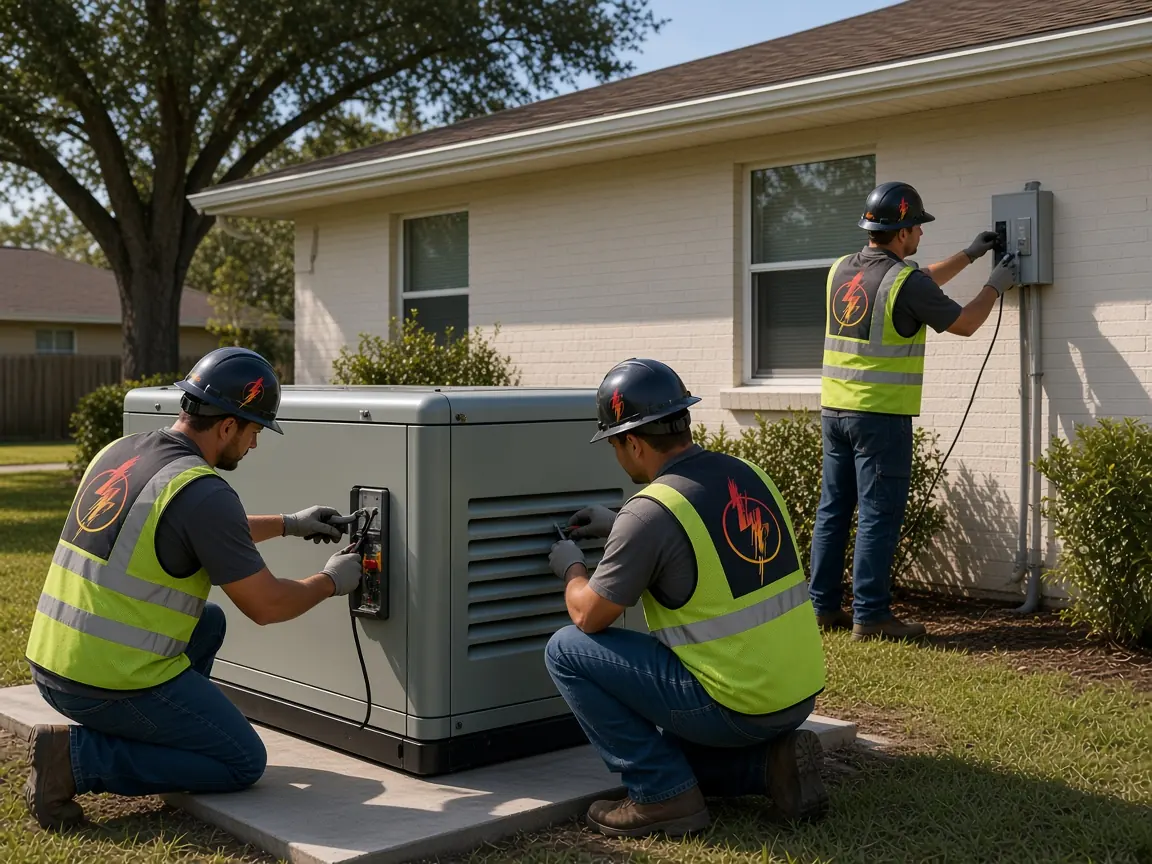
Solar installation in Kathleen: Bills first, then the surface
A single high bill in a dry, hot month can overstate what the house uses the rest of the year. We ask for twelve months of records from your electric provider. After that we walk the lot, note shade and any long feeder to a well or a shop, and only then does the partner draw a layout.
Services from 1991 or earlier
The median home dates from 1991 or earlier, and about 80 percent of occupied homes are owner-occupied. The detached share and the year built come from ACS data for 2020 through 2024. About 46 percent of units are detached houses. Whatever the building type, we open the panel and read the bus. If the bus cannot take the tie-in, we may plan a connection ahead of the main, a new can or SPAN.
SPAN as a planning tool
SPAN shows circuit-level use. That can reveal a pump or a heater that runs more than you thought. Fixing a timer can shrink the array you need. If storage is added later, that same SPAN can pick what stays on.
- Florida electrical contractor license EC13014717, licensed & insured
- Woman-owned business based at 6248 Seminole Blvd, Seminole FL 33772
- 2-year workmanship warranty, 5 years with a Member Care Plan
- SPAN Authorized Installer and Home Depot preferred contractor
- Open 24/7 for electrical emergencies: call or text (727) 476-7079
- Projects up to $2 million, with bonding up to $1 million
Partners and incentives
We do not mount the modules; a licensed partner does that work. Our electricians land the conduit, run the tests and file for local permitting. Credits and net metering rules change, and we will not promise a credit. Consult a tax professional; incentives can change.
Code and distance
The adopted electrical code governs the tie-in, the labels and the disconnects. We torque lugs, check the ground path and use wet-rated fittings outdoors. A Kathleen visit includes about 50 miles of travel from 6248 Seminole Blvd. Our electrical labor term is two years, extending to five under a Member Care Plan.
Send the year’s use
Share twelve months of use and a panel photo at (727) 476-7079. The form near the top also reaches us.
Irrigation months and quiet months in the same file
A dry, hot stretch can run a well or an irrigation clock much harder than a mild winter. We want both in the year of bills. If the well is on a long feeder, we note that on the visit so the electrical path, not just the module count, accounts for it. The partner then draws a layout that fits the lot and the use together.
Opening every service, whatever the building type
About 46 percent of units here are detached houses. The rest are other types. We still open the panel in every case. The bus rating, the main size and the free slots decide the tie-in, not the look of the building from the street. If the bus cannot take the array, we walk through a connection ahead of the main, a new can or SPAN, with the numbers in front of you.
One plan for the partner and for us
You approve a single schedule. Paperwork is filed. Panel or SPAN work, if needed, happens first. The partner sets the modules. We connect, label, test and meet the inspector. You get a walk-through of the inverter screen and, if SPAN is present, the circuit view. We also leave the steps on paper.
Claims we will not make
We will not promise that solar will cut a bill by a set amount. We will not promise a tax result. We will not skip the year of bills because a neighbor already has an array. The file for your house is the file we use.
<!–kwle-pack2–>
Open lots, irrigation months and a service that may be tight
Some Kathleen lots are open enough that shade is a minor issue. Others sit near a tree line or a shop that throws a late shadow. The partner has to see the actual surface, not a map. We also want a year of bills that includes a dry, hot stretch, because irrigation and a well can jump in those months and sit quiet in winter. Sizing from a mild month alone would miss that jump.
A long feeder to a well house is an electrical fact, not only a water fact. We trace it, note the conductor size and say whether the path needs work before an array is tied in. A later battery plan will thank us for that note, even if you do not add a battery now.
About 46 percent of units are detached houses, and the rest are other types. The look of the building does not decide the tie-in. The bus rating, the main size and the free slots do. We open the can in every case. If the bus cannot take the array, we talk through a supply-side connection, a new can or SPAN with the numbers in front of you.
Delivery of modules and a place to stage a lift or a trailer have to be planned on a long drive. We put that note in the confirmation, including a field access if the driveway is narrow. You should not find a truck blocking the only way out of the shop on a workday.
<!–kwle-pack3–>
A year that includes a dry stretch, and a feeder we can actually trace
A mild winter bill can look calm while a dry, hot spring can run a well for hours. We want both in the file. If you only have six months, we will still look at them, and we will tell you what we cannot yet know. A complete year is the standard we aim for, not a hoop we invent to slow you down.
The well feeder is traced, not assumed. We look at the conductor, the disconnect if it exists, and the condition of the well-house fittings. Rust, a missing bushing or a tight squeeze at the tank are notes for the electrical path, even if the array never sits near the well. A later battery or a later generator plan will use those notes, so we take them now.
Staging on a long lot can mean a field access, a wide grass shoulder or a driveway that also serves the shop. We pick one and we write it down. A lift or a trailer that blocks the shop on a workday is a mistake we can avoid with one sentence in the confirmation. You should be able to leave the property while work is underway.
<!–kwle-pack4–>
Extra notes on an open lot
We write down a leaning mailbox post, a broken reflector on a drive, a low culvert grate and a washout at the ditch lip. We write down a roll of leftover field fence, a pile of lime rock, a torn tarp and a cracked kiddie pool if they occupy the staging strip. We write down a well-house wasp nest, a rusted pressure-gauge glass, a weeping valve and a sun-faded flex hose.
We write down a late-day shadow from a shop eave, a windbreak of pines and a single pecan if that is what the lot actually has. We write down a cattle grate, a chain across a field access and a muddy two-track that a delivery truck cannot use after rain. The write-up is for staging and for the electrical path, not for a pretty brochure.
<!–kwle-pack5q–>
A delivery that does not block the shop
On a long lot the driveway may also serve a shop. A lift or a trailer in that drive can trap a workday. We pick a staging spot in writing: a field access, a wide shoulder or a strip that leaves the shop open. You should be able to leave the property while work is underway. That sentence belongs in the confirmation, not in a spoken aside.
The well feeder notes from the first visit stay in the file even if the array never sits near the well. A later battery or a later standby plan will use them. We would rather take those notes now, including conductor size and any missing disconnect, than walk the same grass twice. Rust, a missing bushing or a tight squeeze at a tank are part of that record.
Close-out includes a walk of the inverter, the disconnects and, if SPAN is present, the circuit view, plus paper steps for all of it. We do not leave you with only an app login and a wave from the drive. If a question comes up after the inspector has signed, call (727) 476-7079 and have those paper steps in hand.
<!–kwle-pack6–>
Tools for a long-lot tie-in
A Kathleen solar visit that includes a well feeder and a long drive needs a tracing kit. We carry fish tape, a tracer wire note and detectable warning tape if a later bury is in the plan. We carry a clamp meter, a residual current check where it applies, an insulator standoff and a bushing insert for a tight can. We carry an as-built redline, a markup, a punch list and a closeout binder so the partner and our crew are not holding two different drawings at the end of the day. A transmittal, a submittal, a cut sheet and a one-line diagram sound formal, and they are: they keep the tie-in honest.
A riser sketch, a legend, a schedule and an engraved plate for the disconnects go in the same binder. Inch-pounds on a torque sticker, a thermal image if a lug looks suspect, a wire brush, a Scotch-Brite pad and an oxide inhibitor are how we leave copper or aluminum clean. A pin adapter or a cup washer comes out only when the lug needs it. We photograph the binder tab so you know what left with you.
Kathleen solar FAQ
Why start with a year of bills instead of a module count? The count should follow the use, not the other way around.
Who sets the modules? A licensed partner. We do the electrical path and the tests.
Can a well on a long feeder be part of the plan? We will note it on the visit so the electrical path accounts for it.
How many miles is the trip from Seminole? A Kathleen visit includes about 50 miles of travel from 6248 Seminole Blvd.
Will you file a tax credit for me? No. Consult a tax professional; incentives can change.
Why write a staging spot into the confirmation? So a delivery does not block the shop or the only way out of the property on a workday.
Why note the well feeder on a solar job? Because it is an electrical fact on the same service, and a later storage plan will need it.
Related: solar installation across Tampa Bay · SPAN smart panel installation · battery backup in Kathleen · generators in Kathleen. Nearby: solar in Medulla · solar installation in Weeki Wachee Gardens · solar installation in Bradley Junction · solar installation in Bayport.