
Need an RV outlet installation in Redington Beach? Keywest Lights & Electric provides RV outlet installation in Redington Beach with 30 amp and 50 amp receptacles, pedestals and dedicated circuits. We are licensed and woman-owned, we size the circuit to your rig, protect it from weather and test it with a load.
Request rv outlet installation in Redington Beach
Tell us what you need and where the work is. A licensed electrician will reply with next steps and a time to visit.
Around Redington Beach we also put in home EV charging, a business standby generator, shop and office electrical work and backup generator hookups. Related: jellyfish lighting and panel upgrade replacement.
Call or text (727) 476-7079 · open 24/7 for emergencies · request a quote online
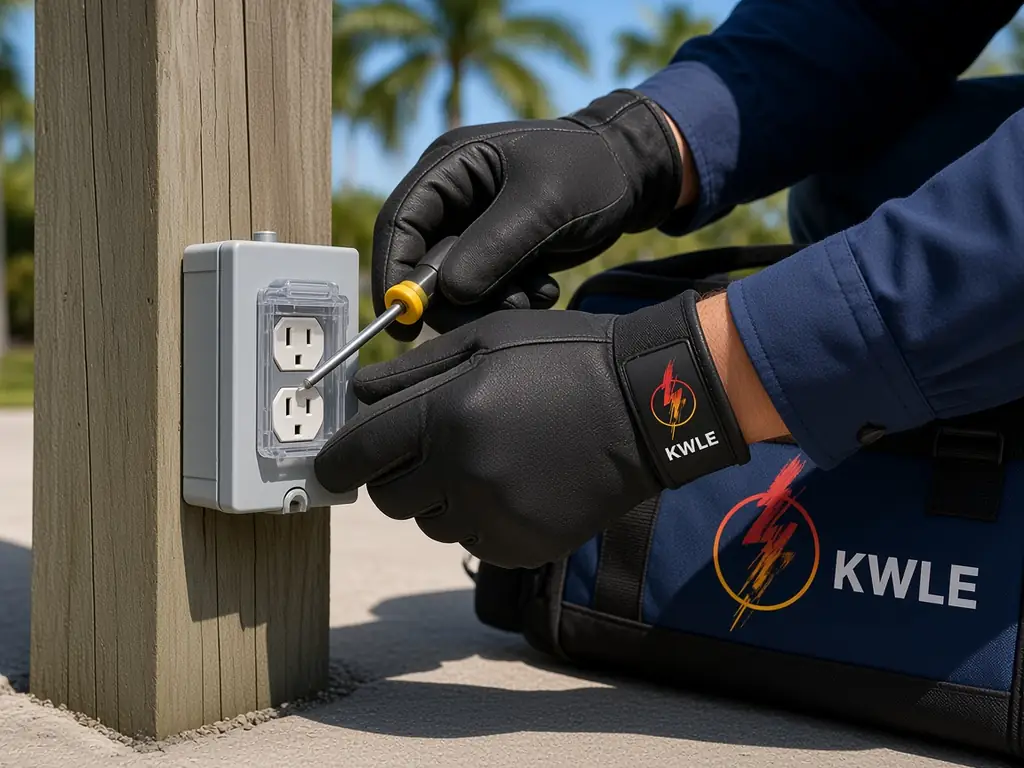
RV outlet installation in Redington Beach: a proper hookup at home
Running a camper from a household outlet or an adapter can overload wires and trip breakers. A dedicated RV outlet gives your trailer or motorhome the power it needs, with the right plug, breaker and protection.
Types of RV outlets
- 30 amp receptacle: common on smaller travel trailers.
- 50 amp receptacle: larger trailers and motorhomes.
- Pedestal: a post with outlets, meter or breakers.
- Wall-mounted box: for a driveway or side wall.
- Weatherproof cover: for a plug in rain.
- Surge protection: at the outlet or the panel.
Sizing the circuit to the rig
- Florida electrical contractor license EC13014717, licensed & insured
- Woman-owned business based at 6248 Seminole Blvd, Seminole FL 33772
- 2-year workmanship warranty, 5 years with a Member Care Plan
- SPAN Authorized Installer and Home Depot preferred contractor
- Open 24/7 for electrical emergencies: call or text (727) 476-7079
We read the manual or the plate on your RV and match the outlet and the wire. A 30 amp rig uses a 30 amp circuit, and a 50 amp rig uses a 50 amp one.
The 30 amp versus 50 amp plugs
A 30 amp plug has three prongs and a 50 amp plug has four. They are not interchangeable, and an adapter does not make a small circuit safe for a big rig.
Choosing the location
We place the outlet near where you park, with a cord that reaches the RV without a trip hazard. We also keep it clear of the driveway and any sprinklers.
Running the wire
We route wire in conduit, in the ground or on a wall, depending on the distance. We size it for the load and avoid voltage drop on long runs.
Pedestals and posts
A pedestal stands on its own, with outlets and breakers on a post. We set it on a footing, bond it and run a feeder to the panel.
Protection and ground faults
Outdoor receptacles need ground-fault protection. We use a breaker or an outlet, and we test it with the camper’s load.
Panel capacity
A 50 amp outlet draws a lot. We check the panel for space and the service for capacity, and we add a subpanel when needed.
Weatherproof covers
We use covers that close over a plug and gaskets that keep rain out. A cover also shields the outlet from salt and sun.
Surge protection for the RV
A power surge can damage an RV’s electronics. We offer surge devices at the outlet or panel, to protect the rig.
Salt air and corrosion
Coastal air attacks plain steel, so near the water we install corrosion-resistant boxes and stainless hardware.
Storm planning
We add a switch or breaker you can reach to cut power during a storm, and we recommend unplugging the RV and storing the cord.
Rules on parking and placement
Some blocks, associations and lots limit where a camper may sit. Check your rules before installing a pedestal or running a long line.
Older homes and small services
A house from the late 1950s often has a modest panel, and a big RV outlet can push it past its limit. We check before we promise anything.
Electric heat and big loads
With electric heat the norm, a camper plugged in on top of it is a large extra load. We run the numbers before adding a circuit.
Condos and shared lots
In larger buildings, associations often forbid camper hookups. Confirm the rule first, before you buy any equipment.
Seasonal use
For owners who leave for months, we label the breaker and the outlet and show you how to shut both off.
Aging in place
A heavy plug is hard to push in and pull out. We mount the outlet at a comfortable height and suggest a cord with a good handle.
Charging an electric RV or a golf cart
Some outlets can also charge other vehicles. We can add a separate circuit if you want one. See our EV charger installation page.
Permits and inspections
A new RV circuit needs a permit and an inspection. We prepare the paperwork and meet the inspector.
Distance and voltage drop
Long wire runs lose voltage, and that strains an air conditioner. We pick wire gauge from the distance and the load, not just the breaker size.
Digging and conduit depth
Buried wire needs a set depth and a protective pipe. We mark the path, call for line locates and bury the conduit at the right depth.
Pedestal footings
A post needs a firm footing in sandy soil. We pour or set a base and brace the post so a bump from a trailer will not tilt it.
Wall boxes near the driveway
A wall-mounted outlet saves space. We place it where the cord reaches without a bend that can damage the plug.
Lights at the pad
A small flood light by the outlet helps you connect after dark. We wire it to a switch or sensor.
Testing under load
We run the air conditioner and a heater on your rig and measure the voltage, so we know the circuit performs under the heaviest use.
Keeping the plug cool
A loose plug heats up. We use quality receptacles with a firm grip and show you how to seat the plug.
Motorhomes and generator ports
A motorhome may carry its own generator and a transfer switch. We tell you how the outlet and the generator should stay separate, so power cannot flow backward.
Reading the RV’s inlet
The inlet on your rig has a rated plug and a cord. We check the cord for heat marks and recommend a replacement when the jacket is worn.
Shared outlets for guests
If guests visit with a camper, a second outlet saves swapping cords. We label each and size the panel for both.
Boat trailers and tool power
A large outlet can also run a welder or a compressor. We discuss uses beyond the camper so the circuit fits.
Dusk to dawn security light
A light that comes on by itself near the RV pad deters trouble and helps you walk the cord safely at night.
Cord storage and wall hooks
A cord left on the ground gets crushed and corroded. We add a hook or a small bin near the outlet so the cord stays dry.
Breaker handles and labeling
The 50 amp breaker is a two-pole type. We use a clear label and a lock-off option if you want to prevent others from using it.
Warranty
We guarantee our labor for 2 years; add a Member Care Plan and that grows to 5 years.
Before we arrive
Tell us your RV’s make, model and amp rating, or send a photo of the plug. Mark where you park.
Safety first
Do not plug an RV into a household outlet with an adapter and run the air conditioner. The wire can overheat. Call us for a proper outlet.
After the install
We test the outlet with a load, label the breaker and show you how the cover works.
Common questions
Do I need a 30 amp or a 50 amp outlet? It depends on your RV. We check the plate or manual and match the circuit.
Can you install a pedestal? Yes. We set the post, run the wire and add protection.
Will my panel handle it? Often yes. We check the load and tell you if an upgrade is needed.
Our trucks leave the shop on Seminole Blvd, about 2 miles away, and work near Gulf Boulevard and the Intracoastal Waterway. We also serve Indian Shores, North Redington Beach, Madeira Beach, Redington Shores and Bay Pines.
Up: RV Outlet Installation across Tampa Bay · For everything we do locally, see Redington Beach electrical service.
Call or text (727) 476-7079 for rv outlet installation in Redington Beach, or book online. Business hours 7 AM–5 PM, weekend service, 24/7 emergency calls.