
Need RV outlet installation in Tampa Bay? Keywest Lights & Electric installs 30-amp and 50-amp RV outlets and pedestals across Pinellas, Hillsborough and Pasco counties. We are a woman-owned contractor under license EC13014717, and we size the feeder, breaker and weatherproof receptacle to your camper.
Request rv outlet installation in Tampa Bay
Tell us what you need and where the work is. A licensed electrician will reply with next steps and a time to visit.
Call or text (727) 476-7079 · open 24/7 for emergencies · request a quote online
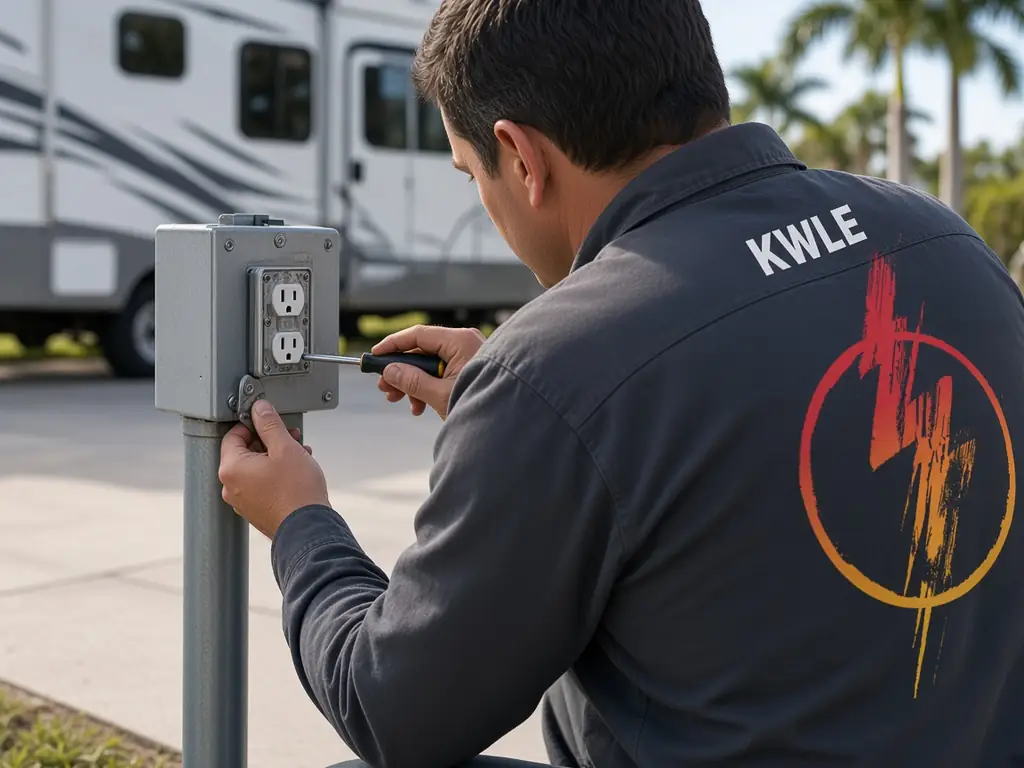
RV outlet installation in Tampa Bay: shore power at home
Plugging a camper into a household outlet works for a night and fails for a season. Air conditioners, microwaves and water heaters need real shore power. A proper RV outlet gives you the same connection you would find at a campground, at your own driveway, side yard or storage lot.
30-amp or 50-amp
A 30-amp RV uses a three-prong, 120-volt outlet, and many small trailers and camper vans use it. A 50-amp RV uses a four-prong, 120/240-volt outlet and carries about double the power, which suits larger coaches with two air conditioners. Check the plug on your RV’s cord and the label near the inlet, and call us with the model.
Pedestals and wall outlets
- Florida electrical contractor license EC13014717, licensed & insured
- Woman-owned business based at 6248 Seminole Blvd, Seminole FL 33772
- 2-year workmanship warranty, 5 years with a Member Care Plan
- SPAN Authorized Installer and Home Depot preferred contractor
- Open 24/7 for electrical emergencies: call or text (727) 476-7079
- Wall-mounted outlet: on the house or garage wall.
- Post or pedestal: a weatherproof stand near the parking pad.
- Combination pedestal: RV outlet, ground-fault outlet and water spigot.
- Dock-style marine outlet: for boats and trailers near water.
- Subpanel feed: for several outlets.
- Dedicated meter: in some park and lot settings.
Feeder, breaker and wire
A 30-amp outlet needs a 30-amp breaker and 10-gauge copper wire, and a 50-amp outlet needs a 50-amp breaker and 6-gauge wire. Long runs need a larger wire to avoid voltage drop, which strains air conditioners. We measure the distance, pick the wire and breaker and run conduit that protects the cable.
Placement and parking pad
Outlets should sit where the RV’s inlet and cord can reach without stretching or crossing walkways. We measure the camper’s cord length and the usual parking position. A pedestal at the edge of the pad keeps cords clear of the lawn, and bollards protect it from bumpers.
Weather and safety
RV outlets live outdoors in sun, rain and humidity. We install weatherproof covers, use UV-rated conduit and place the outlet at a safe height. A ground-fault breaker or outlet protects against shock. We also add a disconnect where the code asks, and we label the circuit at the panel.
Electrical capacity
A 50-amp RV can draw as much as an electric range and a dryer together. We check the panel, calculate load and add a subpanel or a service upgrade when needed. Planning the load before you buy a bigger coach avoids surprises.
Storage lots and rentals
Owners of storage lots, small campgrounds and rental driveways need several outlets, metering and clear labels. We design a feeder, a distribution panel and numbered outlets. Ground-fault protection and secure covers reduce liability.
Quotes, permits and warranty
New outdoor circuits need a permit. Our workmanship carries a 2-year warranty, or 5 years with a Member Care Plan.
Camper electronics and surge protection
Coaches carry converters, inverters, televisions, microwaves and sensitive control boards. Park power can be dirty, and storms add spikes. A surge protector at the pedestal or at the RV protects investments worth far more than the device. We recommend a unit with voltage monitoring that cuts power if voltage swings too high or too low.
Cord length, adapters and cheater cables
Dog-bone adapters, long extension cords and thin cheater cables can overheat and melt. We measure the distance from the outlet to the inlet, then suggest a heavy-gauge RV cord of the right length. Short, direct runs keep voltage steady and cords cool. We also show you how to coil and store the cord.
Boats, trailers and toy haulers
Owners often park several vehicles side by side: a camper, a boat, a utility trailer and a toy hauler. A single feeder can serve a distribution panel with labeled outlets for each. Marine outlets near water need special parts and ground-fault protection. We plan the layout so cords never cross each other.
Guest hookups and family visits
Many owners offer a driveway outlet for visiting relatives who arrive in campers. A tidy pedestal with a 30-amp outlet, a ground-fault outlet and a water hose bib turns a driveway into a guest site. We install a lockable cover or a switch inside the house so the power can be shut off between visits.
Gravel, pavers and trenching
A feeder to a side yard or back lot crosses sod, gravel, pavers or a slab. Trenches in sandy soil collapse easily, and roots slow the digging. We choose a route with the fewest crossings, use conduit with sweeps instead of tight bends and patch the surface. Where cutting concrete is not practical, we drill under it or route along a fence line.
Maintenance for outdoor RV power
Wipe the outlet face, check the cover seal and look for green corrosion on blades every season. Replace cracked covers and worn receptacles. If the plug feels hot after a few hours of air conditioning, stop and call us. A quick inspection each spring, before camping season, keeps trips trouble-free.
Common questions
How do I know if I need 30-amp or 50-amp? Look at the plug on your RV’s power cord. Three prongs means 30-amp, and four prongs means 50-amp.
Can I plug my RV into a regular outlet? A household outlet is fine for light use with an adapter, but it cannot run air conditioning.
Where should the outlet go? Near the RV’s power inlet on the parking pad, away from walkways, and protected from vehicles.
Do RV outlets need GFCI protection? Outdoor outlets generally need ground-fault protection. We install it as the code requires.
Can you install a pedestal? Yes. We mount it on a post or concrete base with conduit and a breaker.
How long does installation take? A simple outlet takes a few hours. A long run with trenching takes a day or more.
Do I need a permit? Yes. New circuits need one, and we handle it.
Can you wire several RV spaces? Yes. We design a distribution panel with an outlet for each space.
Local pages: RV outlet installation in Seminole, our home base. See also Pinellas County, Hillsborough County and Pasco County service areas, or browse all electrical services.
Call or text (727) 476-7079 for rv outlet installation in Tampa Bay, or book online. Business hours 7 AM–5 PM, weekend service, 24/7 emergency calls.