
Want RV outlet installation in Bay Pines? Keywest Lights & Electric installs RV outlets in Bay Pines for driveways, side yards and storage pads. We are licensed and woman-owned, and we match the receptacle and breaker to your RV’s plug.
Request rv outlet installation in Bay Pines
Tell us what you need and where the work is. A licensed electrician will reply with next steps and a time to visit.
Around Bay Pines we also put in home EV charging, a business standby generator, shop and office electrical work and backup generator hookups.
Call or text (727) 476-7079 · open 24/7 for emergencies · request a quote online
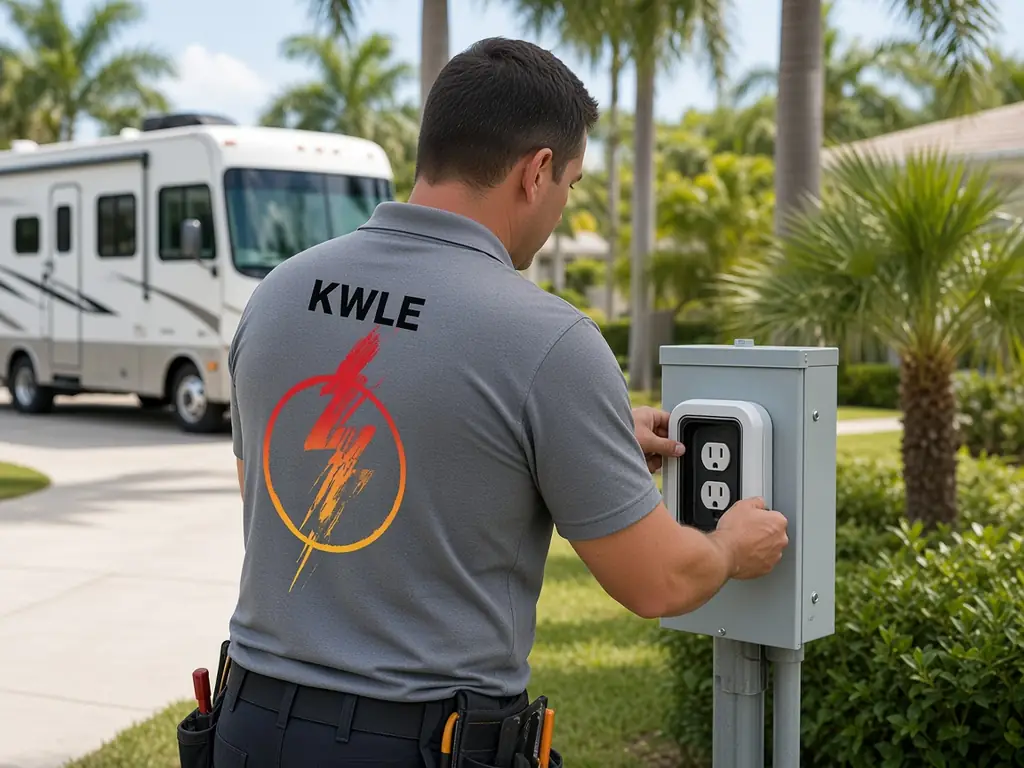
RV outlet installation in Bay Pines: shore power at home
An RV that plugs into a household outlet struggles to run air conditioning, a microwave and a water heater at once. A dedicated RV outlet gives you the right amperage, a locking plug and a weather cover. We install them at the side of the house, on a pedestal or at the storage pad.
What we install
- 30-amp outlets: a TT-30 receptacle for most travel trailers.
- 50-amp outlets: a 14-50 receptacle for larger coaches.
- Pedestals: a post with a breaker and weather cover.
- Wall-mounted boxes: on block or stucco next to the driveway.
- Dock and carport outlets: a short run to the pad.
- Subpanels: when the main panel is far from the pad.
- Replacement outlets: worn, burned or corroded receptacles.
Choosing 30-amp or 50-amp
- Florida electrical contractor license EC13014717, licensed & insured
- Woman-owned business based at 6248 Seminole Blvd, Seminole FL 33772
- 2-year workmanship warranty, 5 years with a Member Care Plan
- SPAN Authorized Installer and Home Depot preferred contractor
- Open 24/7 for electrical emergencies: call or text (727) 476-7079
Check your RV’s plug. A three-prong 30-amp plug needs a TT-30 receptacle. A four-prong 50-amp plug needs a 14-50 receptacle. We read your rig’s inlet, size the wire and set the breaker to match.
Where to place it
We choose a spot close to the RV’s inlet so the cord reaches without strain. We keep the box clear of water, sprinklers and car doors and mount it at a height that works for you.
Running the cable
A short run can go inside a wall or attic. A long run goes through buried conduit with a larger wire to hold voltage. We plan the route, mark underground lines and keep the trench neat.
Weather and salt air
RV outlets live outside. We use weatherproof in-use covers, sealed boxes and corrosion-resistant fittings. Where the pad sits near salt water, we choose stainless hardware.
Ground-fault protection
Outdoor receptacles need ground-fault protection. We install a GFCI breaker or a GFCI receptacle that fits your outlet and test it with you.
Panel capacity
A 50-amp RV circuit is a large load. We check your service, run a load calculation and tell you whether the panel can handle it. When it cannot, we plan the work.
Pedestals and posts
A pedestal puts the receptacle on a treated post with a breaker and a cover. We set the post at a safe height, run conduit up and seal every opening.
Boat lifts and golf carts
Some homes near the bay use a similar outlet for a boat lift, a golf cart charger or a power tool. We can add a second receptacle to the same post and size the circuit for both.
Deed rules and parking
Some deed rules or associations limit RV parking and outdoor equipment. Check yours before you plan, and we will work within it.
Permits and inspection
An RV pad outlet is a new outdoor circuit, and that means a permit and a final look from an inspector. We take care of both and leave you the signed card.
Surge protection for an RV
Campground power can spike, and so can a storm. A surge protector at the pedestal or at the RV inlet protects the air conditioner and electronics. We can mount a protector and show you how to read its indicator lights.
Locking plugs and cord storage
A short cord with a locking plug survives wind, rain and a bump from a bike better than a loose cord. We add a hook near the pedestal for cord storage so the plug stays off the wet ground.
Testing the new outlet
Before we leave, we meter the voltage, check the polarity and test the ground-fault device. We also plug in a load tester so we know the circuit holds steady with the air conditioner running.
Planning for more than one rig
Guests with an RV may visit now and then. We can set up a second receptacle or a labeled breaker so a visitor can plug in without touching your main panel.
Cord length and tripping hazards
A cord stretched across a driveway invites a trip and a nick from a tire. We place the receptacle so the cord runs along the edge of the pad, and we add a short protective cover where a cord must cross a path.
Conduit depth and marking
Buried conduit needs enough cover to protect it from a shovel or a mower. We set the depth to the standard for the wiring method, lay warning tape above it and leave you a simple sketch of the route.
Seasonal use and storage
If the rig sits through summer, a breaker that you can switch off keeps the pedestal from staying live without need. We mark the breaker clearly and show you how to shut it off when you leave town.
Pressure washing, hoses and sprinklers
Outdoor receptacles take abuse from spray. We mount the box above splash height, angle the cover so water drains away and keep the outlet well clear of hose bibs and irrigation heads.
Wind, hurricane straps and posts
A pedestal post needs a deep footing to survive gusty weather. We set it plumb, brace it with concrete and use rated fittings so the conduit does not pull loose in a blow.
Neighbors, noise and lights
A porch light or a pedestal lamp helps you see the outlet after dark. We add a small shielded light on the post that stays out of the neighbor’s windows.
A short checklist before travel
Switch the breaker off, coil the cord, close the cover and log the date of your last test. Little habits keep an outdoor outlet reliable for years.
Warranty
We stand behind our workmanship for 2 years, or 5 years with a Member Care Plan.
Before we arrive
Tell us the make and length of your RV, where you park it and where the inlet sits. A photo of the plug helps.
Common questions
Can I plug my RV into a regular outlet? A regular outlet can power small loads, but it cannot run air conditioning and appliances together. A dedicated RV circuit is the right fit.
What is the difference between 30-amp and 50-amp? A 30-amp outlet has three prongs, and a 50-amp outlet has four. Your RV’s plug tells us which you need.
Can you run power to a far pad? Yes. We use buried conduit and larger wire to hold voltage over the distance.
Our trucks leave the shop on Seminole Blvd, about a mile away, and work near Bay Pines Boulevard, Long Bayou, Seminole Boulevard and Boca Ciega Bay. We also serve Largo, Redington Shores, Indian Shores, Redington Beach and North Redington Beach.
Up: RV Outlet Installation across Tampa Bay · For everything we do locally, see Bay Pines electrical service.
Nearby: Seminole
Call or text (727) 476-7079 for rv outlet installation in Bay Pines, or book online. Business hours 7 AM–5 PM, weekend service, 24/7 emergency calls.