
Need meter base replacement in Indian Shores? Keywest Lights & Electric provides meter base replacement in Indian Shores when a rusted, damaged, or outdated meter socket should be changed to a listed can. We are a licensed, woman-owned shop. This visit is the meter socket itself, not a weatherhead repair, not a main-breaker swap, and not a service-upgrade package. The utility has to release and reseal the meter; we coordinate that step without treating this article as their procedure. We land a listed socket, tighten the jaws and the lugs to the published value, and leave a can the seal can go back on.
Request meter base replacement in Indian Shores
Tell us what you need and where the work is. A licensed electrician will reply with next steps and a time to visit.
On this barrier island we also handle a commercial electrician visit, a commercial standby generator, an EV charger hookup and a backup generator install.
Call or text (727) 476-7079 · open 24/7 for emergencies · request a quote online
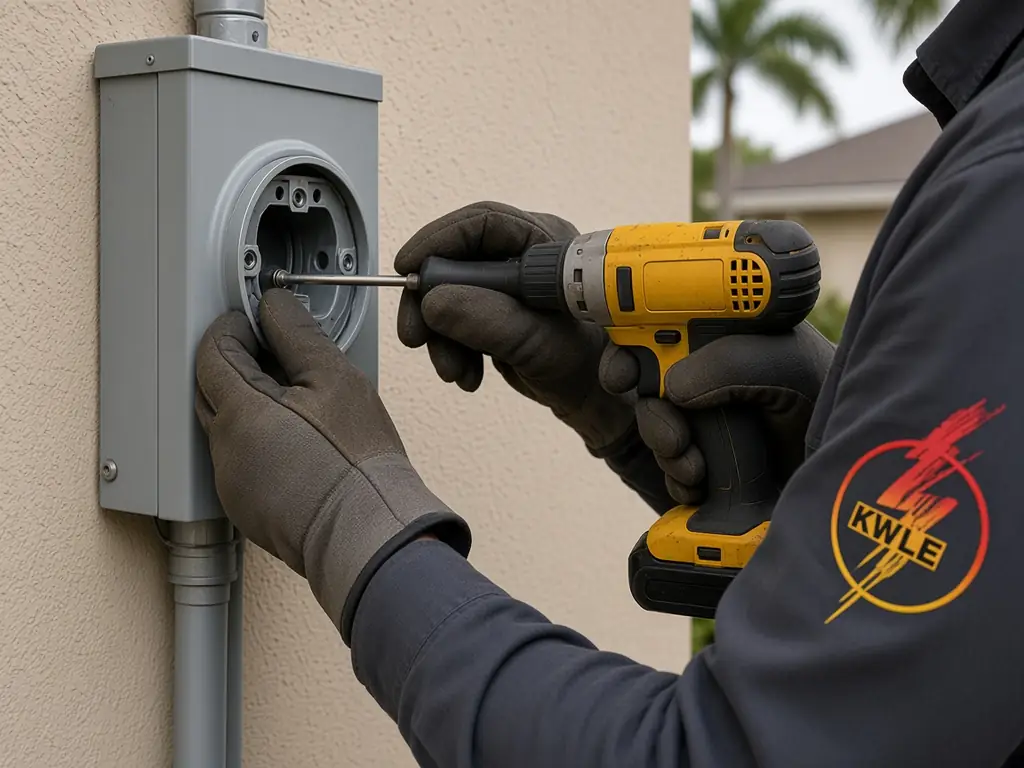
Meter Base Replacement in Indian Shores: a socket, a ring or a ringless cover, a coordinated outage
Meter sockets here show up on a rare single-family wall, in a mid-rise meter room, or as a house meter for common loads. Salt air and a tired can produce loose jaws, a burned block, or a cover that will not take a seal. We install a listed socket of the right jaw count and bypass type in place of the failed can, and we plan the outage with the utility and, when it applies, the building.
Socket jobs that belong here
- Florida electrical contractor license EC13014717, licensed & insured
- Woman-owned business based at 6248 Seminole Blvd, Seminole FL 33772
- 2-year workmanship warranty, 5 years with a Member Care Plan
- SPAN Authorized Installer and Home Depot preferred contractor
- Open 24/7 for electrical emergencies: call or text (727) 476-7079
- A rusted, burned, or impact-damaged meter can.
- Loose or pitted jaws that heat the meter.
- A 4-jaw versus a 5-jaw socket that no longer matches the service.
- A ring-type or ringless cover that will not take a seal.
- A riser nipple or a knockout repair that is part of landing a new can.
Jaw count, a bypass type, and a can the utility will actually accept
We match the new socket to the service: jaw count, ring or ringless, and whether a horn or a lever bypass is required at that location. A pretty can the utility will not energize is not a finished job. We confirm those details before the old can comes off the wall.
Weatherheads, main breakers, service upgrades, and fuse cabinets sit elsewhere
Weatherhead repair, main breaker replacement, electrical service upgrade, and fuse box replacement are covered on other write-ups. The job described here is the meter socket. If the riser, the weatherhead, or the service size also has to change, we will say so and point you to that work.
How the socket swap runs
We coordinate the outage, confirm the incoming supply is released, and remove the old can. The new socket is mounted plumb, the incoming and load conductors are landed at the listed torque, and the cover is fitted for a seal. After the utility restores the meter, we check for heat and a tight cover. The paperwork carries the terms.
Mid-rise meter rooms, a house meter, and a building that has to grant access
A mid-rise meter room may have tight working space, a stacked set of sockets, and a building rule about who can be in that room. We ask for access and we do not treat a neighbor’s socket as a workbench. A single-family wall can is a simpler site, with a clear path for the riser and the load exit.
Meter cans we decline
We will not leave a burned block in a new cover and call the socket replaced. A weatherhead or a service-size change is not hidden inside a “meter can only” ticket. We will not land a 4-jaw can on a service that needs a 5-jaw socket. If the incoming conductors themselves are failed, we stop and talk about the riser or the service before we mount a new socket.
Rings, a lever bypass, and a seal path that has to stay honest
A ring-type can gets a listed ring that the utility can seal. A ringless can gets a cover that latches and seals as listed. A lever bypass, when it is part of the specified can, is tested only as the listing and the utility allow. We do not leave a bypass that has been blocked open.
Salt air, a rusted nipple, and a knockout that has to be closed
The riser nipple into the can often rusts in this air before the conductors fail. We replace a rusted nipple as part of the socket landing when that is the honest move. Unused knocks get listed closures so the can is not an open path for spray.
Electric heat, a tight load exit, and conductors that must be long enough to land
Load conductors that were cut to a tired can may be too short for a new, deeper socket. We plan an extension with listed connectors or a slightly different can depth, rather than yank a short tail onto a lug. Electric heat on the load side does not change the socket, but it does mean the outage should be planned so the unit is not left mid-cycle without warning.
Directory is not this can, but the job file still gets a snapshot
A meter socket does not get a branch directory, but the job file gets a snapshot of the old can, the jaw type, and the new listing. A later visit should not have to guess whether the can is 4-jaw or 5-jaw, or whether a bypass is present.
Block assemblies, a horn bypass, and a plastic versus a steel can
We follow the specified block assembly and bypass style, not a leftover from the truck that “might work.” A steel or a listed non-metallic can is chosen for the location and the utility’s accepted list, and we do not mix a block and a can that are not listed together.
4-jaw versus 5-jaw, a ninth-position jaw, and a ringless 200-amp body
A typical 120/240 house socket is a 4-jaw can. A 5-jaw can, with the extra jaw often at the nine o’clock position, is used when that service needs it. We do not guess. A ringless 200-amp body, or another listed size, is picked to match the service and the utility’s accepted list, not from a leftover can on the truck.
A hub on the top of the can has to match the riser size. We do not force a 2-inch riser into a 1-1/4-inch hub with a random reducer if the listing wants a different can. The load exit is planned the same way, so the conductors are not bent against a sharp knockout.
A lay-in lug, if the new block uses one, is dressed so the conductor sits flat. We do not leave a single strand cut on a jaw. A plastic closing plate under a steel cover is used only when that socket listing includes it, and the seal path still lines up.
A 5th-jaw kit, when a 4-jaw can is the wrong starting point, is not a field add unless the can is listed for that kit. Usually the honest move is a 5-jaw body from the start. A bypass lever that binds after the cover is on is adjusted before the utility is asked to reseal.
A meter-to-socket gap that lets spray in at the glass is a cover or a ring problem, and we fix it before the seal goes back on. We do not leave a tilted can that puts standing water against the block.
Questions we hear in Indian Shores
Do you provide meter base replacement in Indian Shores? Yes. We replace rusted or damaged meter sockets with a listed can, and we coordinate the utility outage and reseal so the meter can go back on.
Does this overlap with a weatherhead repair or a service upgrade? No. Those subjects are covered on other write-ups. The job here is the meter socket itself. If the riser or the service size also has to change, we will say so.
Will the utility need to be involved? Yes. The meter has to be released and resealed. We coordinate that step; this page is not their procedure, and we do not name a specific office here.
I live in a mid-rise. Is the socket in a shared meter room? Often yes, or it may be a house meter for common loads. We ask the building for access and we work only on the agreed can.
What if the incoming conductors are also burned? We flag that before the old can comes off and talk about the riser or the service work that has to come with the socket.
How do I arrange a meter socket visit? Call or text (727) 476-7079 and send a picture of the meter can, the cover, and the wall or meter-room location. We roll from Seminole, about 4 miles from town.
Crews roll out from our shop on Seminole Blvd, about 4 miles from town, and work along Gulf Boulevard, the Gulf shore, the Tom Stuart Causeway and the Intracoastal. We also take calls in Seminole, North Redington Beach, Redington Beach, Largo and Madeira Beach.
Back to the service: Meter Base Replacement in the Tampa Bay area. For a full list in this town, visit Indian Shores electrician services.
Nearby towns: Bay Pines · Seminole
Call or text (727) 476-7079 for meter base replacement in Indian Shores, or book online. Shop hours 7 AM–5 PM, weekend service, 24/7 emergency calls.