
Need meter base replacement in Tampa Bay? Keywest Lights & Electric replaces damaged, corroded and outdated meter bases across Pinellas, Hillsborough and Pasco counties. We are a woman-owned contractor under license EC13014717, and we coordinate the disconnect and reconnect with the power company and the inspector.
Request meter base replacement in Tampa Bay
Tell us what you need and where the work is. A licensed electrician will reply with next steps and a time to visit.
Call or text (727) 476-7079 · open 24/7 for emergencies · request a quote online
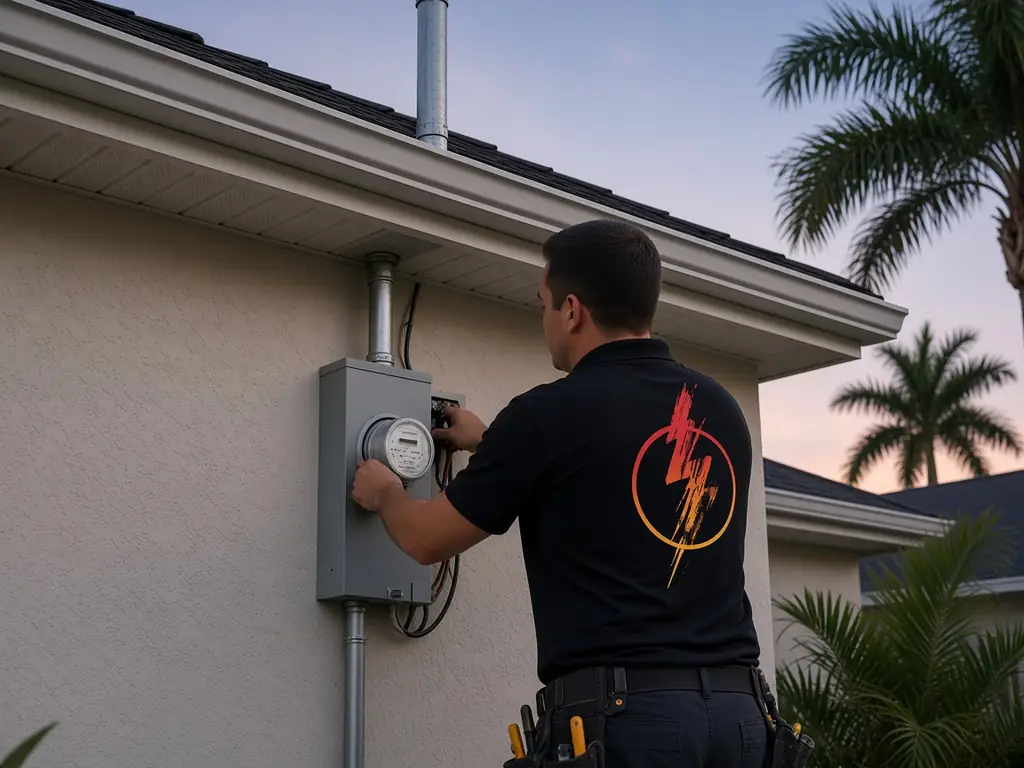
Meter base replacement in Tampa Bay: the box that connects your home to the grid
The meter base, or meter socket, is the box on the outside wall that holds the electric meter. It carries the full power of the house, so a bad one is a serious problem. Salt, rain, insects, impacts and heat all damage it. A new base restores a safe, tight connection and gives the power company a proper place to read and service the meter.
Signs a meter base is failing
- Rust or corrosion: flaking metal and green or white powder at terminals.
- Cracked or broken housing: impact damage or old plastic.
- Burn marks: dark soot, melted plastic or a hot smell.
- Loose or wobbly box: pulled away from the wall.
- Water inside: rain getting past the cover.
- Flickering power: loose jaws or damaged terminals.
- Missing sealing ring: tampering or damage.
Why bases fail
- Florida electrical contractor license EC13014717, licensed & insured
- Woman-owned business based at 6248 Seminole Blvd, Seminole FL 33772
- 2-year workmanship warranty, 5 years with a Member Care Plan
- SPAN Authorized Installer and Home Depot preferred contractor
- Open 24/7 for electrical emergencies: call or text (727) 476-7079
Meter jaws are spring clips that grip the meter blades. Heat and age weaken the springs. Corrosion adds resistance, and resistance makes heat. In coastal areas, salt air eats steel boxes. Storm winds and falling limbs can pull the service mast and twist the base. Insects and lizards add their own damage.
Who does what
The power company owns the meter, and the owner owns the meter base and everything on the house side. The power company must pull and reset the meter when a base is replaced, so we schedule with them. We handle the permit, the new base, the wiring and the inspection.
Choosing the right base
Bases come in different amp ratings and jaw counts. A typical home uses a 200-amp, four-jaw base. Some local rules require specific types, such as ringless or lever-bypass models, and some require a disconnect on the exterior. We choose a base that meets the local rules and suits your service size.
Service mast and weatherhead
The service mast holds the wires coming from the street. A rusted mast, a leaning weatherhead or loose clamps can pull on the base. We inspect the entire service entrance and replace worn parts together, so the new base is not stressed by old hardware.
Grounding at the meter
Many service entrances ground at the meter or the main panel. We check the grounding electrode, bonding and clamps, and replace corroded parts. Good grounding protects against shock and helps surge devices work.
Timeline and power outage
Replacement usually takes a few hours, with power off for part of that time. Scheduling with the power company can add waiting time. We tell you what to expect and keep the interruption as short as possible.
Quotes, permits and warranty
Meter base replacement needs a permit and an inspection. Our workmanship carries a 2-year warranty, or 5 years with a Member Care Plan.
Jaws, blades and heat
Meter jaws grip the meter blades with spring tension. Over years, springs weaken, and the contact area shrinks. A loose jaw makes heat that discolors the base and the meter glass. We look for brown or blue tint on the meter and for pitting on the jaws. Early replacement avoids an outage on a hot day.
Underground services and pedestals
Not every meter hangs on a wall. Underground services bring wires up in conduit to a socket on the house or to a pedestal. Frost heave is not a problem here, but settling, mowers and sprinklers are. We repair conduit sweeps, replace sockets and check the lateral connections, coordinating with the power company where their wire begins.
Upgrading with a panel change
Many owners replace the meter base and the panel together. A new 200-amp panel pairs naturally with a new 200-amp base, and local rules often require an exterior disconnect. Doing both at once means one outage, one permit and one inspection, and the grounding system is updated in a single pass.
Condos, duplexes and meter stacks
Multi-unit buildings use meter stacks, which are columns of sockets with a main disconnect. A failed socket needs a matched replacement. We label each socket, confirm the unit and coordinate with the property manager and the power company. Clear records help when tenants move or utilities are billed.
Protecting the new base
A new base lasts longer when it is mounted level, sealed at the top and shielded from sprinklers and mowers. We use stainless fasteners, seal the wall penetration and suggest moving sprinkler heads away from the meter. A simple guard post or plant barrier protects it from vehicles.
Smart meters, antennas and access
Many meters now carry radios that report usage. The base should leave room for the meter and any cover, and the meter must stay accessible to crews. Fences, gates, planters and storage boxes should not block it. We note clearance issues and suggest simple fixes.
Seals, lugs and torque
Line and load lugs must be tightened to the torque on the label, using a calibrated driver. Over-tightening cracks lugs and under-tightening burns them. We apply antioxidant paste on aluminum, fit sealing rings and cap unused hubs with approved plugs.
Common questions
Who owns the meter base? The homeowner owns the base and the equipment on the house side. The power company owns the meter itself.
Can I replace my own meter base? The service wires are live up to the base, and the meter seal is controlled. A licensed electrician and the power company must be involved.
How do I know my base is bad? Rust, burn marks, cracks, water inside or a loose box are signs.
Will I lose power? Yes, for part of the visit.
Do I need a permit? Yes. We pull it and schedule the inspection.
Does the mast need replacing too? Often when it is rusty or damaged. We inspect the whole entrance.
Do you handle the power company coordination? Yes. We schedule the disconnect and reconnect.
Can a base be repaired instead of replaced? Minor issues, like a cover, may be repaired. Corroded or burned bases need replacement.
Local pages: meter base replacement in Seminole, our home base. See also Pinellas County, Hillsborough County and Pasco County service areas, or browse all electrical services.
Call or text (727) 476-7079 for meter base replacement in Tampa Bay, or book online. Business hours 7 AM–5 PM, weekend service, 24/7 emergency calls.