
Need emergency exit lighting in Seminole? Keywest Lights & Electric installs, repairs and tests emergency lights and exit signs for Seminole businesses, churches, schools and apartment buildings. We are licensed and woman-owned, with our shop on Seminole Blvd, and we keep the paperwork inspectors ask for.
Request emergency exit lighting in Seminole
Tell us what you need and where the work is. A licensed electrician will reply with next steps and a time to visit.
Neighbors also book us for permanent lights under the eaves, a commercial electrician, a home EV charger and a backup generator. Related: commercial generator installation.
Call or text (727) 476-7079 · open 24/7 for emergencies · request a quote online
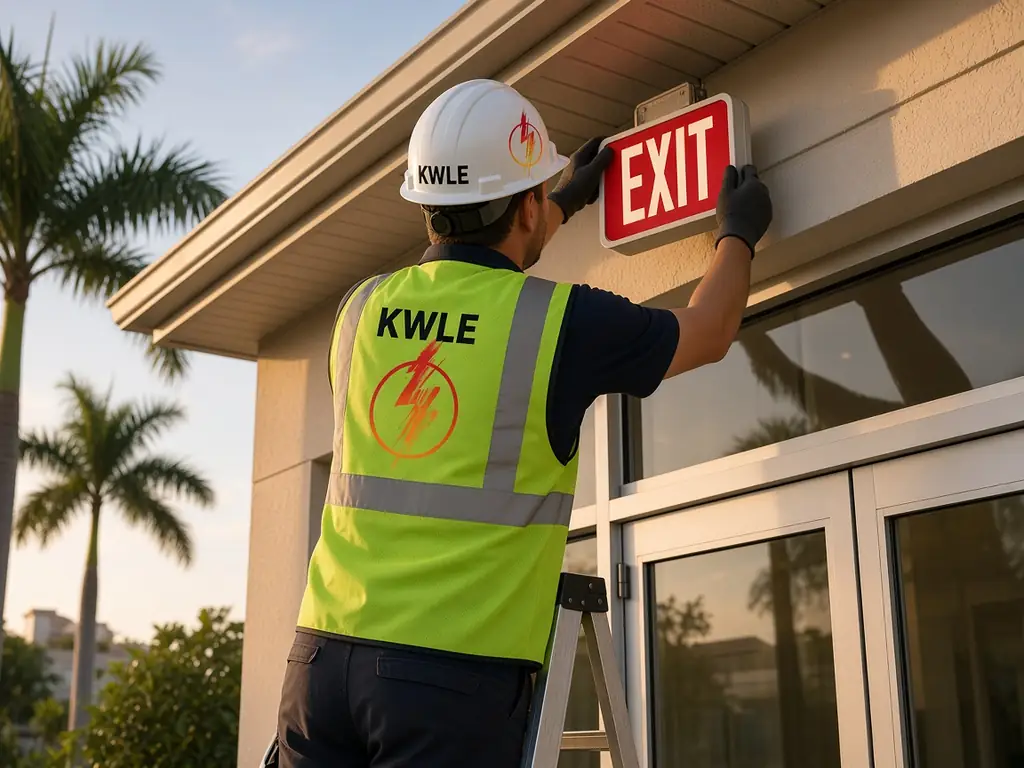
Emergency exit lighting in Seminole: light when the power fails
When the power goes out in a crowded room, people need to see the way out. Exit signs mark the path, and emergency lights brighten the floor and the stairs. Both run on batteries or a backup source. Rules call for them in most commercial and multi-family buildings, and they must work when they are needed.
What we handle
- Exit signs: LED signs with battery backup, in red or green.
- Emergency lights: twin-head units, recessed units and wall packs.
- Combination units: a sign and lights in one housing.
- Remote heads: extra lamps wired to a central battery.
- Inverter systems: one unit that backs up a set of regular fixtures.
- Testing: monthly and yearly checks with a written log.
Placement and coverage
- Florida electrical contractor license EC13014717, licensed & insured
- Woman-owned business based at 6248 Seminole Blvd, Seminole FL 33772
- 2-year workmanship warranty, 5 years with a Member Care Plan
- SPAN Authorized Installer and Home Depot preferred contractor
- Open 24/7 for electrical emergencies: call or text (727) 476-7079
Exit signs must be visible from anywhere along the path. Emergency lights should cover corridors, stairs, exit doors and large rooms without dark gaps. We walk the egress route, mark gaps, and place units so light overlaps. We avoid spots where a door swing or a ceiling tile would block the light.
Batteries and tests
Emergency units typically need to run for 90 minutes on battery. A short monthly test confirms that they come on, and a longer annual test confirms that they last the full time. Batteries wear out, usually within a few years. We replace weak ones and log the date. A dead light fails the test even if the building looks fine.
Retrofits and upgrades
Old exit signs with incandescent lamps or tired batteries are inefficient and fail often. LED signs use little power and last for years. We replace them in groups, often without touching the wall wiring. For new tenant spaces, we add units on the plan, with circuits that stay on when the room lights switch off.
Seminole properties
Local buildings that need emergency lighting include medical offices, strip centers, churches, schools, restaurants and apartment buildings. Many were built in the 1970s and 1980s, with older units that now fail. Salt air shortens battery life and corrodes housings on exterior units, so we choose wet-listed parts outdoors.
Fire inspections and records
Inspectors may ask for a test log. We write dates, results and replacements in a log you can keep at the property. We also note which units failed and when they were fixed. A neat record helps pass inspections and satisfies insurers.
Quick response
If a unit fails and an inspector is due, call (727) 476-7079. We keep common parts on the truck and can often fix it the same day.
Choosing between battery units and central inverters
Self-contained battery units are common in small buildings because each light has its own charger and cells. They are easy to replace but need many separate tests. A central inverter feeds many fixtures from one cabinet, so testing is simpler and batteries last longer in a cool room. We recommend a type based on building size, ceiling heights and your maintenance staff.
Exterior and wet locations
Exits that lead outdoors need lights that can face rain, heat and salt air. We choose wet-rated housings, stainless hardware and sealed lamps. Mounting height and aim matter: a light that points at the door but not the path outside leaves people in the dark a few steps later. We walk the outside path at night when it helps.
Exit signs in stairwells and corridors
Signs should point clearly toward the exit, with arrows where the path turns. In long corridors, we add directional signs at set spacing so no one wonders which way to go. In stairwells, lights should cover every landing, since the stairs are where falls happen. We also confirm that doors and hardware do not block the light.
Tenant buildouts and remodels
When a space is rebuilt, partitions move and old coverage no longer fits. A new layout needs a new lighting plan. We coordinate with the contractor so lights go up before ceilings close, and we test the system before inspection. Missing a unit at this stage can delay an opening, so we plan early.
Common failure points
Dead batteries, loose charger cords, blown lamps, tripped breakers feeding the charging circuit and dirty or covered lenses cause most failures. A unit that is plugged into a switched outlet may never charge. We fix the cause and recheck. We also clean lenses and replace faded signs so they are easy to read.
Training staff and managers
A light is only useful if someone notices when it fails. We show your manager how to read the charge lamp on each unit, press the test button and record the date. Staff can report a dark corner or a flickering sign right away. A short walk-through at handoff takes ten minutes and helps keep the system ready between our visits.
Common questions
How often must emergency lights be tested? A short test each month and a full-duration test each year are common practice, and inspectors may ask to see the log.
Can you install exit signs without running new wires? Often yes. We replace like-for-like on existing circuits. New locations need new wiring.
Do exit signs need to be lit all the time? Most are lit all the time, either by standard power or with battery backup.
What does a failed test mean? The battery, charger or lamp has failed. We replace the failed part and retest.
Do you work in apartment buildings? Yes. We test corridors and stairs, and we work with managers on schedules.
Our trucks leave the shop on Seminole Blvd and work near Walsingham Road, Lake Seminole, 113th Street North, Lake Seminole Park. We also serve Largo, Bay Pines, Redington Beach, Redington Shores, Indian Shores, Gulfport, Ridgecrest and Belleair Bluffs.
Up: Emergency Exit Lighting across Tampa Bay · For everything we do locally, see Seminole electrical service.
Nearby: Bay Pines · Madeira Beach · Redington Beach · North Redington Beach
Call or text (727) 476-7079 for emergency exit lighting in Seminole, or book online. Business hours 7 AM–5 PM, weekend service, 24/7 emergency calls.