
Need bathroom exhaust fan installation in Indian Shores? Keywest Lights & Electric puts a correctly sized, quietly running exhaust fan in Indian Shores condo and house baths and vents it to the outdoors. We are licensed and woman-owned. A timer or a humidity control is part of the job when you want the fan to keep drying the room after you leave.
Request bathroom exhaust fan installation in Indian Shores
Tell us what you need and where the work is. A licensed electrician will reply with next steps and a time to visit.
On this barrier island we also handle JellyFish holiday lighting, panel upgrades, a home charging circuit and a backup generator install.
Call or text (727) 476-7079 · open 24/7 for emergencies · request a quote online
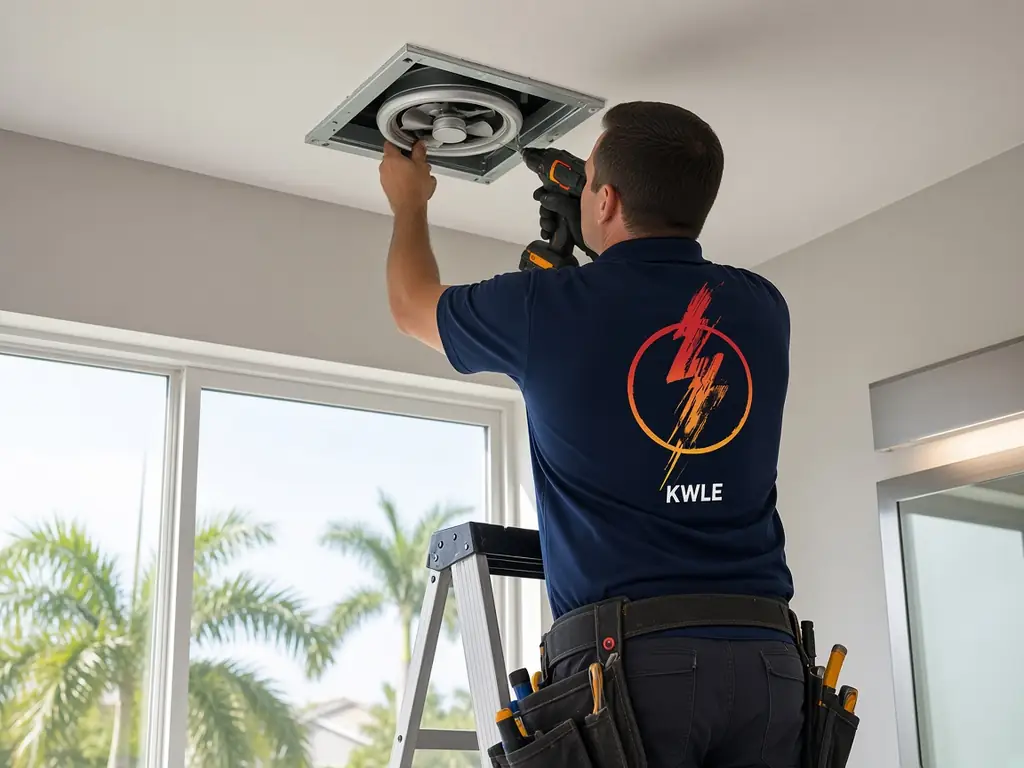
Bathroom exhaust fan installation in Indian Shores: a damp room on a barrier island
A bath on this island holds moisture. Short showers in a closed condo, salt in the air and little wall area all slow the drying. A fan that is too small, too loud or aimed into a dead ceiling pocket will not dry the paint or the grout. We install a unit that moves the right volume of air and a duct that actually leaves the building.
What we insist a fan must do
- Florida electrical contractor license EC13014717, licensed & insured
- Woman-owned business based at 6248 Seminole Blvd, Seminole FL 33772
- 2-year workmanship warranty, 5 years with a Member Care Plan
- SPAN Authorized Installer and Home Depot preferred contractor
- Open 24/7 for electrical emergencies: call or text (727) 476-7079
- Move enough air: sized to the room, not to the hole that happens to be there.
- Terminate outdoors: never into an attic, a soffit bay or a shared chase that was not designed for it.
- Stay quiet: or it will be switched off.
- Run after the shower: on a timer or a humidity function.
- Sit in a tight housing: so moist air does not bleed into the ceiling.
Tired fans in 1970s and 1980s baths
Many baths here still use the original motor, or a later unit dropped into a dirty housing. Bearings grind, damper flaps stick and the flexible duct slips off the collar. We pull the assembly, inspect the duct and the backdraft damper, and replace what will not seal. A rusted housing goes out with the motor.
Picking a path to the outside
On a mid-rise the run may be a short side-wall cap or a longer path to an approved termination. We will not invent a route through a neighbor’s ceiling. If the association already has a standard cap, we use it. If the old duct ends in a closed cavity, that gets fixed before a new motor goes in.
Rigid pipe, short flex and a real damper
Wherever the joist bay allows it, we prefer smooth rigid duct over a long accordion hose, because the ribs catch lint and cut the airflow. A short, tight flex connector at the housing is fine. We pitch the run so condensation drains out the cap, not back into the motor, and we check that the damper opens easily and closes against wind from the Gulf side.
The circuit, the switch and a wet room
A new fan needs a solid, grounded connection and a control you can find with a wet hand. In a small bath we often pair it with a timer or a humidity function so it does not stop the instant the light goes out. We respect clearances around tubs and showers and work with any GFCI-protected lighting already in the room.
Quiet enough for a shared wall
A bedroom often sits on the other side of a condo bath. We choose a sound rating that belongs in that setting, then we run the fan with you after it is in, so you can hear it and feel the air at the grille.
Shared ceilings and new caps
The drywall above a bath may be a common element, and a new wall or roof cap may need a signature. We provide a small sketch and the product sheet. We do not cut a new exterior cap until that approval is in hand, when it is required.
Paint will not fix a dead fan
Fresh enamel will peel again if the room cannot dry. A correctly vented fan is the part of a bath refresh that actually lowers moisture. We do not treat mold, and we do not claim to, but we will tell you if the existing fan was never going to keep up.
Ceiling radiation dampers in a stacked building
Some mid-rise ceilings need a rated radiation damper at the fan opening. We check for that before we cut a larger hole or drop in a new housing. Swapping a rated assembly for an ordinary one is not a shortcut we will take. If the existing damper is stuck open or painted shut, we replace it with the same kind of rated part.
Protecting the room while we work
The vanity and the tub get covered, the circuit is isolated, the old fan comes out and the duct is inspected. The new housing is set, the electrical connection is made, gaps are sealed and the damper is tested. Dust is vacuumed, not brushed into the hall.
Simple controls for everyday use
A timer you can see, or a fan that starts with the light and runs a few extra minutes, is easier than a hidden module no one can find. We ask how you use the room and set the control so it does not take a second thought.
Two baths, one appointment
Plenty of condos have a hall bath and a bedroom bath. If both fans are weak, doing them the same day saves a return trip and lets us match the controls. Each fan is still sized to its own room.
Tight units and makeup air
A very tight condo can let a strong fan pull air down a common duct or under a door. We watch for that during the test and will not leave a setup that backdrafts another space. A slightly different unit or a longer run time can be the better choice.
Leaks we will not hide
If the old fan stained the ceiling, we show you the cavity. Drywall repair may belong to another trade. We will not put a new grille over a wet pocket and call the work finished.
Living with the new fan
We show you how to clean the grille and when a replacement is reasonable. Fans in this climate work hard. A quick rinse of the cover a few times a year keeps the airflow up and the motor cooler.
No ventless shortcuts
A unit that only stirs the room, or a duct that ends in the ceiling, moves moisture into places you cannot see. We will not install that. If a proper termination cannot be built today, we say so and plan the right path.
Questions we hear in Indian Shores
Can a loud condo fan be swapped for a quieter one? In most baths, yes. We inspect the housing and the duct first, then choose a quieter unit that still moves enough air.
Must the duct go outdoors? Yes. We will not dump moist air into a ceiling pocket or a sealed soffit bay.
Does a new cap need association approval? If we cut a new exterior termination, it often does. We provide a sketch and wait for that okay.
Can the fan keep running after I leave the room? Yes. We install timers and humidity-sensing controls and set them with you.
Can both bathrooms be done the same day? We can, and many owners prefer that. Mention it when you call so we bring two units.
How do I schedule this? Call or text (727) 476-7079. The shop is about 4 miles away in Seminole.
Crews roll out from our shop on Seminole Blvd, about 4 miles from town, and work along the Gulf shore, the Intracoastal, the Tom Stuart Causeway and Gulf Boulevard. We also take calls in North Redington Beach, Redington Beach, Indian Rocks Beach, Madeira Beach and Bay Pines.
Back to the service: Bathroom Exhaust Fan Installation in the Tampa Bay area. For a full list in this town, visit Indian Shores electrician services.
Nearby towns: Seminole
Call or text (727) 476-7079 for bathroom exhaust fan installation in Indian Shores, or book online. Shop hours 7 AM–5 PM, weekend service, 24/7 emergency calls.