
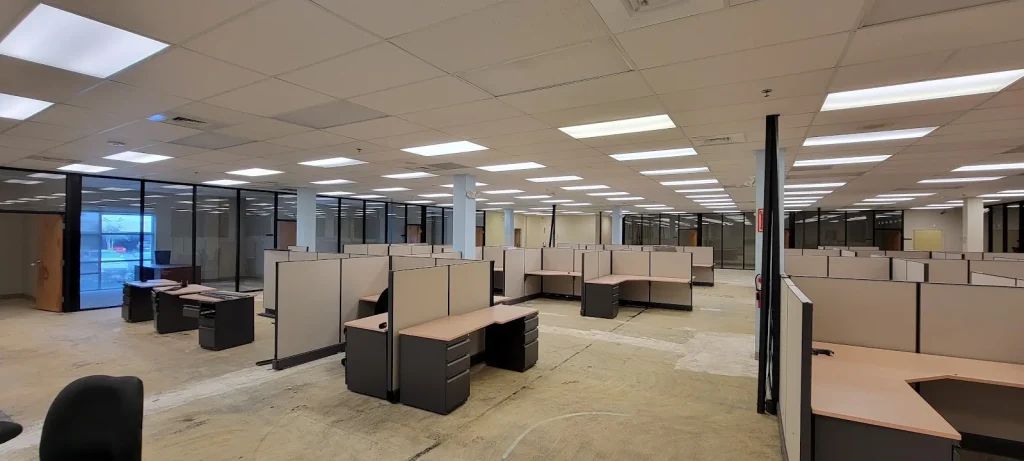
Walk into a lot of offices, shops and warehouses around Pinellas County and you’ll still find the same thing overhead: fluorescent tubes that flicker, a few dead fixtures nobody has gotten around to, and high-bay lights in the back that take forever to warm up. Lighting is easy to ignore until it starts costing you, through higher power bills, constant lamp and ballast replacements, or a space that feels dim and tired to employees and customers.
An LED lighting upgrade fixes most of that. But “switch to LED” covers a lot of ground, and the right plan for a 3,000-square-foot office in Largo is very different from the right plan for a warehouse in Pinellas Park or a flex space off Ulmerton Road. Here’s what we walk through with business owners and property managers before any work starts.
Request a quote
Tell us what you need and where you are. A licensed electrician will call or text you back to set a time. For an emergency, call (727) 476-7079, 24/7.
Retrofit kits or new fixtures?
There are two basic ways to go LED.
Retrofit kits reuse the existing fixture housing. The old lamps and ballast come out and an LED kit or LED tubes go in. This can make sense when the housings are in good shape, the layout already works, and you want to keep disruption and cost down.
New fixtures replace the whole unit, like swapping old 2×4 troffers for LED flat panels, or old metal halide high-bays for LED high-bays. This is usually the better call when housings are yellowed, rusted or damaged, when the layout no longer matches how the space is used, or when you’re already opening up the ceiling for a remodel or tenant improvement.
A lot of projects end up as a mix: retrofit kits where the fixtures are fine and new fixtures where they aren’t. We’ll look at what’s up there and tell you honestly which option makes more sense.
Light where the work actually happens
More light isn’t always better light. The goal is the right amount of light in the right places.
- Offices: even, glare-free light over desks and work surfaces, with softer light in hallways and break rooms. Screens and glossy surfaces pick up glare easily, so fixture choice and placement matter.
- Warehouses and shops: good vertical light on rack faces so labels are easy to read, steady light down the aisles, and brighter light at loading doors and work benches.
- Retail and customer areas: light that makes products and finishes look right, which comes down to color temperature and color quality as much as brightness.
Color temperature is worth a quick conversation too. Many offices land around 3500K to 4000K, while warehouses and shops often go a little cooler. The important thing is to pick one and keep it consistent so the space doesn’t look patchy.
Controls: the part people skip
Fixtures are only half of an upgrade. Controls are where a lot of the day-to-day savings come from:
- Occupancy and vacancy sensors for restrooms, storage rooms, conference rooms and warehouse aisles that sit empty much of the day.
- Daylight dimming near windows and skylights, so fixtures dim back when the sun is doing the work.
- Time schedules so lights aren’t burning all night after the last person leaves.
Depending on the scope of the work, the energy code may also require certain controls when lighting is replaced or added. We’ll confirm what applies to your space before the job is priced, so there are no surprises at inspection.
Permits, inspections and paperwork
Commercial lighting work often needs an electrical permit, especially when circuits are added or changed or fixtures are replaced in quantity. When a permit is required, we pull it and handle the inspection. If you’re a tenant, it’s also smart to check your lease and talk with your landlord or property manager early, since many buildings have their own rules about who can work on the electrical system and when.
Keeping your business open during the work
Nobody wants to close for a lighting job. Before work starts, ask your electrician how they’ll phase it. Breaking the job into zones, working around your busiest hours, and keeping power on to critical equipment all make a big difference. Tell us your hours and your must-stay-on areas up front and we’ll plan around them.
While the lift is out
A lighting upgrade is a good time to deal with other overhead items, since the ceiling is already open and the lift is already on site. Common add-ons include:
- Replacing aging exit signs and emergency lights
- Adding outlets or dedicated circuits for new equipment
- Cleaning up old, abandoned wiring above the ceiling
- Updating exterior wall packs and parking lot lighting
On the outside of the building, some businesses are also adding permanent, programmable lighting along the roofline in their brand colors, for everyday architectural lighting, security, events and the holidays. See our JellyFish permanent lighting page if that’s on your list.
Who we work with
Keywest Lights & Electric works with offices, warehouses, retail spaces, restaurants, medical offices and property managers across Pinellas, Pasco, Hillsborough and Manatee counties, including Seminole, Largo, Clearwater, St. Petersburg, Pinellas Park and Tampa. We’re a licensed and insured, woman-owned business and a Home Depot preferred contractor, and every job comes with a 2-year workmanship warranty (5 years for Member Care Plan members).
Learn more about our commercial electrical services, or if you’re planning a larger buildout, see commercial build-outs and tenant improvements.
Ready to plan your LED upgrade?
Tell us about your space: square footage, what’s overhead now, your hours, and anything that’s been bugging you about the lighting. We’ll walk the site, recommend retrofit kits, new fixtures or a mix, and give you a clear written proposal.
Call (727) 476-7079 or request service online.
About the author: Mark Einstein, Florida licensed electrical contractor, Keywest Lights & Electric.