
Need weatherhead repair in Tampa Bay? Keywest Lights & Electric repairs weatherheads, service masts and entrance cables across Pinellas, Hillsborough and Pasco counties. We are a woman-owned contractor under license EC13014717, and we coordinate any line disconnect with the power company.
Request weatherhead repair in Tampa Bay
Tell us what you need and where the work is. A licensed electrician will reply with next steps and a time to visit.
Call or text (727) 476-7079 · open 24/7 for emergencies · request a quote online
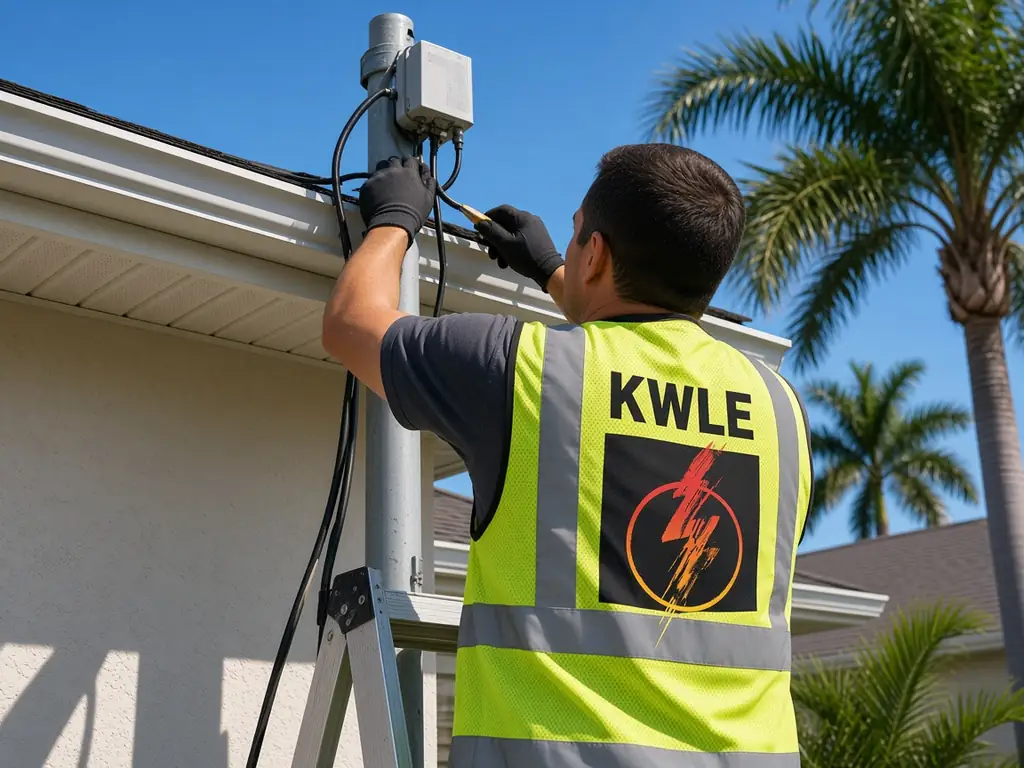
Weatherhead repair in Tampa Bay: where the power enters
The weatherhead is the curved cap at the top of the service mast, where wires from the street enter a conduit that runs down to the meter. It keeps rain out of the pipe. When it cracks, rusts, leans or loses its seal, water runs down the conduit into the meter base and panel. That causes corrosion, shorts and outages.
Signs of trouble
- Leaning or bent mast: pulled by wind or a heavy line.
- Cracked or rusted cap: water entering the conduit.
- Frayed insulation: wires that rub or have been chewed.
- Sagging service drop: wires too low or loose.
- Water in the meter base: stains and rust below the mast.
- Sparks or buzzing: arcing at a connection.
- Lights flickering: a loose splice or damaged conductor.
Parts of the service entrance
- Florida electrical contractor license EC13014717, licensed & insured
- Woman-owned business based at 6248 Seminole Blvd, Seminole FL 33772
- 2-year workmanship warranty, 5 years with a Member Care Plan
- SPAN Authorized Installer and Home Depot preferred contractor
- Open 24/7 for electrical emergencies: call or text (727) 476-7079
The service drop runs from the pole to the house. At the house, it attaches to the mast and enters the weatherhead. A drip loop in each wire lets water drip off before it can run into the pipe. The mast is braced by clamps or a roof support. Each part must be sound.
Who handles what
The power company owns the wires up to the point of attachment, and the owner owns the mast, weatherhead and everything below. A repair that touches the service wires requires the power company to disconnect them. We schedule it, make our repair and have the line reconnected.
Mast repair and replacement
A mast pulled by a falling limb or a heavy line may bend. Rust thins the wall of the pipe over time. We replace damaged sections with rigid conduit of the right size, brace it and reconnect. Where the mast passes through the eave, we seal the opening.
Drip loops and splices
Each service wire needs a drip loop below the weatherhead. A missing loop lets water run into the conduit. Loose or corroded splices at the top are a source of heat. We cut back damaged wire, make new connections with listed connectors and tape and seal them.
Storm damage
Hurricanes and thunderstorms strain service masts. After a storm, a leaning mast or a pulled-away weatherhead needs prompt repair. We inspect and fix the entrance, and document the damage with photos for insurance.
Quotes, permits and warranty
Service entrance repairs usually need a permit and an inspection. Our workmanship carries a 2-year warranty, or 5 years with a Member Care Plan.
Service drop clearances
The service drop must stay a safe distance above roofs, driveways and walkways. Low or sagging wires are a hazard to ladders, trucks and people. If clearance is short, the mast may need to be raised and braced, and the power company may need to reattach the wires. We measure, plan and coordinate.
Mast materials and bracing
Rigid galvanized conduit is a common mast material. Taller masts need guy wires or braces approved for the height. Plastic conduit is allowed in some settings but is more fragile. We choose a mast type that suits the load and the wires, then secure it to framing, not just siding.
Roof and eave flashing
Where the mast passes through roofing, a flashing and a boot keep water out. Old boots crack in the sun. We coordinate with a roofer when a roof penetration needs resealing, since a roof leak can mimic a weatherhead problem. We test both before assuming.
Birds, squirrels and insects
Birds nest in weatherheads, squirrels chew insulation and wasps build in warm pockets. These intruders cause shorts and blockages. We clean the head, install covers or screens where allowed and inspect the wire jackets. Pest control may be needed for repeated problems.
Aging services and upgrades
Some old services use cloth-wrapped wire or undersized conductors. An upgrade to a larger service may call for a bigger mast, thicker wire and a new meter. We plan the work with the power company, and the permit and inspection follow in order.
Safety distance from wires
Stay at least ten feet from overhead service lines, and further from wires that are down. Do not use ladders, pole saws or metal tools near them. Water, trees and metal gutters can carry current. Call the power company if wires are damaged and call us when it is safe.
Keeping records of the entrance
We photograph the mast, the head, the base and the grounding before and after the work. The photos help with insurance, with the power company and with future repairs. A short written note lists parts and dates, so you know what is new and what is original.
Drip loops and sealing putty
Wires leave the head in a downward loop so rain drips off before entering. Gaps around the wires are sealed with approved putty. We check both, because a perfect head with a missing loop still lets water in. Corrosion inhibitor goes on every splice.
Ladders, lifts and safe working height
Work at the top of a mast needs proper ladders, tie-offs and sometimes a lift. We plan the setup, place cones and keep children and pets away. The power company often disconnects the drop first, so the work happens with the line dead.
Strain relief and cable ties
Service wires carry weight and wind pull. Strain relief at the head and clamps along the mast keep that pull off the connections. We replace brittle ties, check the spacer and confirm the wires hang with a gentle slope instead of a sharp bend.
Grounding electrode conductor at the entrance
A bare copper wire runs from the service to a rod or a water pipe. Corroded clamps, cut wires and missing rods are common finds near the mast. We tighten, replace or add the connection and note it in our report.
Common questions
What is a weatherhead? It is the curved cap at the top of the service mast that lets wires in and keeps rain out.
Can I fix a leaning mast myself? The wires are live, so a licensed electrician and the power company should handle it.
Who is responsible for the wires from the pole? The power company owns them. The owner owns the mast and weatherhead.
What happens if water gets in? It can corrode the meter base and panel and cause shorts. Prompt repair prevents bigger damage.
Do I need a permit? Usually yes. We pull it.
How long does a repair take? Many repairs take a few hours, plus time to schedule the power company.
Can you replace a weatherhead on a metal roof? Yes. We coordinate with the roofer for flashing and sealing.
Do you handle insurance paperwork? We provide photos and a written summary for your claim.
Local pages: weatherhead repair in Seminole, our home base. See also Pinellas County, Hillsborough County and Pasco County service areas, or browse all electrical services.
Call or text (727) 476-7079 for weatherhead repair in Tampa Bay, or book online. Business hours 7 AM–5 PM, weekend service, 24/7 emergency calls.