
Need water heater wiring in Tampa Bay? Keywest Lights & Electric wires electric water heaters across Pinellas, Hillsborough and Pasco counties: tank, tankless and heat pump models. We are a woman-owned contractor under license EC13014717, and we match the circuit, wire and disconnect to the nameplate.
Request water heater wiring in Tampa Bay
Tell us what you need and where the work is. A licensed electrician will reply with next steps and a time to visit.
Call or text (727) 476-7079 · open 24/7 for emergencies · request a quote online
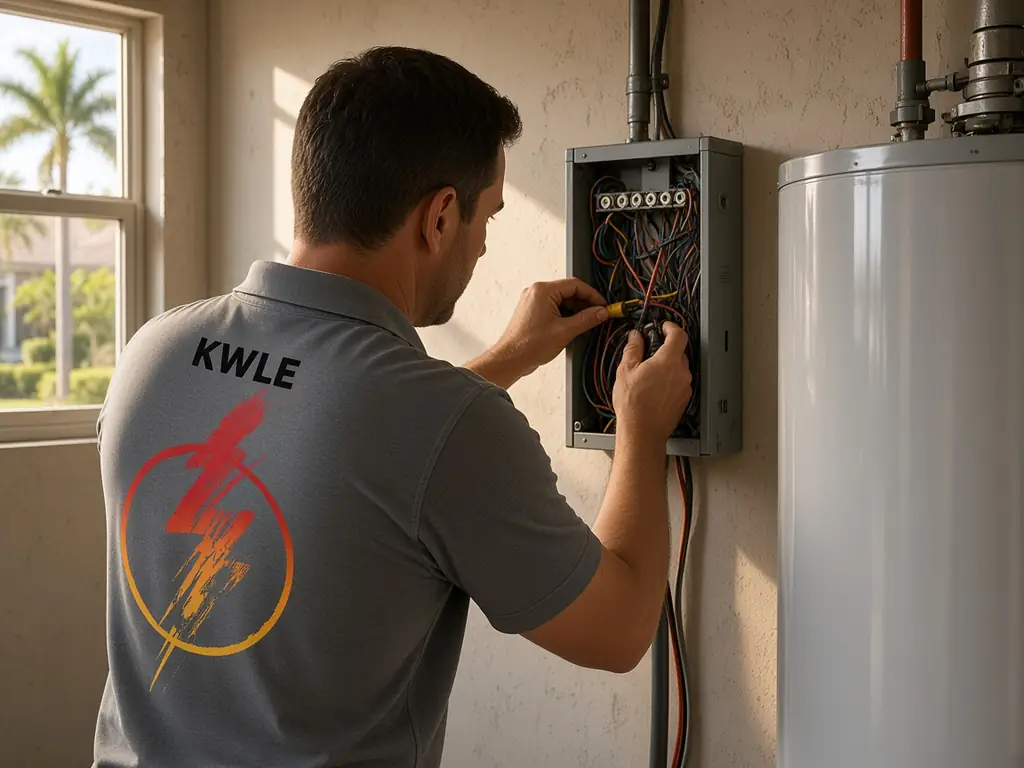
Water heater wiring in Tampa Bay: heat that depends on the circuit
An electric water heater works hard all day. It needs a dedicated 240-volt circuit with the right wire size and breaker, a proper disconnect or junction box and a safe connection to the heating elements. When wiring is wrong or worn, the heater trips, runs lukewarm or overheats.
Types of water heaters
- Tank heaters: the common 40, 50 or 80 gallon models.
- Tankless heaters: high amperage and large wire.
- Heat pump water heaters: efficient units with special circuits.
- Point-of-use heaters: small units under sinks.
- Solar-assisted tanks: electric backup elements.
- Commercial heaters: three-phase or large single-phase.
What the label tells us
- Florida electrical contractor license EC13014717, licensed & insured
- Woman-owned business based at 6248 Seminole Blvd, Seminole FL 33772
- 2-year workmanship warranty, 5 years with a Member Care Plan
- SPAN Authorized Installer and Home Depot preferred contractor
- Open 24/7 for electrical emergencies: call or text (727) 476-7079
The label lists voltage, wattage and breaker size. A standard tank heater uses 4,500 watts and a 30-amp breaker with 10 gauge wire. A tankless unit may need 120 amps or more. A heat pump unit may use less power but needs space and a drain. We read the label and plan the circuit before purchase.
Replacing an old heater
When a tank fails, owners want hot water quickly. We check the wiring while the plumber works, replace brittle wire, add a disconnect where required and tighten every connection. A corroded wire can melt a new unit, so we never reuse questionable cable.
Tankless and high-demand heaters
Tankless electric heaters use very large current for short periods. They may need a heavier service and a bigger panel. We calculate the demand, advise on panel upgrades and explain trade-offs, including whether a heat pump or gas model suits the home better.
Heat pump water heaters
These efficient units use a small compressor and may need a 240-volt circuit with a smaller breaker. They also need airflow and a condensate drain. We run the circuit, install the disconnect and coordinate with the plumber for the drain and the location.
Safety devices and codes
Water heaters need a disconnect within sight, a grounded connection and a pressure and temperature relief valve installed by a plumber. In garages, the code calls for a raised platform in some cases. We follow the wiring rules and note plumbing items for the plumber.
Troubleshooting no hot water
A dead heater might have a tripped breaker, a failed thermostat, a burned element or a bad connection. We test voltage at the heater, check elements with a meter and replace failed parts when appropriate. Many repairs take less than an hour.
Quotes, permits and warranty
New circuits need a permit. Our workmanship carries a 2-year warranty, or 5 years with a Member Care Plan.
Thermostats, elements and high-limit switches
A standard tank has two elements and two thermostats, with a high-limit reset button that trips if the water gets too hot. When a heater produces lukewarm water or none, a failed element or thermostat is a common cause. We test each part with a meter and replace only what has failed.
Wire size, conduit and flexible whip
Flexible metal conduit, often called a whip, carries wire from a junction box to the heater. The whip must be the right length and fastened correctly. We use connectors that grip the cable, tighten each terminal and leave slack for service. A neat connection is easy to inspect and safer for the next person.
Sediment, scale and electrical failures
Hard water builds scale on elements, which makes them run hot and burn out. Tank flushing and a softener can extend life. While we work, we check for signs of leaks around the junction box, since water and wire do not mix. If we see moisture, we alert you and the plumber.
Time-of-use, timers and smart controls
Some owners add timers or smart controllers to run the heater at certain hours. These devices must be rated for the load and installed with the right wiring. We discuss whether a timer helps with your usage, and we install the control with a bypass switch.
Combination systems and boilers
Homes may use an electric boiler, a hydronic air handler or a combined appliance that heats water and air. These units use their own circuits and controls. We read the installation manual, check the supply, run wire to the right terminals and set up thermostats. We work with the HVAC installer for a clean handoff.
Garage platforms, seismic straps and bollards
A heater in a garage often sits on a platform and may need a guard against car impact. Strapping keeps it upright. We place the disconnect where it is visible and out of the way, and we run cable in a neat line to the junction box. A clean, protected install keeps your heater safe during daily garage life.
Water leak shutoffs and monitors
A small leak detector near the heater can warn you before a tank fails, and some models can shut off power or water. They need low-voltage or battery power and sometimes a wired relay. We can install the sensor, the relay and the alert, so a slow leak does not become a flood.
Replacement timing
A tank heater usually lasts around ten to fifteen years. Rust-colored water, popping noises and puddles are signs that it is near the end. Planning replacement before failure lets us check wiring, schedule the plumber and avoid cold showers on a holiday weekend.
Common questions
What size breaker does a water heater need? Most tank heaters use a 30-amp, 240-volt breaker. We confirm with the label.
Can you wire a tankless heater? Yes, if the panel can carry the load. We calculate first.
Why does my breaker trip when the water heater runs? A failed element or a loose wire may be the cause. We test and repair.
Do water heaters need a disconnect? Yes, within sight in most cases. We install it.
Can I switch from gas to electric? Yes. We run the circuit, and a plumber handles the gas and water.
Do you wire heat pump water heaters? Yes. We run the circuit and coordinate the installation.
How long does water heater wiring take? Many jobs take a few hours.
Do you wire solar water heater backup elements? Yes. We connect electric backup elements to a proper circuit.
Local pages: water heater wiring in Seminole, our home base. See also Pinellas County, Hillsborough County and Pasco County service areas, or browse all electrical services. We also handle water heater wiring.
Call or text (727) 476-7079 for water heater wiring in Tampa Bay, or book online. Business hours 7 AM–5 PM, weekend service, 24/7 emergency calls.