
Starting a build? We handle temporary power pole installation in Redington Beach. Keywest Lights & Electric handles temporary power pole installation in Redington Beach for new builds, rebuilds and major remodels. We are licensed and woman-owned, we set the pole, mount the panel with protected outlets, ground it properly and schedule inspection with the power provider.
Request temporary power pole installation in Redington Beach
Tell us what you need and where the work is. A licensed electrician will reply with next steps and a time to visit.
Besides this, our Redington Beach crew handles commercial generator installation, shop and office electrical work, a car charger circuit and backup generator hookups. Related: jellyfish lighting and panel upgrade replacement.
Call or text (727) 476-7079 · open 24/7 for emergencies · request a quote online
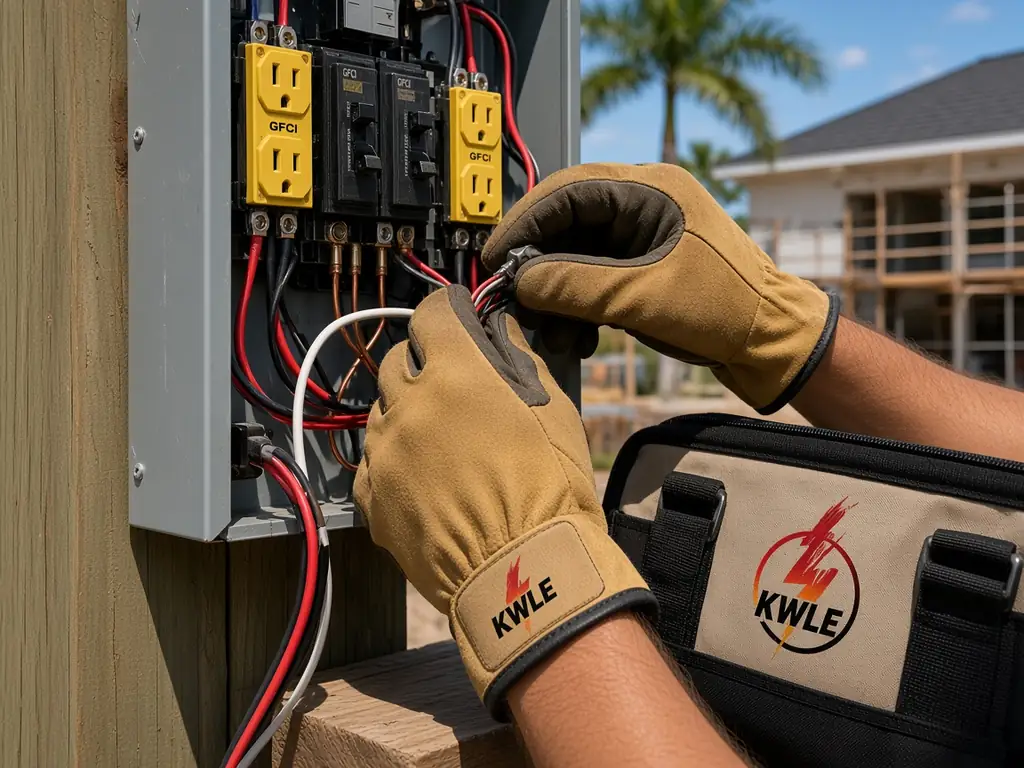
Temporary power pole installation in Redington Beach: power for the crews before the house has any
A construction site needs electricity from day one for saws, compressors, lights and chargers. A temporary pole gives the crew safe, protected outlets until the permanent service goes in. We set it, test it and remove it when the work is done.
What a temporary pole includes
- A treated post or steel frame: set in the ground or braced.
- A meter socket or pedestal: for the power provider’s meter.
- A weatherproof panel: with breakers for the site.
- Protected outlets: ground-fault protection on each receptacle.
- A ground rod: driven and bonded.
- A lockable cover: to keep tools and children out.
Why a pole beats a generator
- Florida electrical contractor license EC13014717, licensed & insured
- Woman-owned business based at 6248 Seminole Blvd, Seminole FL 33772
- 2-year workmanship warranty, 5 years with a Member Care Plan
- SPAN Authorized Installer and Home Depot preferred contractor
- Open 24/7 for electrical emergencies: call or text (727) 476-7079
A pole gives steady power without fuel, noise or fumes. It is quieter for neighbors, cleaner for the site and easier to keep running than a generator over a long build.
Choosing the location
We place the pole where trucks can reach it, where cords will not cross a driveway and where the power provider’s line can connect. It also stays out of the footprint of the house and the septic or pool plans.
Sizing the service
A small build may need only a 100 amp panel, while a large one may need 200 amps and more outlets. We ask about equipment, like a concrete pump or a large saw, and size to match.
Protected outlets and cords
Site outlets must have ground-fault protection. We add 120 volt and 240 volt receptacles, check each one and recommend heavy-duty cords for long runs.
Grounding and bonding
A pole must be grounded to protect crews from shock. We drive the rod, connect the panel and test the system before the inspector arrives.
Coordinating with the power provider
The provider connects the line and sets the meter after the work is approved. We schedule the visit and keep you updated on the date.
Permit and inspection
A temporary pole needs a permit and an inspection. We prepare the paperwork and meet the inspector on site.
Setting the pole in sandy soil
Barrier-island sand is loose, so a post needs more depth or bracing. We set and brace the pole so it stays plumb through rain and wind.
Salt air and corrosion
Bay and Gulf breezes carry salt that eats bare metal, so on a site we choose galvanized hardware and sealed covers.
Storm-season rules
A site can face tropical weather. We secure covers, shut off power and strap loose cords before a storm, and we help restore service afterward.
Flood-zone sites
Where flood rules apply, the panel must sit at a height the code allows. We set the pole accordingly.
Teardown and rebuild projects
Most houses here date to the late 1950s, so many builds start with a teardown. We plan power for the demolition crew, then the framers and every trade after.
Electric heat and the permanent service
Since homes here heat electrically, the permanent service is a big one. We place the pole so it comes out without disturbing that work.
Condos and large buildings
Roughly a quarter of homes are in larger buildings. A shared site follows board rules and may use building power in place of a pole.
Seasonal owners
If you are away for months, we lock the panel and leave a contact number, so the site stays secure until you return.
Aging in place
Some jobs are remodels for retirees who want a safer house, so we time the pole and the work to limit noise and disruption.
Lighting the site
Good light helps crews and discourages theft. We add flood lights on a timer or a photocell.
Phones, chargers and the site office
A trailer or a small office needs steady power. We add a dedicated outlet and a surge strip.
Moving or upgrading the pole
If the plan changes, we move the pole or add capacity. We handle the paperwork and the re-inspection.
Removing the pole
When the permanent service is energized, we remove the pole, the panel and the rod, and restore the area.
Pole height and wire clearance
The service wire must clear driveways and walkways by a set height. We choose a pole length that meets the rule and leaves room for the meter.
Cord management for crews
Cables across a lot are trip hazards and get crushed by trucks. We add hooks and cord covers and place outlets near each work area.
Power for concrete and tile saws
Large saws and mixers draw heavy current at startup. We use breakers and wire that can handle surge loads without nuisance trips.
Security and lockouts
A locked panel keeps out visitors and lets us shut power at day’s end. We use a hasp and a clear label for the main switch.
Heat, rain and sun
A panel on a pole faces the weather. We use a rated enclosure, a drip shield and a gasket on the door.
Moving the pole between phases
Some builds need power in a new location after grading. We re-set the pole and re-inspect it.
Warranty
Workmanship is covered for 2 years, and for 5 years when you add a Member Care Plan.
Before we arrive
Share the site plan, the equipment list and the timing of the build. Mark the property lines and any buried lines.
Safety first
Do not plug in a damaged cord or use an outlet that has no ground-fault protection. If the pole shocks or sparks, stay back and call us.
After the install
You receive the permit, the inspection record and a short operating guide for the crew.
Common questions
How long does a temporary pole take? Setting the pole takes a short visit. The permit and the power provider connection set the overall timeline.
Does a temporary pole need a permit? Yes, it needs a permit and an inspection.
Who connects the power? The power provider connects after the pole passes inspection.
Our trucks leave the shop on Seminole Blvd, about 2 miles away, and work near the Intracoastal Waterway and Gulf Boulevard. We also serve Redington Shores, Indian Shores, Madeira Beach, North Redington Beach and Bay Pines.
Up: Temporary Power Pole Installation across Tampa Bay · For everything we do locally, see Redington Beach electrical service.
Call or text (727) 476-7079 for temporary power pole installation in Redington Beach, or book online. Business hours 7 AM–5 PM, weekend service, 24/7 emergency calls.