
Need temporary power pole installation in Tampa Bay? Keywest Lights & Electric sets temporary power poles for new builds, additions and events across Pinellas, Hillsborough and Pasco counties. We are a woman-owned contractor under license EC13014717, and we coordinate the permit, the inspection and the power company hookup.
Request temporary power pole installation in Tampa Bay
Tell us what you need and where the work is. A licensed electrician will reply with next steps and a time to visit.
Call or text (727) 476-7079 · open 24/7 for emergencies · request a quote online
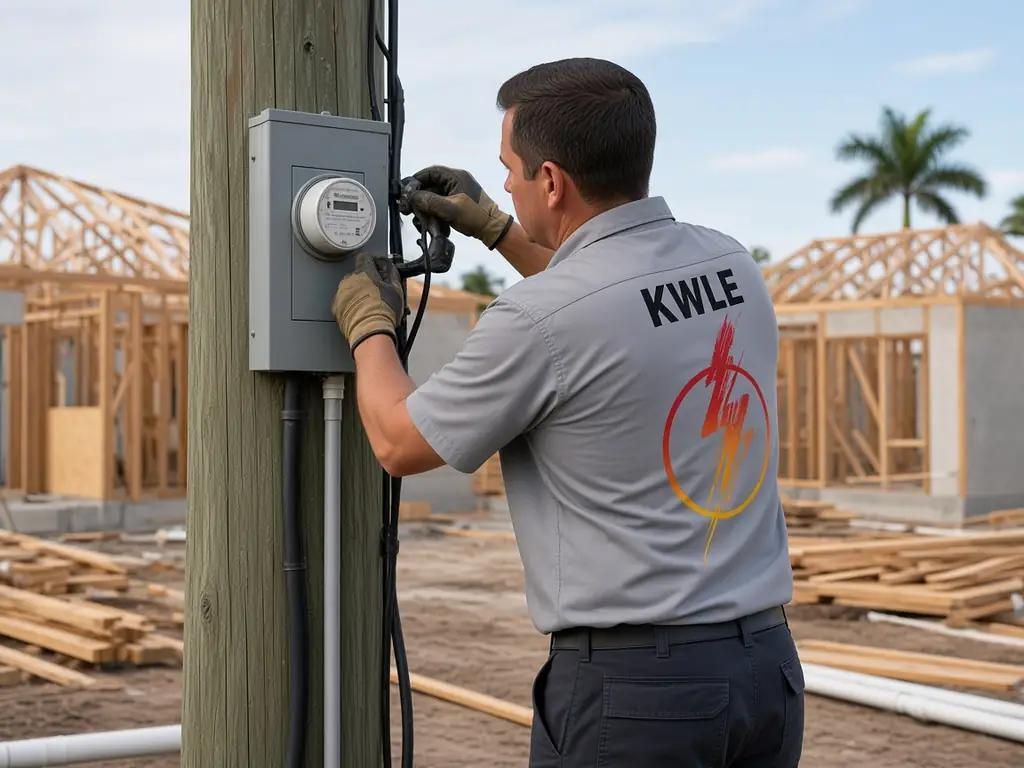
Temporary power pole installation in Tampa Bay: power to start the build
Before a new home has a permanent service, the crew still needs electricity. Saws, compressors, lights and chargers run from a temporary pole. The pole holds a meter socket, a main breaker, ground-fault outlets and sometimes a 240-volt receptacle. It must be safe, grounded and approved by the inspector before the power company connects.
What a temporary pole includes
- Treated post or frame: set deep and braced.
- Meter socket: rated for the pole’s service.
- Main breaker: sized to the site load.
- Ground-fault outlets: protection for tools in damp sites.
- Grounding electrode: rods driven and bonded.
- Weather cover: to keep rain off breakers.
Sizing the pole
- Florida electrical contractor license EC13014717, licensed & insured
- Woman-owned business based at 6248 Seminole Blvd, Seminole FL 33772
- 2-year workmanship warranty, 5 years with a Member Care Plan
- SPAN Authorized Installer and Home Depot preferred contractor
- Open 24/7 for electrical emergencies: call or text (727) 476-7079
A small addition may need a 100-amp pole. A large build with cranes, welders and many saws may need 200 amps. We ask about tools, crew size and the schedule. A pole that is too small trips breakers all day.
Placement on the site
The pole must be reachable by the power company, close to the street or the planned service point and clear of the excavation. It should not block deliveries or trench paths. We walk the lot with the builder and mark a spot.
Grounding
Rods are driven to depth and bonded to the panel. Tools and wet ground make good grounding essential. We test where practical and photograph the connection for the inspector.
Ground-fault protection
Temporary power faces rain, mud and cords. All outlets need ground-fault protection. We use covers that shed water and replace cracked ones during the job.
Permits and inspections
A temporary pole needs a permit and a pass from the inspector. After it passes, the power company sets the meter and connects the drop. We coordinate each step and keep the builder informed.
Moving or upgrading a pole
During a build, the pole may need to move for grading or paving. We relocate it, upgrade the size or add outlets. We keep an eye on cord damage and weather wear.
Events and markets
Fairs, markets and outdoor events also use temporary power. We set distribution boxes, protect cables and add ground-fault outlets. We plan around crowds and weather.
Switching to permanent power
When the house is finished, the pole is removed and the permanent service is connected. We coordinate removal and the new meter set. We then test the final service.
Why choose Keywest Lights & Electric
We are licensed, insured and woman-owned. We arrive on time, build sturdy poles and keep paperwork clean. Our workmanship carries a 2-year warranty, or 5 years with the Member Care Plan. Call or text (727) 476-7079.
Safety on active sites
Keep cords off puddles and out of doorways. Do not overload one outlet with many tools. Report damaged covers right away. We train crews on simple rules and label the main breaker.
What to have ready
Have the site address, builder name, expected tool load and start date. A site plan helps us place the pole. Tell us about any trees, fences or utilities underground.
Pole types and materials
Poles can be pressure-treated posts, steel frames or pre-built units on a trailer. Each has strengths. Posts are simple; steel frames resist rot; trailer units move easily. We pick one that suits the site, soil and schedule.
Meter socket and service entrance rules
The meter socket must match the service voltage and amp rating. The power company may require specific models and sealing rings. We confirm the rule before ordering and mount the socket at the proper height.
Cord management and trip hazards
Long cords across a site wear and tangle. We recommend heavy-duty cords, cord ramps at doorways and hooks on the pole. We label outlets by load so crews spread tools across circuits.
Welders, saws and compressors
Welders and large compressors can need 240-volt receptacles. We install the right plug type and breaker and tell crews to match cords to the receptacle. A mismatched plug can overheat.
Generators on sites
Sometimes a pole is not available and crews use generators. A generator must not be connected to a building panel without a proper transfer device. We explain safe setups and recommend a pole when work will last weeks.
Lightning and surge on construction sites
Poles stand tall and attract strikes. A proper ground rod and short bonding lead help. We recommend crews stop work during thunderstorms. After a strike, we check breakers, outlets and the meter socket for damage.
Marking, tagging and testing
Each outlet gets tested with a meter before the pole is handed over. We tag the main breaker with the date and install a weather-rated label with our phone number, so the crew knows who to call.
Rented trailers and job offices
Job trailers need their own supply, often 50 amps. We install a receptacle on the pole, match the cord and test the trailer’s panel. Lights, air conditioning and computers run safely.
Pole height and drop clearance
The service drop must clear driveways and walkways by set heights. We choose a pole height to meet those marks and add a bracket for the drop. The power company confirms before connecting.
Weatherproof panels and lockable covers
Public sites need lockable covers so strangers cannot flip breakers. We fit a hasp, a rain hood and a cord strain relief. Keys stay with the site lead.
Lighting for safety at night
Work lights at the pole, at stairs and at entrances reduce falls. We add a photocell light at the pole base and a simple switch for the crew.
Common questions
Do I need a permit for a temporary pole? Yes. We pull it.
How long does setup take? Often a day, plus time for the inspection and the power company.
What size pole do I need? It depends on tools and crew. We help you choose.
Can you move the pole later? Yes.
Do you remove it afterward? Yes, when permanent power is ready.
Do you power events? Yes.
Do you work with builders? Yes.
Do you serve my area? We serve Pinellas, Hillsborough and Pasco counties. Call or text (727) 476-7079 to confirm.
Local pages: temporary power pole installation in Seminole, our home base. See also Pinellas County, Hillsborough County and Pasco County service areas, or browse all electrical services.
Call or text (727) 476-7079 for temporary power pole installation in Tampa Bay, or book online. Business hours 7 AM–5 PM, weekend service, 24/7 emergency calls.