
Need smoke detector installation in Tampa Bay? Keywest Lights & Electric installs hardwired, interconnected smoke and carbon monoxide alarms in homes, condos and rentals across Pinellas, Hillsborough and Pasco counties. We are a woman-owned contractor under license EC13014717, and we test every alarm before we leave.
Request smoke detector installation in Tampa Bay
Tell us what you need and where the work is. A licensed electrician will reply with next steps and a time to visit.
Call or text (727) 476-7079 · open 24/7 for emergencies · request a quote online
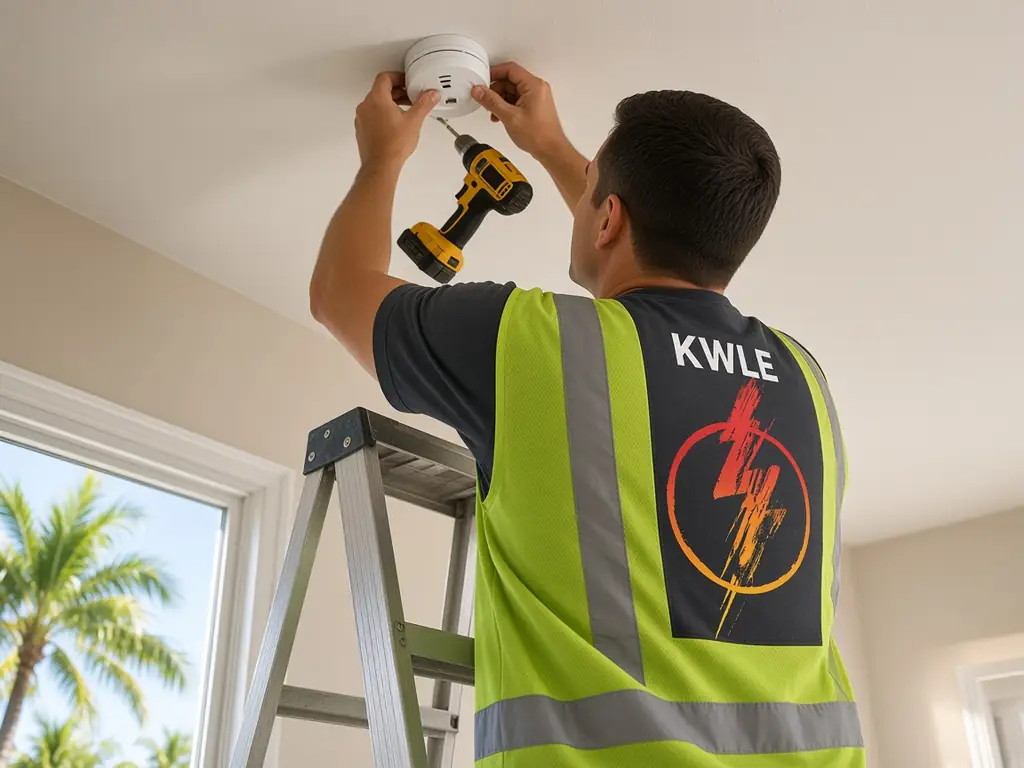
Smoke detector installation in Tampa Bay: early warning that works
A fire can double in size every minute, and most deadly fires happen at night. A working alarm near the bedrooms gives a family time to get out. Alarms that are old, missing or chirping with a dead battery do not help. A proper installation uses hardwired units with battery backup, linked so that one alarm sounds all of them.
Alarm types we install
- Ionization alarms: quick to sense flaming fires.
- Photoelectric alarms: quick to sense smoldering fires and good near kitchens.
- Dual-sensor alarms: both technologies in one unit.
- Carbon monoxide alarms: for homes with gas appliances or attached garages.
- Combination units: smoke and CO in a single housing.
- Heat detectors: for garages and kitchens where smoke alarms nuisance-trip.
- Wireless interconnect: for homes where cable cannot be run.
Where alarms belong
- Florida electrical contractor license EC13014717, licensed & insured
- Woman-owned business based at 6248 Seminole Blvd, Seminole FL 33772
- 2-year workmanship warranty, 5 years with a Member Care Plan
- SPAN Authorized Installer and Home Depot preferred contractor
- Open 24/7 for electrical emergencies: call or text (727) 476-7079
Alarms go inside every bedroom, outside each sleeping area and on every level of the home, including a finished attic or basement-style space. Kitchens need a photoelectric or heat alarm placed away from cooking fumes. Dead air spaces near the corner of a wall and ceiling are poor spots, so we mount alarms at the recommended distance from walls and fans.
Hardwired and interconnected systems
A hardwired alarm runs on household power with a battery backup, so it keeps working in an outage. Interconnection means that when one alarm detects smoke, all alarms sound. That matters in a large house, where a fire in the garage may not be heard upstairs. We run an interconnect wire or use a listed wireless system.
Replacing old alarms
Alarms wear out after about ten years, even if they still beep on test. The date of manufacture is printed on the back. We replace expired units, match the new models to the existing mounting base when possible and test the entire system afterward. If the old base and wire are damaged, we repair them first.
Carbon monoxide protection
Carbon monoxide has no smell and no color. Gas water heaters, gas dryers, fireplaces and cars in attached garages can produce it. CO alarms go near sleeping areas and on each level. We install them as separate units or combined with smoke alarms and explain what the alarm signals mean.
Rentals, condos and sales
Landlords must provide working alarms, and buyers and insurers often ask about them. We install, test and document alarm locations, with a short report for managers. In condos, we coordinate with the association when the building’s fire panel is involved.
Troubleshooting chirps and false alarms
A chirp every minute usually means a low battery or an expired unit. False alarms may come from steam, dust, insects or cooking fumes. We find the cause, move alarms that sit in poor locations and replace parts that are failing. A reliable alarm is one that people trust.
Quotes, permits and warranty
Replacing alarms with like units rarely needs a permit. New circuits and new locations may. Our workmanship carries a 2-year warranty, or 5 years with a Member Care Plan.
Reading alarm signals
Alarms speak in patterns. Three loud beeps mean smoke, four beeps mean carbon monoxide, and a single chirp every thirty to sixty seconds means a low battery or an end-of-life unit. Some units use voice messages. We review the signals with the household and place a label on the cover that lists them, so no one has to guess in the middle of the night.
Escape planning with children and older adults
An alarm is only half the plan. Families need two ways out of every room, a meeting spot outside and a practice drill. Children may sleep through alarms, and older adults may have trouble hearing high tones. We can install alarms with lower-pitch tones, strobe lights and bed shakers for people with hearing loss.
Ceilings, walls and sloped surfaces
Smoke rises, so alarms belong on ceilings or high on walls. Peaked and vaulted ceilings need alarms placed a short distance from the high point, since dead air collects there. Ceiling fans can blow smoke away from a unit. We use a measuring tape and the manufacturer’s rules to find the best spot in each room.
Power, surge and circuit tips
Alarms should share a general lighting circuit, not a ground-fault circuit that may trip and leave them dead. We label the breaker and add a note to the panel directory. Surges can damage alarms, so we check the circuit and recommend whole-house surge protection when it makes sense.
Inspections and insurance
Home inspectors check alarm locations and dates. Insurers sometimes offer credits for monitored or interconnected systems. We give you a simple list of alarm locations, dates and models, which you can share with a buyer, inspector or agent.
Heat alarms and special locations
Unfinished attics, workshops, laundry rooms and mechanical closets see dust, temperature swings and fumes that fool smoke alarms. A heat alarm responds to a rise in temperature instead. We choose units rated for each location, label them and note the model, so a future owner can find replacements without hunting through boxes of old manuals.
Common questions
How often should smoke alarms be replaced? About every ten years. Check the date on the back of the unit.
Do all alarms need to be interconnected? Interconnection is required in many new and renovated homes and is a smart upgrade in any home.
Where should carbon monoxide alarms go? Near sleeping areas and on each level, and near fuel-burning appliances.
Why does my alarm chirp? A low battery, an expired unit or dust can cause chirps. We test and replace the unit if needed.
Can you replace a hardwired alarm with a battery one? We prefer hardwired units with battery backup, since they stay powered in an outage.
Do you test the whole system? Yes. We press the test button and confirm every alarm sounds.
Can you install alarms in a rental? Yes. We install and document them for landlords and managers.
Can you add alarms in a finished house? Yes. We fish wire through attics or use wireless interconnect.
Local pages: smoke detector installation in Seminole, our home base. See also Pinellas County, Hillsborough County and Pasco County service areas, or browse all electrical services.
Call or text (727) 476-7079 for smoke detector installation in Tampa Bay, or book online. Business hours 7 AM–5 PM, weekend service, 24/7 emergency calls.