
Need RV outlet installation in Bear Creek? For RV outlet installation in Bear Creek, Keywest Lights & Electric installs a listed 30- or 50-ampere inlet at the house or on a short listed post, in a wet-listed enclosure, on a branch sized to the inlet you actually need. Our licensed, woman-owned crew, working from a Seminole Blvd shop about 6 miles from this community, treats this as an RV inlet, not as a dryer receptacle and not as a regular outdoor 120-volt face.
Request rv outlet installation in Bear Creek
Tell us what you need and where the work is. A licensed electrician will reply with next steps and a time to visit.
Other work we do in Bear Creek: commercial electrical service, commercial generator installation, a car charger circuit and generator installation.
Call or text (727) 476-7079 · open 24/7 for emergencies · request a quote online
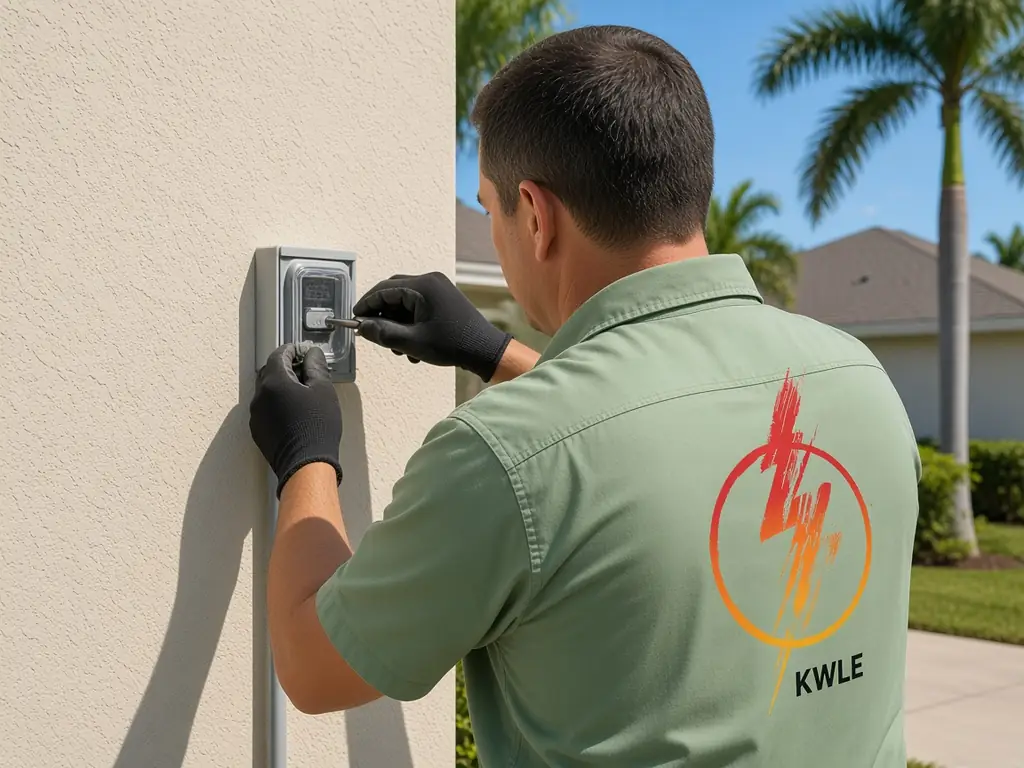
RV outlet installation in Bear Creek is an inlet for a coach, not a dryer face
The job on this page is an RV inlet: a TT-30 or a 14-50 inlet, a wet-listed enclosure, a protected branch and a place a coach can reach without a random cord across the yard. A dryer receptacle can look similar and still be the wrong device; that page is separate. A regular outdoor 120-volt receptacle is also a different visit. We start with the inlet the coach needs, where you park it and whether the panel can spare that branch.
What an RV inlet visit usually includes
- The right inlet: 30-ampere or 50-ampere, matching the coach, in a listed, wet enclosure.
- A branch: sized to that inlet, with a breaker we will label.
- A mounting: a house wall or a short listed post, not a loose board on a fence.
- A cord path: a reach to the parked coach that does not cross a sidewalk as a trip.
- A test: the inlet is live, the enclosure closes and the breaker trips on command.
30-ampere versus 50-ampere, and a guess we will not make
- Florida electrical contractor license EC13014717, licensed & insured
- Woman-owned business based at 6248 Seminole Blvd, Seminole FL 33772
- 2-year workmanship warranty, 5 years with a Member Care Plan
- SPAN Authorized Installer and Home Depot preferred contractor
- Open 24/7 for electrical emergencies: call or text (727) 476-7079
We match the inlet to the coach you actually hook up. A 50-ampere inlet on a 30-ampere coach, or the reverse, is a mismatch. We read the coach rating, and we will not install the wrong inlet because it was on the truck.
A wet-listed enclosure and a lid that still closes on the cord
The inlet has to live in a listed outdoor box that can close on the cord. We fit that box, we seal the hole in the wall and we will not leave a laundry receptacle on an open outdoor box and call it a coach inlet.
This is not a dryer outlet and not a patio receptacle
A 14-50 dryer face in a laundry closet is a different page. A 120-volt outdoor receptacle is a different page. We keep this visit on the coach inlet.
How we cover the inlet labor
Labor on the RV inlet is warranted two years, or five years under the Member Care Plan. The inlet, the enclosure and the breaker remain on their makers’ terms.
Permits for a new RV branch
A new 30- or 50-ampere inlet almost always needs a permit. We build that into the plan before we cut the wall. Who reviews it follows the parcel, not the mailing city.
After the first weekend with the coach plugged in
If the inlet warms, the breaker trips or the box weeps after rain, tell us. A loose lug or a lid that does not seat is easier to correct after the first hookup than after a season of use.
A short listed post versus a house-wall landing
If the park-spot is away from the wall, a short, listed pedestal can be the honest landing. We set that pedestal so it is supported and above the soil, and we will not screw an inlet to a fence board.
A tight driveway and a cord we will not leave in the walk
The inlet should sit so the cord is not a trip on the walk to the door. We shift the landing rather than drop a cord across the only path.
Panel space, a 50-ampere slot and a can we will not oversubscribe
A 50-ampere inlet is a real load. If the main cannot spare it, we say so and we talk about a panel upgrade or a load plan. We will not add a 50-ampere inlet to a can that is already full and hope it never coincides with the range.
A transfer or an interlock is a different page
If you want the inlet to feed the house as a generator substitute, that is a transfer-switch or interlock visit, not this inlet. We will not backfeed the house through an RV inlet.
Manufactured homes and a landing we have to keep off a soft wall
A manufactured home wall may not take a heavy inlet box where a site-built wall would. We pick a listed landing for that product, and we will say when a short post is the better mount.
A TT-30 inlet versus a 14-50 inlet, and a dogbone we will not treat as a plan
A 30-ampere coach wants a TT-30; a 50-ampere coach wants a 14-50. A dogbone adapter is not a substitute for the right inlet, and we will not sell you the wrong inlet and a bag of adapters.
Shore-power cords, a strain at the inlet and a lid that still closes
The coach cord should enter the inlet without holding the lid open as a permanent state. We set the enclosure so the lid can close, and we will not leave a cord jammed under a lid that cannot latch.
A 10-30 or a 14-30 laundry face is not a shore-power inlet
Those devices belong in a laundry room. We will not mount a dryer face on an exterior wall and call it an RV inlet.
A parking pad, a slide-out and a reach we measure with the coach in mind
We measure the park-spot, including slide-out clearance, so the cord can reach without crossing the only walk. A landing that only works if the coach is crooked is a missed measure.
A house-side surge device at the inlet is optional, and we will not force one
Some owners want a listed surge device at the inlet. We can add one when you ask, and we will not require it as a condition of the inlet itself.
A 20-ampere household receptacle is not a shore-power inlet
A regular 120-volt patio face will not feed a coach honestly. We install the listed inlet, and we will not tell you to run a household cord to a 30-ampere coach.
A pull-through drive and an inlet on the street side
If you pull through, the inlet should sit on the side the coach bay actually opens. We ask which side the bay is on, and we will not mount the inlet on the street side if the bay is on the yard side.
A generator inlet is a different shape and a different page
A generator inlet that is meant to feed the house is not this coach inlet. If that is what you want, we steer you to the transfer or interlock page instead of hanging an RV inlet as a backfeed.
A 50-ampere inlet with two hots, and a tester we use on both legs
A 14-50 inlet has two hot legs. We test both legs, and we will not close a visit on an inlet that only has power on one side.
A motorhome bay, a cargo trailer and a rating we will not confuse
A cargo trailer with a small 15-ampere plug is not a 50-ampere motorhome. We ask what you actually park, and we will not install a 50-ampere inlet for a trailer that only wants a household receptacle.
A 50-ampere cord with a dogleg and a box height we set for that plug
A heavy 50-ampere cord has a stiff dogleg. We set the inlet height so that plug can enter without a sharp bend at the lid, and we will not put the inlet at ankle height just because that was easy to wire.
A park-model or a toy hauler with a different inlet than a Class A coach
A park-model or a toy hauler may want a 30-ampere inlet even if a Class A in the same driveway wants 50. We ask which unit parks here most, and we will not assume every coach is a 50-ampere Class A.
A removable hitch, a ball mount and an inlet we keep off the tongue path
The inlet should not sit in the path of a hitch or a ball mount. We shift the landing, and we will not put a 50-ampere box where a hitch swing will smash the lid.
A surge-protected doghouse at the inlet, only when you ask for the extra box
Some owners want a small listed “doghouse” or a surge cabinet around the inlet. We can add that when you ask, we keep the inlet accessible and we will not force a cabinet that blocks the lid.
A marine-style twist inlet is not a coach inlet unless the listing says so
A marine-style twist inlet is a different listing. We install the shore-power inlet the coach actually uses, and we will not hang a marine twist body on a house wall and call it an RV inlet.
A shoreline locker, a utility hatch and a height we set for a stiff cord
If the coach feeds from a shoreline locker or a utility hatch, we set the house inlet at a height that stiff cord can reach without a hard kink. An ankle-high inlet under a high locker is a missed measure.
A j-hook at the wall and a cord reel we will not treat as the inlet
A hook or a cord reel can hold the slack. It is not the inlet. We can add a listed hook if you want one, and we will not substitute a reel for a listed inlet enclosure.
A ferrule, a strain bushing and a knockout we actually close
The inlet body gets a listed ferrule or a strain bushing where the cable enters, and every unused knockout gets a listed plug. An open knockout in an outdoor inlet box is a water path, not a detail.
Common questions
Can you do RV outlet installation near Bear Creek? Yes, for a listed 30- or 50-ampere inlet in a wet-listed enclosure. Call or text (727) 476-7079 with the coach rating and where you park it.
Is a dryer outlet the same thing? No. It can look similar and still be the wrong device and the wrong page. This visit is the coach inlet.
Will this inlet backfeed my house? No. A transfer or an interlock is a different page. This inlet is for the coach.
Does a new inlet need a permit? Almost always. We include that in the plan.
How do we start an RV-inlet visit? Text (727) 476-7079 the coach rating and a photo of the wall or the park-spot.
Our trucks leave the shop on Seminole Blvd, about 6 miles from Bear Creek, and work near Boca Ciega Bay and Bear Creek. We also serve Treasure Island, Lealman, Kenneth City, Gulfport and South Pasadena.
Up: RV Outlet Installation across Tampa Bay.
Call or text (727) 476-7079 for rv outlet installation in Bear Creek, or book online. Business hours 7 AM–5 PM, weekend service, 24/7 emergency calls.