
Need recessed lighting installation in South Highpoint? Keywest Lights & Electric handles recessed lighting installation in South Highpoint when a 1970s living room, a duplex hall or a compact kitchen needs listed housings in the ceiling, not a surface fixture and not a lighting track on the eaves. We are licensed and woman-owned. The drive from our Seminole Blvd shop is about 7 miles.
Request recessed lighting installation in South Highpoint
Tell us what you need and where the work is. A licensed electrician will reply with next steps and a time to visit.
You can also book us in South Highpoint for a commercial generator hookup, EV charger hookups, backup generator hookups, JellyFish eave lighting and a new 240-volt receptacle. Other pages for this area cover generator interlock transfer switch, panel upgrade replacement and permanent lighting. Other pages for this area cover commercial electrician.
Call or text (727) 476-7079 · open 24/7 for emergencies · request a quote online
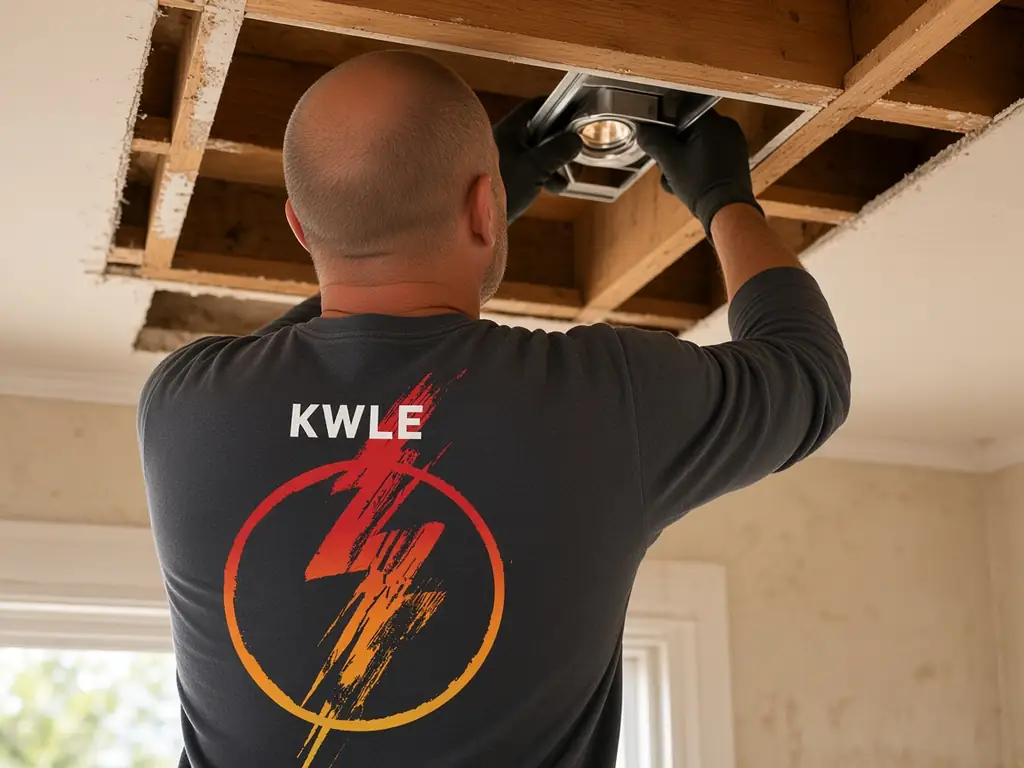
Recessed lighting installation in South Highpoint belongs in the ceiling plane, not on the eaves
A recessed housing sits in a joist bay or a shallow remodel opening. The trim finishes flush with the drywall or the plaster. This is not the same job as a general fixture swap, and it is not permanent lighting along the eaves, soffits or gable rakes. Those jobs have their own pages. Here we plan cans, trims and a switch leg that the room can actually take.
A 1970s ceiling is a different animal than a new one
The median year built here is 1974, and about 77 percent of the homes went up before 1980. Those ceilings are often a mix of thin drywall, a skim of plaster and joists that are already busy with heat ducts or old cable. We probe the bay, we find the joists and we choose a listed remodel housing or a new-construction housing if the ceiling is open. We do not cut a hole and hope the bay is empty.
Shallow bays and an IC rating
- Florida electrical contractor license EC13014717, licensed & insured
- Woman-owned business based at 6248 Seminole Blvd, Seminole FL 33772
- 2-year workmanship warranty, 5 years with a Member Care Plan
- SPAN Authorized Installer and Home Depot preferred contractor
- Open 24/7 for electrical emergencies: call or text (727) 476-7079
Many of these attics hold blown insulation over electric-heat ducts. A housing in that bay must be listed for insulation contact when the insulation will touch it. We use IC or IC-AT housings where the bay calls for them, we keep a listed clearance when the listing requires it and we do not bury a non-IC can in the fill. A hot housing in a packed bay is a later problem we refuse to create.
Manufactured-home ceilings are a stop-and-check
About a quarter of the homes here are manufactured. Those ceilings are often shallow, with a different assembly than a site-built joist bay. Some will not take a standard remodel can at all. We open a small test cut or we look from an access, we tell you what will fit and we will not force a housing into a thin assembly that cannot hold it. A surface disc or a listed fixture may be the honest option, and we will say so.
Duplex rooms and a party-wall ceiling
About 19 percent of the homes here are duplexes, and another share sits in small three- or four-unit buildings. A living-room ceiling may share a joist run with the unit next door. We stay on your side of the assembly, we do not chase a feed through a party wall and we do not treat the neighbor’s room as a pull path. If a shared junction is in the way, we stop and we explain the limit.
Kitchens, halls and a room that already feels dark
Working families in this compact community often want better light over a counter, down a hall or in a room that still has one tired ceiling fixture. We lay out a simple grid, we keep cans off cabinet doors and we do not pack six housings into a short galley just because a catalog showed that look. A compact 1970s kitchen usually needs fewer, better-placed cans and a switch the cook can reach.
Bathrooms, damp ratings and a shower-adjacent ceiling
A bath ceiling that will see steam needs a listed damp or wet trim, not an open baffle from the living room. We keep a housing out of an unrated shower volume, we use a gasketed trim where the listing calls for it and we do not treat a moisture-stained 1970s bath ceiling as a standard dry bay. If the ceiling is soft, we tell you before we cut.
Closets, tight halls and a listed fixture rule
A small closet or a tight linen bay may not accept a recessed housing under the rules that apply to storage spaces. We measure the clearance, we choose a listed fixture that belongs in that volume and we do not punch a can into a closet just to match the hall. A surface or a shallow disc is sometimes the right finish in those rooms.
Sloped bays, a short rake and a housing that aims
A few houses here have a sloped ceiling in a later family room or a porch that was closed in. A sloped bay needs a housing listed for that angle, or a trim that can aim without overheating. We do not jam a flat-ceiling can into a rake and twist the trim until it looks close. If the slope is too tight for a can, we say so and we offer a listed alternative.
The layout visit, a laser and a joist map
On the visit we mark joists, we note ducts and we snap a simple layout you can see on the ceiling. We keep a consistent spacing where the structure allows it, we stagger around a beam and we will not cut a joist to force a centerline. You approve the marks before the hole saw comes out.
Remodel clips, a clean cut and a dust plan
In a finished 1970s room we use a hole saw sized to the housing, we bag the dust and we set remodel clips or hanger bars as the listing requires. We do not over-cut a plaster ceiling and we do not leave a ragged ring for a later painter to hide. If the cut reveals a surprise duct or a forgotten box, we stop and we re-plan that can.
Trims, baffles and a lamp you can actually replace
We match a listed trim to the housing: a baffle, a modest reflector or a shallow lens, in a finish that fits the room. We use a listed lamp or a listed module, we leave you a way to change it later and we do not glue in a trim that only one discontinued part will fit. A pretty trim that cannot be serviced is not a finished job.
Switch legs, dimmers and a box that can take the load
A new string of cans needs a switch leg that is sized and protected, and a dimmer only when the lamps are listed for it. We do not hang a crowd of housings on a tired 1970s lighting circuit that is already shared with a hall and a porch. If the room needs a new home run, we say that up front and we add it as its own scope.
What this page does not cover
A single hanging fixture, a ceiling fan or a porch lantern belongs on other pages. Permanent lighting on the eaves, soffits and gable rakes is a separate product. A whole-house rewire is also a different ticket. We will point you to the right page when the work is not a recessed housing job.
Paperwork for a ceiling opening
Some recessed work needs a permit, especially when we add a circuit or open a ceiling in a way the inspector wants to see. We prepare the paperwork, we meet the inspector when a visit is set and we do not invent a desk or a wait time. This community is unincorporated Pinellas County, even when the mail reads Clearwater, Largo or Pinellas Park.
How the work is covered
Housings, trims and wiring we install carry a two-year workmanship warranty. A house on the Member Care Plan at /member-care-plans/ gets five years on that same work. A later lamp you change, or a trim you swap on your own, is not part of that term.
After the first evening in the room
We energize the string, we check each trim for glare and we walk the room with you at a normal evening level. A can that aims into a doorway or a can that sits tight to a cabinet door gets adjusted or moved if the bay still allows it. We do not leave a layout that only looked even on a bright afternoon.
A feed path that stays in the bay
We fish a listed cable or a short flexible whip in the joist space, we support it as the listing requires and we do not staple a feed across a sharp truss plate. A 1970s bay can be dusty and tight. We take the longer clean path rather than a short path that scrapes the jacket.
Common questions
Can every 1970s ceiling in South Highpoint take recessed cans? A: No. A shallow bay, a manufactured-home ceiling or a closet volume can rule a housing out. We check the assembly first and we tell you if a surface fixture is the honest choice.
Will you patch the ceiling around each can? A: We make a tight, listed cut and we set the trim so the ring sits clean. Larger plaster repair or a full ceiling skim is a separate finish scope we will name if the ceiling is already failing.
Is this the same as permanent lighting on the house? A: No. Permanent lighting stays on the eaves, soffits and gable rakes. Recessed lighting installation is inside the room, in the ceiling plane.
From the Seminole Blvd shop, South Highpoint is about 7 miles away. We know the streets around 49th Street North, 34th Street North, Ulmerton Road and Roosevelt Boulevard and also take work in St. Petersburg, Feather Sound, Clearwater, Largo and Pinellas Park.
Up: Recessed Lighting Installation across Tampa Bay · For everything we do locally, see South Highpoint electrical service.
Cities next door: Bay Pines · Seminole
Call or text (727) 476-7079 for recessed lighting installation in South Highpoint, or book online. Business hours 7 AM–5 PM, weekend service, 24/7 emergency calls.