
Looking for property management electrical in Greenbriar? Property management electrical in Greenbriar is work for a manager of small rentals, a triplex, or a fourplex. A typical ticket is a unit turn, a dark common lamp, or a meter tag. Most houses here are owner-occupied ranches. We do not treat this place as a mid-rise portfolio. We use your ticket system when you have one. Common gear and unit gear are split on the close-out.
Request property management electrical in Greenbriar
Tell us what you need and where the work is. A licensed electrician will reply with next steps and a time to visit.
Homeowners in Greenbriar also book commercial electrician, commercial generator installation, a home car charger circuit, generator interlock transfer switch, JellyFish lighting on the eaves, a new breaker panel, permanent lighting, battery backup installation, solar installation, generator installation, 240v outlet installation, aluminum wiring repair, apartment multifamily electrical and appliance wiring hookup.
Call or text (727) 476-7079 · open 24/7 for emergencies · request a quote online
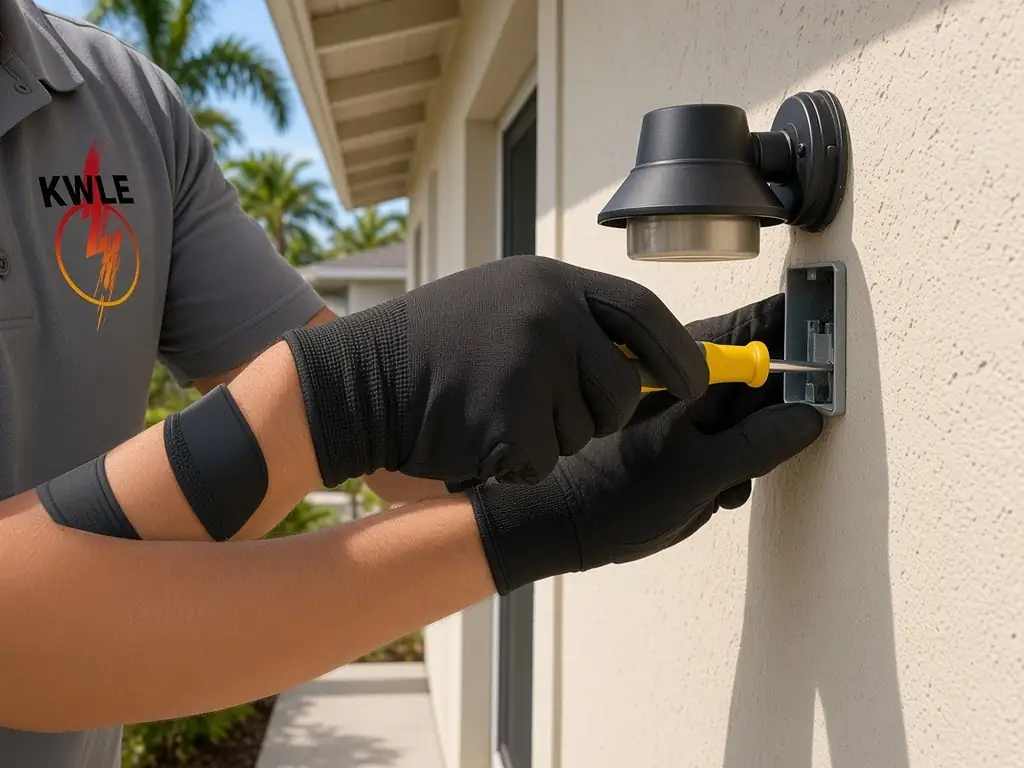
Property management electrical in Greenbriar is small-rental ticket work
Shared condo gear for an association board also has an HOA page. This page is the manager’s ticket: a make-ready, a tenant complaint, or a common lamp at a building you already manage. We do not invent a downtown portfolio.
Tickets we typically close
A unit that fails a make-ready because a GFCI is dead. A common walk lamp that stays lit after sunrise. A laundry receptacle that tripped. A smoke alarm missing at a turn. A meter tag that no longer matches the unit. We close the ticket under your work-order number. We do not enter a second unit on the same sheet without a second ticket.
How a ticket is worked
- Florida electrical contractor license EC13014717, licensed & insured
- Woman-owned business based at 6248 Seminole Blvd, Seminole FL 33772
- 2-year workmanship warranty, 5 years with a Member Care Plan
- SPAN Authorized Installer and Home Depot preferred contractor
- Open 24/7 for electrical emergencies: call or text (727) 476-7079
Send the work-order number, the unit or the common area, and the symptom. We arrive in the window you set. We use the access you release. We write the close-out to your form when you have one. Evening hours are available when a vacant unit or a common area can be released then.
Common gear versus unit gear
A walk lamp, a laundry circuit, and a meter bank are usually the owner’s or the association’s. A unit cabinet and the receptacles inside the unit are usually the unit side. When a ticket crosses that line, we stop and say so. Billing lines are split so a ledger stays clean.
Papers we keep for the manager
The work-order number, the photographs, and the device we changed go in the manager-ticket file. We can also file them in your vendor folder when you ask. A W-9 or an insurance packet is provided when a new office requests one. We do not invent a contract we do not have.
If the same ticket repeats
We re-check the device after the unit is back in use, or after the common lamp is on. A ticket that repeats inside a week can be reopened at (727) 476-7079 with the work-order number. Labor coverage is two years. Member Care, if the owner carries it, lengthens that to five.
What a useful ticket includes
The building, the unit, the symptom, the access notes, and the number you want on the invoice. A photo of the device helps when it is safe to take one. Tell us whether the unit is vacant and when a tenant moves in.
A make-ready walk in a vacant unit is done once. We test GFCIs, we test smoke alarms, we check the cabinet directory, and we note anything that should be its own ticket. A common-area dusk sensor is checked after sunset when that is the complaint. A mail-kiosk lamp or a small laundry fixture is treated as common gear unless your documents say otherwise.
A lockbox or a key release is used only for the unit or the common area named on the ticket. A COI or a W-9 is emailed to the address the new office gives us, not posted on a door. A unit directory in a triplex or a fourplex is updated in the visit notes when a meter tag was the reason for the visit.
A punch list from a make-ready is closed item by item, not as a vague “unit is ready.” A hanging exhaust fan in a small laundry, a dead porch lamp on a shared walk, and a reversed polarity at a bedroom receptacle are written as separate lines when they are separate defects. A spare listed GFCI and a spare smoke alarm stay in the van so a simple make-ready can finish in one visit.
A house-load or a common-meter cabinet is treated as common gear unless your documents say it belongs to a unit. A laundry-stack circuit that trips during a turn is isolated and tested before a tenant move-in date. An additional-insured certificate, when a new office asks for one, is sent to the email they name. A vendor-id or a portal login is used when you already have a portal; we do not invent a platform we do not use. A smart-lock or a lockbox code is requested only for the unit named on the ticket, and it is not stored on a paper flap on the door.
A tenant-folder note lists the work-order number, the unit, and the device we changed, and a copy can go to your portal when you have one. A house-panel directory in a fourplex is updated when we add or relabel a common breaker.
A vacant-unit punch that includes a reversed hot and neutral, a missing blank in the cabinet, and a dead bath fan is closed item by item. After-hours access is limited to the lockbox or the code you release for that window. A recurring ticket on the same laundry circuit is compared to the last visit notes before another device is condemned. Insurance limits, when a new office asks, are sent as the certificate they requested, not as a screenshot of a policy card.
A common walkway photocontrol is aimed north, or is shielded, so passing headlights do not cycle the lamp. A meter-stack tag that has faded is reprinted and clipped, and a photo goes in the tenant folder. A bath-fan switch that has no ground in a 1970s unit is reported, and the fan is landed only on the conductors that exist. A vacant-unit stove receptacle is tested for an open neutral before a new range is rolled in. A shared mailbox light on a photocell is common gear unless your documents say otherwise.
A common stair lamp with a three-way pair is traced at both ends before a single switch is condemned. A dumpster-pad receptacle, when one exists at a fourplex, is GFCI-protected and written as common gear. A washer outlet that shows an open bootleg is corrected if a ground path exists, or is reported if it does not. A mailbox kiosk clock-timer, rare here, is set to the hours the manager states.
Common questions
Can you work inside our current ticket system? Yes. Send the work-order number and the access notes. We write the close-out to your form when you have one.
Do you also take tenant or unit-owner calls in the same building? We can, on a separate ticket. We do not open common gear on a tenant’s word alone.
Can a visit happen after the office has closed? Yes, when a vacant unit or a common area can be released then. We agree on that window before we roll.
What does a new management office need to send before the first ticket? A work-order process, an access plan, and, if you need it, a vendor packet. We do not advertise an agreement we do not have.
How do we open a ticket? Email the work-order number and the symptom, or telephone (727) 476-7079. Mention the unit or the common area.
The drive from our shop at 6248 Seminole Blvd is about 13 miles. In Greenbriar we work along the Clearwater edge of the community, the Dunedin side and the Safety Harbor side. From here we also reach Clearwater, Dunedin, Palm Harbor, Safety Harbor and Oldsmar.
Up: Property Management Electrical across Tampa Bay · For everything we do locally, see Clearwater electrical service.
Nearby: Tierra Verde · South Highpoint · Bear Creek · Indian Shores
Call or text (727) 476-7079 for property management electrical in Greenbriar, or book online. Business hours 7 AM–5 PM, weekend service, 24/7 emergency calls.