
Need main breaker replacement in Tampa Bay? Keywest Lights & Electric replaces failed and overheating main breakers across Pinellas, Hillsborough and Pasco counties. We are a woman-owned contractor under license EC13014717, and we test the service, the bus bars and the lugs before and after the swap.
Request main breaker replacement in Tampa Bay
Tell us what you need and where the work is. A licensed electrician will reply with next steps and a time to visit.
Call or text (727) 476-7079 · open 24/7 for emergencies · request a quote online
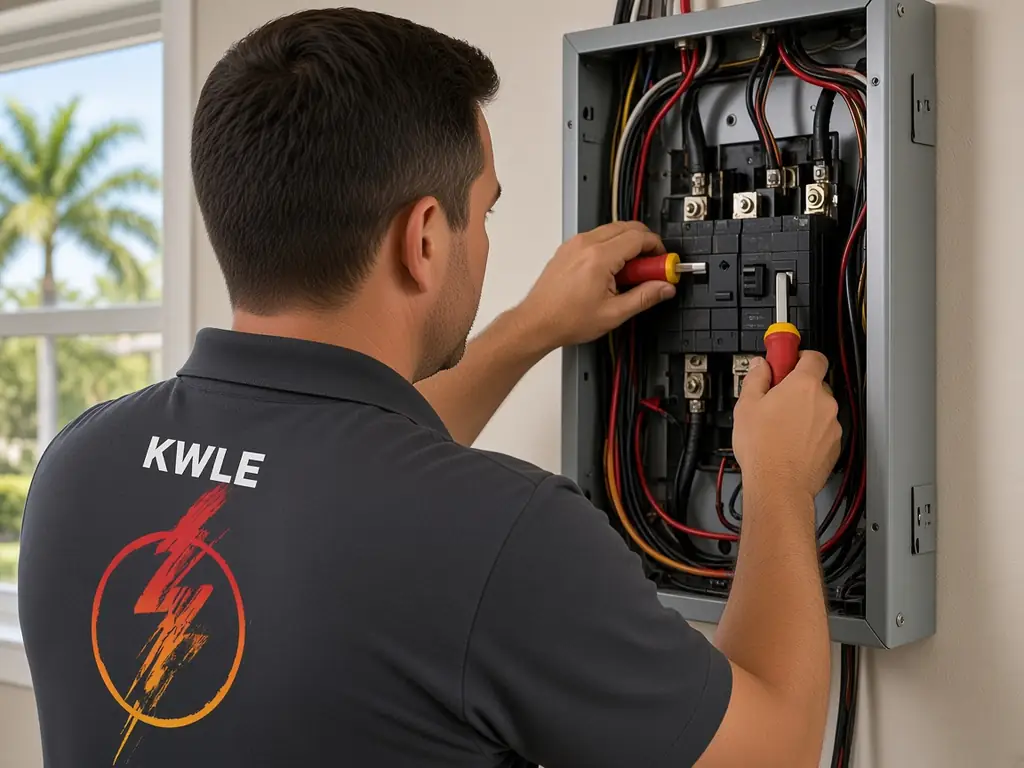
Main breaker replacement in Tampa Bay: the switch that guards the whole house
The main breaker is the large breaker at the top of your panel. It shuts off everything in the house and protects the service wires. When it trips again and again, runs hot, buzzes or will not reset, it may be worn out. Replacing it is delicate work, because the lugs above it stay live unless the power company disconnects the service.
Signs of trouble
- Trips without cause: no overload, yet the main goes off.
- Will not reset: the handle will not stay on.
- Hot to the touch: heat from loose or worn contacts.
- Buzzing or humming: arcing or a loose connection.
- Burn marks: dark spots on the breaker or bus bar.
- Half the house dead: one pole of the main is bad.
- Loose handle: worn mechanism.
Why mains fail
- Florida electrical contractor license EC13014717, licensed & insured
- Woman-owned business based at 6248 Seminole Blvd, Seminole FL 33772
- 2-year workmanship warranty, 5 years with a Member Care Plan
- SPAN Authorized Installer and Home Depot preferred contractor
- Open 24/7 for electrical emergencies: call or text (727) 476-7079
Heat, age, loose lugs and constant load wear mains down. A weak spring or a pitted contact may stop a breaker from holding. Surges and overloads stress it. In a coastal climate, moisture can corrode terminals. A failed main can also reflect a deeper issue in the panel, such as loose bus bar connections.
Safety during replacement
The main lugs carry live power from the meter even when the main is off. Safe replacement often needs the power company to pull the meter or cut the service. We coordinate this, use insulated tools and test with a meter at every step. This work belongs to a licensed electrician.
Matching the right breaker
Not every breaker fits every panel. We match the brand, series and amp rating to the panel’s label. A wrong fit can overheat or fail to trip. If the panel is obsolete or the part is no longer made, we explain the options, including a full panel replacement.
Checking the panel
When the cover comes off, we inspect the bus bars, lugs, neutral bar and ground. We tighten connections to the correct torque and look for heat discoloration. If bus bars are damaged, the repair may not be safe, and we recommend replacing the panel.
Service wire and meter base
A hot main may reflect a problem at the meter or service wire. We check the connections at the meter base, the weatherhead and the service conductors. If corrosion or heat damage is present, we repair it.
Quotes, permits and warranty
Main breaker replacement may need a permit and inspection. Our workmanship carries a 2-year warranty, or 5 years with a Member Care Plan.
Lugs, torque and heat damage
A loose lug creates resistance, which makes heat, which loosens the lug further. We tighten each connection to the manufacturer’s torque using a calibrated driver. Discolored copper, melted insulation and pitted metal show that heat has been at work. We cut back damaged wire and re-terminate it, or recommend a larger repair.
Main lug panels and subpanels
Some panels have no main breaker. They are called main lug panels, and they rely on a breaker elsewhere. Subpanels often work this way. Replacing a breaker in such a panel means finding the upstream protection. We confirm what protects each feeder and label it.
Overload versus fault
A main may trip because the house draws too much current, or because a fault has occurred. We check both. If load is the issue, we look for circuits to rebalance or equipment to move. If a fault is at work, we trace it. A new breaker will not fix a problem it is correctly reacting to.
After the replacement
We clean the panel interior, replace the cover, restore power in stages and check voltage at several outlets. Sensitive electronics should be unplugged until power is stable. We leave a short report on what we found and any follow-up needs.
Aluminum service wire and special lugs
Some service wires are aluminum, which needs lugs rated for it and a coat of compound at the terminal. If a previous repair used the wrong lug, the connection may run hot. We check the wire type, use rated parts and torque to the correct value. We also look for corrosion at the weatherhead.
Panels that are past their time
Some panels, such as certain older brands, have a track record of breakers that fail to trip. If your main or panel belongs to that group, replacing the breaker may not be enough. We explain the history and the options. A new panel is often the more durable fix.
Planning a smooth day
Plan for a few hours without power. Unplug sensitive equipment, clear a path to the panel and tell us about any medical devices. If the power company must disconnect, the visit may take longer. We schedule early in the day, so power is back by afternoon.
Preventive checks
A yearly thermal scan of the panel finds loose connections before they fail. A quick visual check, with the cover on, can reveal rust, water stains or discolored paint on the cover. Call if you notice any. A Member Care Plan includes periodic inspections.
Generator interlocks and backfeed safety
If you plan a portable generator, tell us before we replace the main. An interlock kit must match the panel and the main breaker. Installing one incorrectly can allow backfeed, which endangers line crews. We install listed kits only and label the panel so the sequence is clear during an outage.
Meter pulls and utility coordination
Pulling a meter requires authorization, so we schedule the power company for a visit when needed. Do not break a meter seal yourself. We handle requests, confirm the time window and plan the work around it, so the interruption is as short as possible.
Common questions
What does a main breaker do? It shuts off power to the whole panel and protects the service wires.
Can I replace it myself? No. The lugs stay live. A licensed electrician should do it with the power company’s help.
Why does my main keep tripping? Overload, a short or a worn breaker may be the cause. We test to find out.
Is a hot main breaker dangerous? Yes. Heat can damage the panel and start a fire. Call right away.
How long does it take? Often two to four hours, plus time for the power company.
Will I lose power? Yes, for part of the visit.
Can the panel be too old for a new breaker? Sometimes. We then recommend replacing the panel.
Do you work with the power company? Yes. We coordinate the disconnect and reconnect.
Local pages: main breaker replacement in Seminole, our home base. See also Pinellas County, Hillsborough County and Pasco County service areas, or browse all electrical services. Related: main breaker replacement.
Call or text (727) 476-7079 for main breaker replacement in Tampa Bay, or book online. Business hours 7 AM–5 PM, weekend service, 24/7 emergency calls.