
GFCI outlet not working in Tampa Bay? Keywest Lights & Electric repairs GFCI outlets that will not reset, trip again at once or have gone dead in Pinellas, Hillsborough and Pasco counties. We are a woman-owned contractor under license EC13014717, and we trace the real cause before we replace anything.
Request GFCI outlet not working in Tampa Bay
Tell us what you need and where the work is. A licensed electrician will reply with next steps and a time to visit.
Call or text (727) 476-7079 · open 24/7 for emergencies · request a quote online
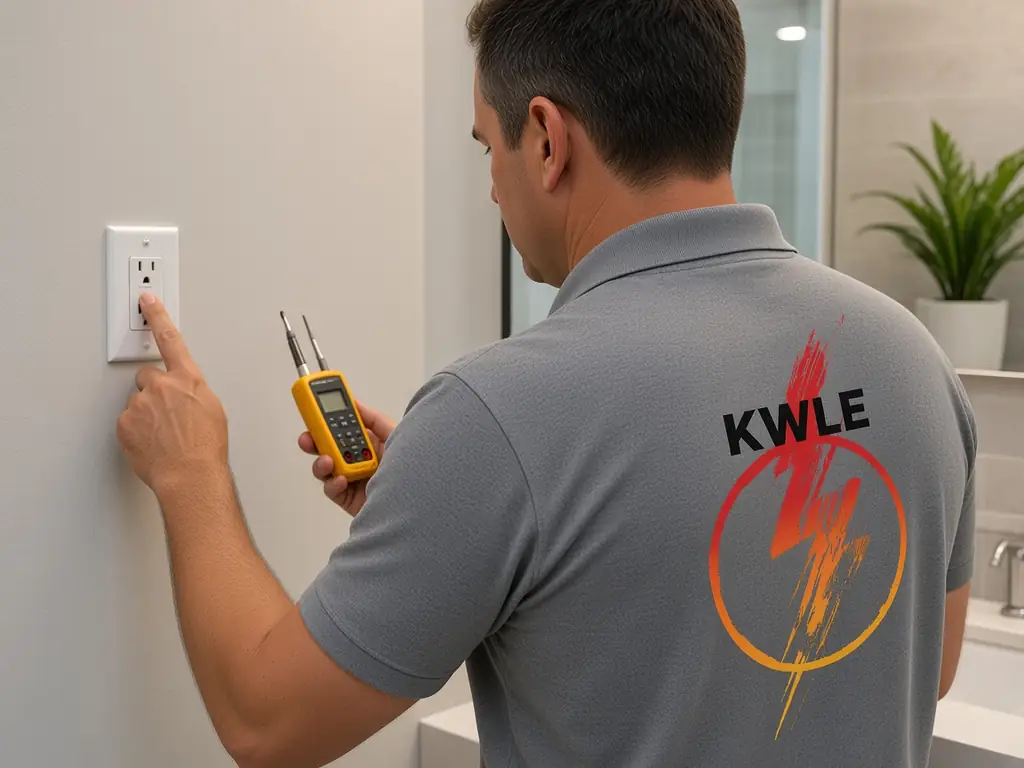
GFCI outlet not working in Tampa Bay: what the device does
A ground-fault circuit interrupter watches the current going out and coming back on a circuit. If a small amount leaks away, as it would through a person or a wet appliance, the device opens in a fraction of a second. That makes it one of the most important safety parts in a home. When it will not reset, or when it trips for no clear reason, something is wrong, and the cause is often outside the outlet itself.
Typical symptoms
- Will not reset: the reset button pops out or stays dead.
- Trips again and again: sometimes within seconds of resetting.
- Other outlets dead: a single device can protect many outlets downstream.
- No power on the face: the test and reset buttons do nothing.
- Trips in wet weather: rain or humidity reaches an exterior box.
- Trips with one appliance: a leaking motor or heater is plugged in.
Why a GFCI fails or trips
- Florida electrical contractor license EC13014717, licensed & insured
- Woman-owned business based at 6248 Seminole Blvd, Seminole FL 33772
- 2-year workmanship warranty, 5 years with a Member Care Plan
- SPAN Authorized Installer and Home Depot preferred contractor
- Open 24/7 for electrical emergencies: call or text (727) 476-7079
Moisture is the most common cause. Lanais, garages, bathrooms and outdoor outlets collect humidity, and a damp box can leak enough current to trip the device. Age matters too: most devices last only a number of years, and the internal parts wear out. Other causes include a worn appliance, a shared neutral, a damaged cable and a lightning surge that left the device weak without a mark.
The hidden outlet that protects others
A single GFCI can protect every outlet after it on the same line. That is why a dead outdoor outlet is often fixed by finding a tripped device in a garage or a bathroom. Many Florida homes have a GFCI hidden behind a freezer, inside a closet or in a different room from the dead outlet. We locate the source, test each outlet on the run and reconnect the chain correctly.
How we repair it
We start with the history: what is plugged in, when it began and whether it rained. We test the device, the box and the wiring with a meter and a tester. If the device has failed, we replace it with a new listed unit. If moisture is the cause, we dry and seal the box, replace a damaged cover and add an in-use cover outdoors. If wiring is damaged, we repair it and explain the work.
Replace, upgrade or leave alone
Not every GFCI needs replacement. A device that trips because a wet appliance leaks should stay in place. A device that will not reset, runs warm or fails its test button is done. Where a circuit has many outlets, we may use one protective breaker at the panel instead. We explain the options and the cost of each in writing before we start.
Homes, condos and shops
Single-family homes, condos, rental units and small shops all use GFCI protection near water. In older homes from the 1960s and 1970s, we often find none at all, or a device that was installed incorrectly. In rentals, we keep documentation for the manager. In shops, we test every GFCI on a schedule, since business insurance often asks for proof.
Testing and monthly habits
Press the test button once a month. The reset button should pop out and power should stop. Press reset to restore it. If nothing happens, replace the device. We show customers this routine at the end of a visit, and Member Care Plan holders get a periodic check as part of their plan.
Quotes, permits and warranty
We give a written quote after we see the work. A simple device swap usually needs no permit. New circuits do, and we handle that paperwork. Our workmanship carries a 2-year warranty, or 5 years with a Member Care Plan.
Reading the lights and buttons
Some devices have an indicator light that glows green when protected and red when the protection has failed. A device with no light, a flickering light or a stuck button needs replacing. Others have no light at all, so the test button is the only check. We explain which type you have, because the signs of trouble differ between brands and generations of devices.
What homeowners can try before calling
Unplug everything on the circuit, press reset firmly and plug devices back one at a time. If the device trips when a specific appliance is plugged in, that appliance is the likely cause. If it trips with nothing plugged in, the device or the wiring is at fault. Report what you saw when you call, and we will bring the right parts.
GFCI protection near pools, docks and fountains
Water features raise the stakes. Pool pumps, spa equipment, fountain pumps and dock outlets rely on ground-fault protection, and a failed device may leave a hazard. We test every protective device near water, repair bonding where needed and note which circuits have breakers rather than outlets. Our checks are practical and documented.
Appliances that leak current
A refrigerator, a washer, a dehumidifier or a window air conditioner can develop a small leak long before it fails. The GFCI sees that leak and trips. We can test appliance leakage with a meter and tell you whether the appliance or the outlet is at fault, which saves you from replacing the wrong part.
Common questions
Why will my GFCI not reset? The device may have failed, the circuit may have a fault, or something plugged in may be leaking current. We test each part to find which one it is.
Why do other outlets have no power? They are likely wired behind the GFCI. A tripped or failed device cuts power to everything downstream, and the fix usually restores them all.
Is it safe to bypass a GFCI? No. The device protects people from shock. Bypassing it or replacing it with a standard outlet removes that protection.
How long does a GFCI last? Many last ten years or more, but damp locations shorten life. Test monthly and replace any device that fails the test.
Do garages and lanais need GFCI protection? Yes. Garages, outdoor outlets, bathrooms, kitchens, laundry areas and many damp locations need it under current code.
Can a GFCI trip when it rains? Yes. Water in an outdoor box or a damaged cover can leak current. We dry, seal and replace damaged parts.
Can you add GFCI protection to an older home? Yes. We install a device at the first outlet on the circuit or a GFCI breaker at the panel, depending on the layout.
What should I do while I wait for service? Unplug what is on the circuit, keep the area dry and do not use the outlet. Call or text (727) 476-7079 if you see sparks or smell smoke.
Local pages: GFCI outlet not working in Seminole, our home base. See also Pinellas County, Hillsborough County and Pasco County service areas, or browse all electrical services. Also available here: gfci outlet not working.
Call or text (727) 476-7079 for GFCI outlet not working in Tampa Bay, or book online. Business hours 7 AM–5 PM, weekend service, 24/7 emergency calls.