
Planning garage electrical wiring in Tampa Bay? Keywest Lights & Electric wires attached and detached garages across Pinellas, Hillsborough and Pasco counties: outlets, lights, door openers, subpanels, chargers and workshop circuits. We are a woman-owned contractor under license EC13014717, and we plan the wiring around how you use the space.
Request garage electrical wiring in Tampa Bay
Tell us what you need and where the work is. A licensed electrician will reply with next steps and a time to visit.
Call or text (727) 476-7079 · open 24/7 for emergencies · request a quote online
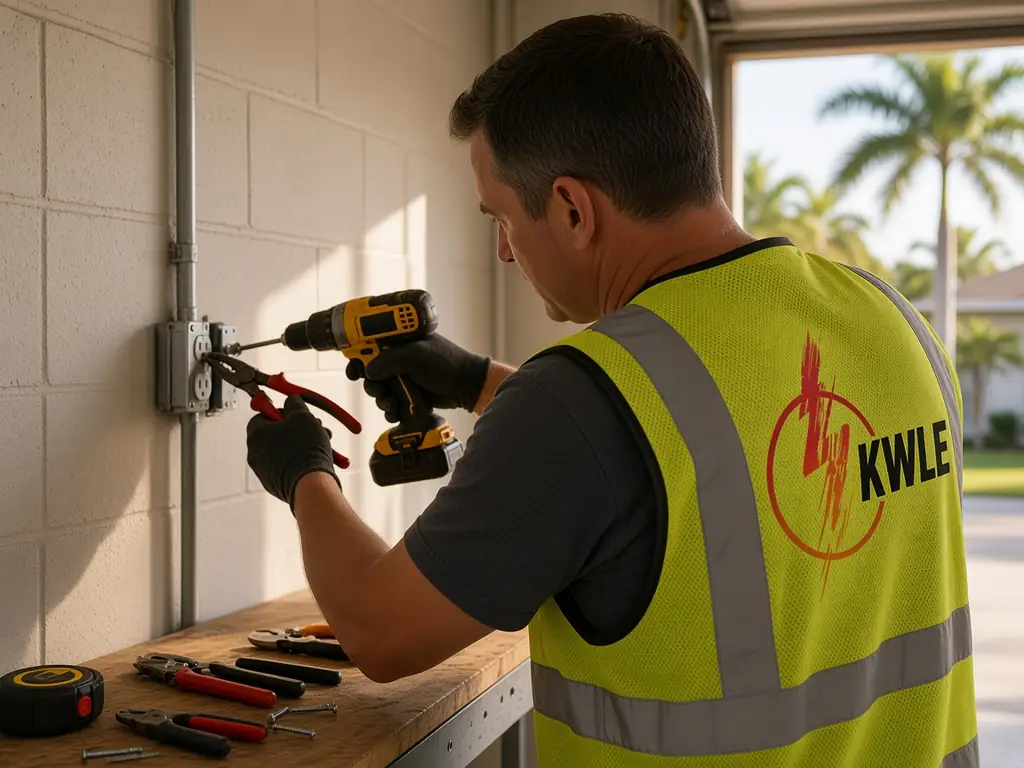
Garage electrical wiring in Tampa Bay: power for cars, tools and storage
Modern garages work as storage rooms, workshops, gyms and laundry rooms. They also host chargers, freezers and tools. Old wiring in a garage often has one or two outlets and a single light. A good plan adds protected outlets, bright lights, a subpanel and room to grow.
What owners add
- Outlets: along walls and at the workbench.
- LED lighting: bright, even light over cars and benches.
- Garage door openers: dedicated outlets in the ceiling.
- EV chargers: 240-volt circuits.
- Freezers and refrigerators: dedicated, protected lines.
- Subpanels: more breaker space near the work.
- Air conditioning or mini splits: for workshops and gyms.
Ground-fault protection
- Florida electrical contractor license EC13014717, licensed & insured
- Woman-owned business based at 6248 Seminole Blvd, Seminole FL 33772
- 2-year workmanship warranty, 5 years with a Member Care Plan
- SPAN Authorized Installer and Home Depot preferred contractor
- Open 24/7 for electrical emergencies: call or text (727) 476-7079
Garage outlets need ground-fault protection under current code. Damp floors, wet tools and hoses raise the risk of shock. We install protected outlets or GFCI breakers, test them and label the circuits. Older garages may have none, and adding it is one of the most valuable upgrades.
Lighting for work
A single bulb leaves shadows and strain. LED shop lights, aimed from above and slightly forward, give even light on the bench and the car. Switches near each door make it easy to turn on lights with full hands. Motion sensors save energy in storage areas.
Workshop and hobby needs
Table saws, compressors, welders and kilns need their own circuits. We calculate the load, run 240-volt lines where needed and add a subpanel to keep wires short. Outlets at bench height and along walls reduce cords across the floor. A ceiling drop reel or outlet strip adds convenience.
Detached garages and workshops
A detached building needs a feeder from the main panel, a subpanel, a ground rod and conduit buried at the right depth. We plan the trench route, protect wire from lawn equipment and install a disconnect. Many owners also add lights outside and a switch inside the house.
Door openers and safety
Garage door openers run on a dedicated or shared outlet in the ceiling. Safety sensors, wall buttons and battery backups need clear wire runs. We install or relocate outlets and check that the opener’s wiring is neat and protected.
EV chargers and large loads
Electric vehicle chargers need a 240-volt circuit sized to the charger, with a proper breaker and wire. We check the panel’s capacity and install the circuit and receptacle or hardwired unit. We can plan the circuit even before you buy the car.
Quotes, permits and warranty
New circuits require a permit. Our workmanship carries a 2-year warranty, or 5 years with a Member Care Plan.
Heat, dust and corrosion in the garage
Garages see wide temperature swings, dust, vehicle fumes and moisture. Standard indoor parts age quickly in them. We use boxes with gaskets, wire rated for heat and covers that keep dust out. Where paint, fuel or solvents are stored, we choose fixtures and switches that suit the area and keep sources of ignition away.
Car lifts, compressors and shop equipment
A hobby garage may hold a two-post lift, a large compressor, a parts washer and a welder. Each has its own power demand and starting current. We read the nameplates, plan the circuits and provide disconnects where equipment needs them. We also place outlets at standing height, so cords do not cross the floor.
Garage doors, keypads and sensors
Door openers need a ceiling outlet, safety sensors need low-voltage wire and keypads need power or a battery. We keep wiring neat, secure sensor cables with staples rated for low voltage and test the reverse feature after installation. A tidy setup reduces nuisance faults.
Storage, freezers and extra refrigerators
A garage is a handy place for extra food storage. Appliances there run all day in heat. A dedicated, protected circuit prevents spoilage from trips. We also place the outlet where the cord can reach without an extension cord and where a power failure can be noticed quickly.
Lighting layouts for different garage sizes
A one-car garage needs two or three fixtures. A three-car bay with a workshop may need a row of fixtures, task lights and wall sconces. We place lights so each work zone and each car door gets enough light. We select color temperatures around 4000 to 5000 kelvin for clear visibility and good color rendering.
Garage ceilings, attic access and insulation
A garage ceiling may be open, finished with drywall or have a pull-down stair to an attic. We run cable where it will not interfere with insulation or storage. Pull-down stairs need clearance for lights and conduit. If the ceiling is insulated, we use rated boxes and keep wires protected.
Safety around fuel and chemicals
Gasoline, paint, propane and cleaning chemicals produce vapors that can ignite from sparks. Outlets and switches near them should be placed carefully, and heaters kept away. We discuss storage habits and recommend sealed fixtures where they make sense.
Seasonal checklists
Before summer, check outlet covers, ground-fault buttons and lights. Before storms, move electronics off the floor and test the generator inlet. Keep the panel clear and the path to it open. We can provide a simple checklist and a seasonal visit through a Member Care Plan.
Cords, reels and power strips
Extension cords strung across a garage floor create trip hazards and overheat under load. Ceiling-mounted reels, outlet strips on the wall and plug molding give clean power at the bench without cords underfoot. We install them with proper circuits and ground-fault protection.
Common questions
How many outlets should a garage have? More than most people expect. We plan along each wall and at the bench, with protection.
Does a garage need a subpanel? Not always, but it helps when you add tools, a charger and lights.
Can you wire a detached garage? Yes. We run a feeder and install a subpanel and grounding.
Do garage outlets need GFCI protection? Yes. Current code calls for it.
Can you add a 240-volt outlet for a welder? Yes. We size the circuit and install a matching receptacle.
Can you wire a garage for an electric car? Yes. We install a charger circuit and check the panel.
Can you replace old fluorescent shop lights? Yes. We install LED fixtures that start instantly.
Do you wire garage conversions? Yes. We plan circuits, cooling and lighting for living space.
Local pages: garage electrical wiring in Seminole, our home base. See also Pinellas County, Hillsborough County and Pasco County service areas, or browse all electrical services.
Call or text (727) 476-7079 for garage electrical wiring in Tampa Bay, or book online. Business hours 7 AM–5 PM, weekend service, 24/7 emergency calls.