
Need flickering lights repair in Indian Shores? Keywest Lights & Electric provides flickering lights repair in Indian Shores when a lamp, a hall run, or a room of fixtures pulses, dips, or strobes and the cause is still unknown. Our shop is licensed and woman-owned. This is a diagnosis and repair of an unstable lighting circuit, not a fixture hang, not a dimmer-only swap, and not a whole-unit rewire. We start with a tester, a toner when we need one, and a look at the first loose landing we can reach.
Request flickering lights repair in Indian Shores
Tell us what you need and where the work is. A licensed electrician will reply with next steps and a time to visit.
On this barrier island we also handle commercial electrician work, commercial generator work, an EV charger hookup and a backup generator install.
Call or text (727) 476-7079 · open 24/7 for emergencies · request a quote online
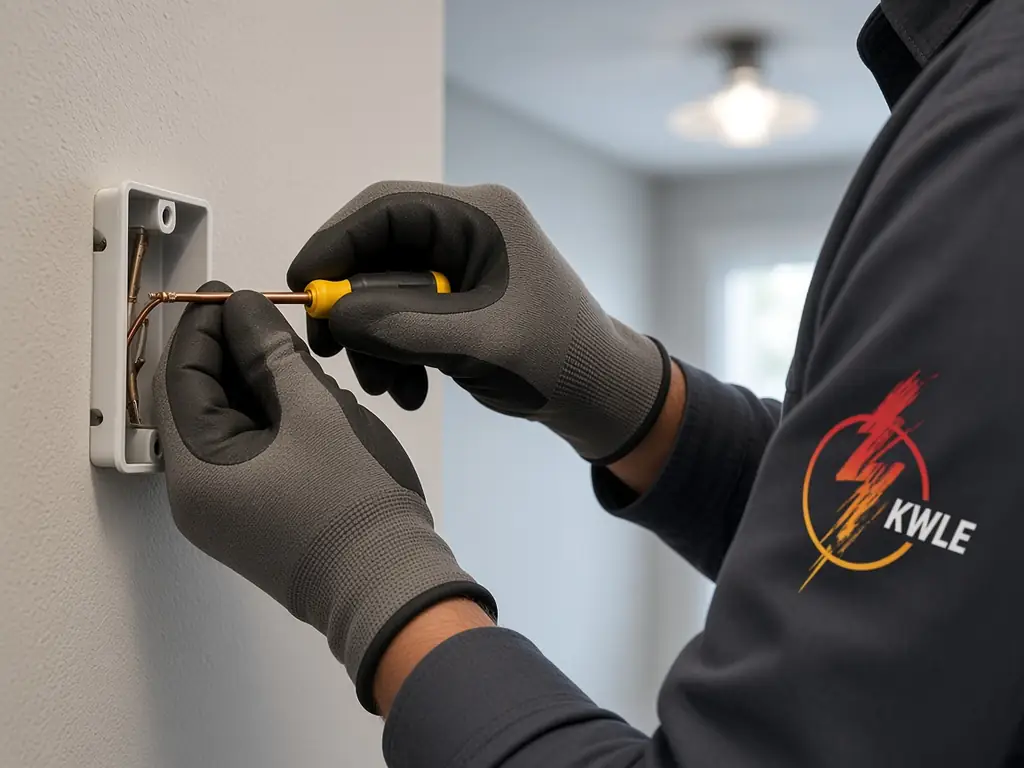
Flickering Lights Repair in Indian Shores: a pulse, a loose landing, a clear cause
A flicker in a mid-rise hall or a living room here is often a loose device screw, a tired dimmer, a failing lamp, or a shared-neutral oddity, not a mystery in the utility feed. We watch the lights, ask when they move, and open the first box that makes sense. A new bulb that still pulses is a reason to keep looking, not a reason to stop.
What usually brings us out
- Florida electrical contractor license EC13014717, licensed & insured
- Woman-owned business based at 6248 Seminole Blvd, Seminole FL 33772
- 2-year workmanship warranty, 5 years with a Member Care Plan
- SPAN Authorized Installer and Home Depot preferred contractor
- Open 24/7 for electrical emergencies: call or text (727) 476-7079
- A ceiling light or a sconce that pulses when a fan, a dryer, or an air unit starts.
- A hall run that blinks at both ends of a three-way.
- A dimmer that makes LED lamps strobe or never go fully off.
- A room that dips when a neighboring receptacle is used.
- A seasonal unit that starts to flicker after months of sitting closed.
First tests, a wiggly lamp, and a box we actually open
We try a known-good lamp first when the socket is easy to reach, then we open the switch, the fixture canopy, and any downstream receptacle that sits on the same run. A loose backstab or a screw that has backed out is a common find in 1970s and 1980s devices. We land those conductors on a side screw or a listed pigtail and we test again before we move on.
A fixture hang, a dimmer job, or a rewire sit on other pages
Light fixture installation, dimmer switch installation, and rewiring have their own pages. This ticket is the unstable circuit itself. If the first opening shows a failed fixture or a dimmer that cannot drive the lamps, we will move that portion to the right visit and quote it plainly.
How we work the call
We isolate the circuit, inspect the landings, and repair or replace the failed part. We then run the lights with the loads that used to trigger the flicker, when those loads can be started safely. Old parts leave with us. The written terms belong on the invoice, not in this article.
Shared neutrals, a multi-wire branch, and a handle that should have been tied
Some older maps here share a neutral between two hots. A flicker that moves from room to room can be that shared conductor loose in a wire nut. We check for a multi-wire branch and a handle tie when the layout calls for one. A loose shared neutral is not something we will leave tucked in a can.
Fixes we will not pretend are done
We will not change a lamp and leave a loose screw in the box. A scorched conductor is not ignored just because the light came back for a minute. We will not call a whole-panel problem a lighting repair. If the flicker follows several circuits at once, we will say so and look at the service or the cabinet.
LED lamps, an old dimmer, and a strobe that is not a loose wire
New LED lamps on an old dimmer can strobe even when every screw is tight. We try the lamps with the dimmer pulled out of the loop. If the strobe dies only then, the control is the problem and that becomes a dimmer visit. A strobe left in place is not a finished lighting repair.
Mid-rise chases, a neighbor’s wall, and a junction we can actually reach
Finished mid-rise walls hide junctions in soffits and closets. We use a toner when a flicker has no obvious device, and we open only the cans we need. A junction in a shared chase is a conversation with the building before we cut.
Seasonal vacancy, oxidation, and a device that sat in humidity
Units that sit closed can oxidize a switch or a fixture contact. We clean or replace those parts and we also look at the next landing, because a weak feed can show up two boxes away when the owner returns and turns everything on at once.
Loose canopies, a fixture keyless, and a center contact that has sprung
A flicker that only happens at one fixture can be a tired center contact or a canopy ground that is barely touching. We reshape or replace that part, and we do not tape a sprung contact and close the shade. If the box itself is loose in the ceiling, we secure it before we hang the fixture again.
Voltage at the device, a drop under load, and a run that is starved
We measure voltage at the failing device and again when a nearby load starts. A real drop is a reason to look at wire size, a long mid-rise path, or a loose lug at the cabinet. A run that is simply loose at one screw will often look normal until we move the conductor.
After the repair, a retest, and a note about the breaker
We retest the room, label a vague directory if we found the right breaker, and tell you what failed. A flicker that comes back on a different lamp is a reason to keep the ticket open, and we will say that rather than leave you guessing.
Wiggle tests, a thermal camera glance, and a screw that was only finger-tight
A wiggle at the device while we watch the lamp is a simple first test. A quick thermal glance at a warm screw or a warm nut, when we have the camera on the truck, can point to the landing without opening every box on the floor. A screw that was only finger-tight gets a real torque and a retest.
Pigtail crimps, a stab-back release, and a toner tone on a traveler
A stab-back hole that has loosened is cut back and landed on a pigtail crimp or a side screw. On a three-way hall we tone the traveler so we are not opening the far box for no reason. A tone that dies in a soffit is a reason to open that soffit, not to keep swapping lamps.
Questions we hear in Indian Shores
Do you provide flickering lights repair in Indian Shores? Yes. We trace a pulse or a strobe in condos and homes, repair the loose or failed landing, and retest the run with the loads that used to trigger it.
Is this the same as hanging a new fixture or changing a dimmer? No. Those have their own pages. This ticket is the unstable circuit. If a fixture or a dimmer is the real failure, we will move that portion to the right visit.
Can a flicker be a loose neutral or a cabinet problem? Yes. If the flicker follows several circuits, or a shared neutral is loose, we will say so and treat that as more than a single device.
My LED lamps strobe on an old dimmer. Is that a loose wire? Not always. We try the lamps with the dimmer out of the loop. If the strobe dies only then, the control has to change. A tight screw alone is not a finished lighting repair.
Can you find a hidden junction in a mid-rise wall? Often yes, with a toner and small openings. A shared chase is a conversation with the building before we cut.
How do I schedule a flicker diagnosis? Call or text (727) 476-7079 and tell us which rooms pulse and when. The Seminole shop is about 4 miles from this island.
Crews roll out from our shop on Seminole Blvd, about 4 miles from town, and work along Gulf Boulevard, the Intracoastal, the Tom Stuart Causeway and the Gulf shore. We also take calls in North Redington Beach, Seminole, Redington Shores, Bay Pines and Madeira Beach.
Back to the service: Flickering Lights Repair in the Tampa Bay area. For a full list in this town, visit Indian Shores electrician services.
Nearby towns: Bay Pines · Seminole
Call or text (727) 476-7079 for flickering lights repair in Indian Shores, or book online. Shop hours 7 AM–5 PM, weekend service, 24/7 emergency calls.