
Need flickering lights repair in Tampa Bay? Keywest Lights & Electric repairs flickering, dimming and buzzing lights in homes and businesses across Pinellas, Hillsborough and Pasco counties. We are a woman-owned contractor under license EC13014717, and we trace the cause instead of just changing bulbs.
Request flickering lights repair in Tampa Bay
Tell us what you need and where the work is. A licensed electrician will reply with next steps and a time to visit.
Call or text (727) 476-7079 · open 24/7 for emergencies · request a quote online
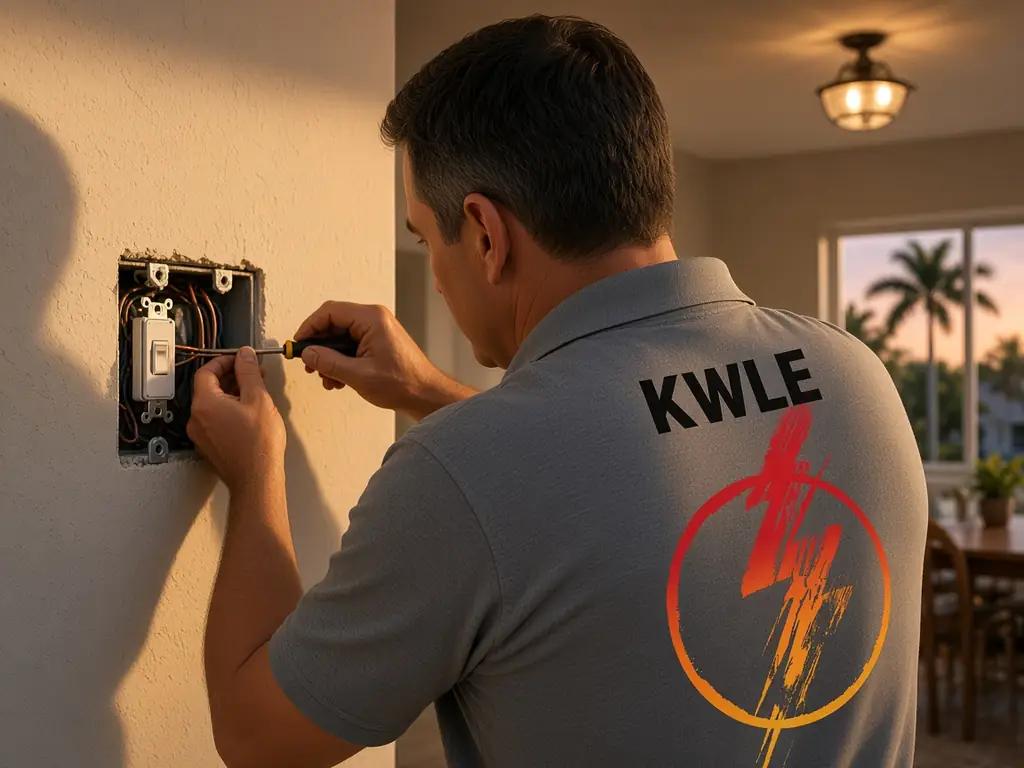
Flickering lights repair in Tampa Bay: a symptom with many causes
Lights flicker for reasons that range from harmless to dangerous. A loose bulb is trivial. A loose neutral at the panel can damage electronics and start a fire. The key is to work out which kind of flicker you have, so we sort the causes by where the problem lives: the bulb, the fixture, the switch, the circuit or the service.
Patterns that help us diagnose
- One bulb flickers: likely the bulb, socket or fixture.
- One room flickers: switch, dimmer or a loose connection on that circuit.
- Lights dim when an appliance starts: heavy load or a weak connection.
- Whole house flickers: service wire, meter or neutral problem.
- Flicker with buzz: dimmer, driver or arcing.
- Flicker in storms: loose service or tree contact.
- Flicker with warm switches: heat at a connection.
Bulbs, drivers and dimmers
- Florida electrical contractor license EC13014717, licensed & insured
- Woman-owned business based at 6248 Seminole Blvd, Seminole FL 33772
- 2-year workmanship warranty, 5 years with a Member Care Plan
- SPAN Authorized Installer and Home Depot preferred contractor
- Open 24/7 for electrical emergencies: call or text (727) 476-7079
LED bulbs flicker when a dimmer does not suit them, when the driver wears out or when voltage dips. Cheap bulbs flicker more. Old dimmers built for incandescent bulbs often fail with LEDs. We test with a known good bulb and dimmer to separate the parts. Many cases end with a compatible dimmer or a better bulb.
Loose connections in the box
A loose wire nut, a backstabbed outlet or a switch with a worn contact causes intermittent flicker that gets worse over time. These faults make heat and sparks. We open the box, retighten or replace connections and inspect the wire for damage. Fixing them early prevents burn marks and fires.
Overloaded circuits and big appliances
When a compressor, a pump or a microwave starts, it draws a surge of current. On a shared or undersized circuit, voltage drops and lights dim. A dedicated circuit, a larger wire or a soft-start device fixes the cause. We measure voltage under load to confirm.
Service and meter problems
If every light in the house flickers, the problem may be at the meter, the service wire or the main panel connection. A loose neutral can swing voltage high on one side of the house and low on the other, which damages electronics. We test at the panel and the meter, tighten lugs and call the power company if the fault is on their side.
Wiring that has aged out
Aluminum branch wiring, brittle insulation and old splices can create flicker as connections loosen. In older homes, we may find shared neutrals or tired circuits. We explain the findings and give options from partial repairs to planned rewiring.
Safety first
Flicker with a burning smell, buzzing at the panel, sparks or hot plates is an emergency. Turn off the affected circuit and call us. Do not ignore a pattern that grows.
Quotes, permits and warranty
We quote after we find the cause. Our workmanship carries a 2-year warranty, or 5 years with a Member Care Plan.
How we measure the problem
A multimeter shows steady voltage, but a flicker comes and goes. We use a clamp meter with a recording function, a thermal camera and an oscilloscope-style tester when needed. We test the circuit under load, shake connections gently while watching voltage and compare readings at the panel and at the fixture. Data tells us where the weak link is.
Neutral faults and why they matter
The neutral wire carries current back to the panel. If it is loose or broken, voltage on the circuit can float. Some lights glow dim, others burn bright, and electronics may fail. A bad neutral can be inside the panel, at the meter or in the middle of a run. We trace it, repair it and verify balanced voltage.
Fluorescent, halogen and LED differences
Old fluorescent tubes flicker when they age or when the ballast fails. Halogen lamps flicker when a socket loosens. LED lamps flicker when the driver or the dimmer is wrong. Knowing the lamp type helps us choose the test. We may replace a ballast, a socket or a driver rather than the whole fixture.
Commercial lighting flicker
Shops and offices have long runs, shared panels and many lamps. A flicker in a warehouse might be a failing driver on a high bay light or a voltage dip from a nearby motor. We test fixtures, controls and panels and propose repairs that reduce complaints and eye strain.
Surge, storm and lightning effects
Storms leave lights flickering for days when a connection near the service has been damaged. Lightning can weaken a driver without breaking it. We check surge devices, test the service and recommend protection that fits your home. Good surge protection costs little compared with replacing electronics.
Tracking intermittent faults
Faults that come and go are the hardest to catch. We ask you to note the time, the weather and what was running. We leave a logger on the circuit when needed, or schedule a return visit while the problem is active. Patience and good records beat guessing, and they stop repeated service calls.
Tree limbs, pole connections and the street
Sometimes the issue lies outside the house: a tree limb brushing the service drop, a corroded splice at the pole, a transformer near its limit. We can see signs of this when many neighbors have flicker too. We document the symptoms and help you report them so the power company can send a crew.
Common questions
Why do my lights flicker when the air conditioner starts? The compressor draws a surge. A loose connection, a shared circuit or a weak service can make lights dip. We test voltage under load.
Are flickering lights dangerous? They can be, if a loose connection or a neutral problem is the cause. Call us if flicker comes with heat, buzzing or smell.
Why do new LED bulbs flicker? The dimmer may not be compatible, or the bulb quality may be poor. We match parts and test.
Can flickering lights damage my electronics? A neutral problem or severe voltage swing can. We recommend prompt testing.
Should I replace my dimmer? If it is old or buzzes with LEDs, a new LED-rated dimmer often fixes it.
Can the power company fix a flicker? If the cause is on their line or meter, yes. We tell you which side the fault is on.
How long does a flicker repair take? Many repairs finish in a visit. Complex faults may need more time.
Can you check the panel too? Yes. Loose lugs and worn breakers are common causes of flicker.
Local pages: flickering lights repair in Seminole, our home base. See also Pinellas County, Hillsborough County and Pasco County service areas, or browse all electrical services.
Call or text (727) 476-7079 for flickering lights repair in Tampa Bay, or book online. Business hours 7 AM–5 PM, weekend service, 24/7 emergency calls.