
Need electric range wiring in Tampa Bay? Keywest Lights & Electric wires electric ranges, cooktops and wall ovens across Pinellas, Hillsborough and Pasco counties. We are a woman-owned contractor under license EC13014717, and we match the circuit, cable and receptacle to the appliance nameplate.
Request electric range wiring in Tampa Bay
Tell us what you need and where the work is. A licensed electrician will reply with next steps and a time to visit.
Call or text (727) 476-7079 · open 24/7 for emergencies · request a quote online
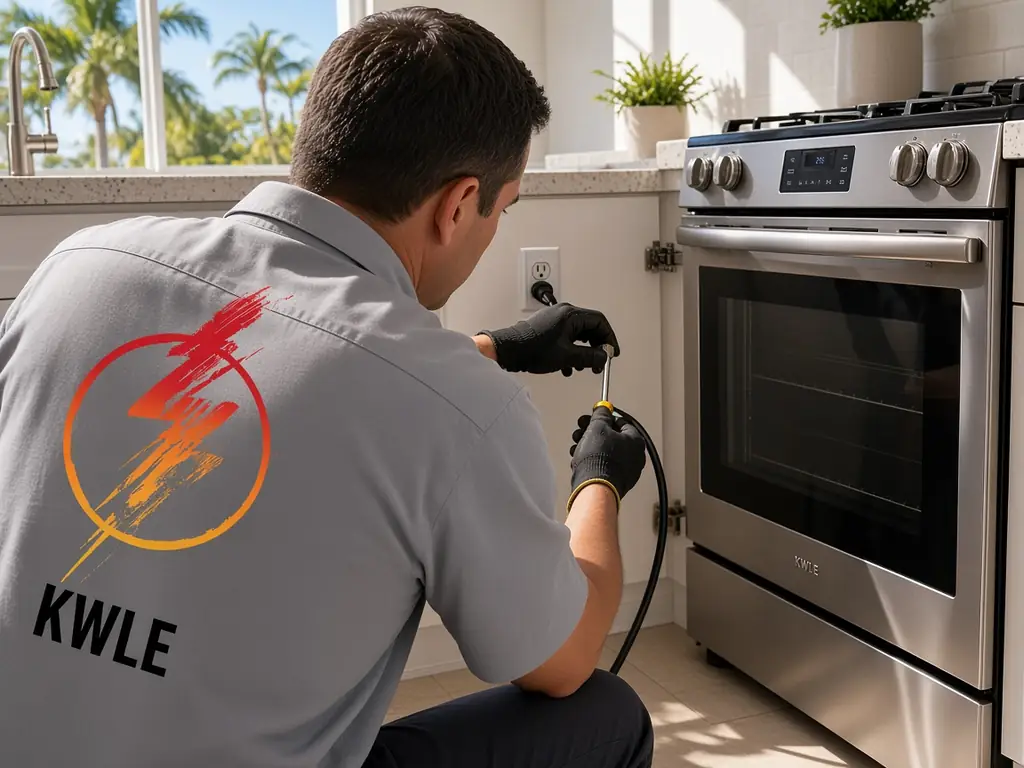
Electric range wiring in Tampa Bay: a big appliance with big needs
An electric range can draw 40 or 50 amps when every burner and the oven run together. It needs its own 240-volt circuit, a heavy cable, the right breaker and a matching receptacle or direct connection. A weak link overheats. Getting the details right protects the wire, the range and your kitchen.
What we handle
- New range circuits: a fresh line from the panel.
- Gas to electric conversions: adding 240-volt power where gas used to be.
- Induction ranges: large loads with specific requirements.
- Wall ovens and cooktops: separate or combined circuits.
- Receptacle and cord changes: three-prong to four-prong updates.
- Burned outlets: melted plugs and scorched wire.
- Moving a range: new location in a remodel.
Reading the nameplate
- Florida electrical contractor license EC13014717, licensed & insured
- Woman-owned business based at 6248 Seminole Blvd, Seminole FL 33772
- 2-year workmanship warranty, 5 years with a Member Care Plan
- SPAN Authorized Installer and Home Depot preferred contractor
- Open 24/7 for electrical emergencies: call or text (727) 476-7079
Every range has a label, often inside the oven door or behind the storage drawer, that lists voltage, wattage and amps. A typical range needs a 40-amp or 50-amp breaker with 8 or 6 gauge copper wire. We compare the label with the plan and the panel, pick the wire and breaker and allow for future appliance swaps.
Plug-in or direct wire
Many ranges use a cord and a four-prong receptacle. Wall ovens and cooktops are often hardwired through a junction box. Each has its own rules for box type, strain relief and cable. We follow the manufacturer’s instructions and the code, and we leave service slack so the appliance can be pulled out for cleaning.
Induction and high-power ranges
Induction cooktops heat fast and need steady power. Some models require a 50-amp circuit and others a 40. Ceramic-top ranges with large burners also draw heavily. We confirm the specification before we pull wire, because buying an appliance first and wiring second often leads to mismatches.
Gas to electric conversions
Homeowners switching from gas to electric need a new circuit, a breaker space and a new receptacle at the range location. If the gas line stays, a licensed plumber should cap it safely. We coordinate with the plumber, route the cable and patch the wall for the finish crew.
Burned or loose connections
A range receptacle can run hot when the plug is loose or the wire is undersized. Discolored plates, a sweet burning smell or flickering lights while cooking are warnings. We replace the receptacle, the cord and any scorched wire, and we test under load to be sure the heat is gone.
Panel capacity and kitchen planning
Ranges, dishwashers, microwaves, refrigerators and small appliances all compete for power. We calculate the kitchen load, check the panel’s capacity and add a subpanel or a service upgrade when the numbers demand it. A full kitchen plan prevents trips when everyone cooks at once.
Quotes, permits and warranty
New circuits need a permit, which we pull. Our workmanship carries a 2-year warranty, or 5 years with a Member Care Plan.
Cable types and conduit choices
Most range circuits use a three-conductor-plus-ground copper cable with insulation rated for the room. In garages and exposed runs, conduit protects the wire from nails and impact. Aluminum cable is sometimes used for large feeders, and it requires the right lugs and an anti-oxidant paste. We choose materials that last and are easy to inspect later.
Anti-tip brackets, clearances and cabinet cutouts
The range must sit snug against its cabinets, with an anti-tip bracket fastened to the floor or wall. The receptacle should not sit where the cord will be pinched or the range will push the plug. A recessed box lets the range slide flush. We confirm cutouts, heights and clearances to combustibles before the appliance arrives.
Range hoods and downdraft vents
A powerful hood and an electric cooktop often need separate circuits. Downdraft vents add another load. We map every kitchen appliance and wire each to its own protection. We also install the switch for the hood where you can reach it, and we leave a light circuit for the hood’s built-in lamps.
Why a loose range plug is a hazard
A range may run at high power for hours on holidays. A plug that is slightly loose creates resistance, which makes heat, which loosens it further. The cycle can melt plastic and ignite nearby materials. We tighten each terminal to the right torque, and we use heavy-duty receptacles built for the load.
Cooktop and oven combos in islands and peninsulas
Placing a cooktop on an island means running cable under the floor or through a chase, with a junction box accessible from a cabinet. Ventilation may use a downdraft or an overhead hood. Ovens in tall cabinets need their own junction box at the correct height. We study the cabinet drawings, mark clearances and coordinate with installers to avoid cutting a finished panel.
Troubleshooting a range that will not heat
A range with a dead oven or one burner out may have a tripped breaker, a burned receptacle, a failed element or a broken terminal block. We test voltage at the outlet, inspect the plug and measure each leg. If the appliance is at fault, we tell you so you can call a technician instead of paying for needless electrical work.
Kitchen remodel timing
Range wiring should be done before cabinets and floors are finished, so the receptacle sits correctly behind the appliance. If you are replacing counters or a backsplash, tell us early. We set the box depth, check clearances and avoid damage to new surfaces.
Renters, landlords and condos
Landlords replacing a range between tenants often find a mismatched cord or a scorched outlet. We repair the wiring, document the work and provide a short note for the file. In condos, we confirm the board’s rules on appliance changes before we pull any wire.
Common questions
What size breaker does an electric range need? Most use a 40-amp or 50-amp breaker. We read the nameplate and choose accordingly.
Can I plug a new range into my old outlet? Only if the plug type and the circuit rating match. We check the outlet and the wire.
Do induction ranges need special wiring? They need a proper 240-volt circuit sized to the model. We verify the specifications.
Can you convert my gas range to electric? Yes. We run a new 240-volt circuit and install the receptacle.
Why is my range plug hot? A loose connection or undersized wire may be the cause. Stop using it and call us.
Do I need a permit? Yes, for new circuits. We handle it.
How long does it take? Most installs take a few hours, longer when the run is long.
Can you move the range to a new wall? Yes. We run new wire and install a new box.
Local pages: electric range wiring in Seminole, our home base. See also Pinellas County, Hillsborough County and Pasco County service areas, or browse all electrical services.
Call or text (727) 476-7079 for electric range wiring in Tampa Bay, or book online. Business hours 7 AM–5 PM, weekend service, 24/7 emergency calls.