
Need dryer outlet installation in Tampa Bay? Keywest Lights & Electric installs and replaces 240-volt dryer outlets across Pinellas, Hillsborough and Pasco counties. We are a woman-owned contractor under license EC13014717, and we match the circuit, the receptacle and the cord to your dryer.
Request dryer outlet installation in Tampa Bay
Tell us what you need and where the work is. A licensed electrician will reply with next steps and a time to visit.
Call or text (727) 476-7079 · open 24/7 for emergencies · request a quote online
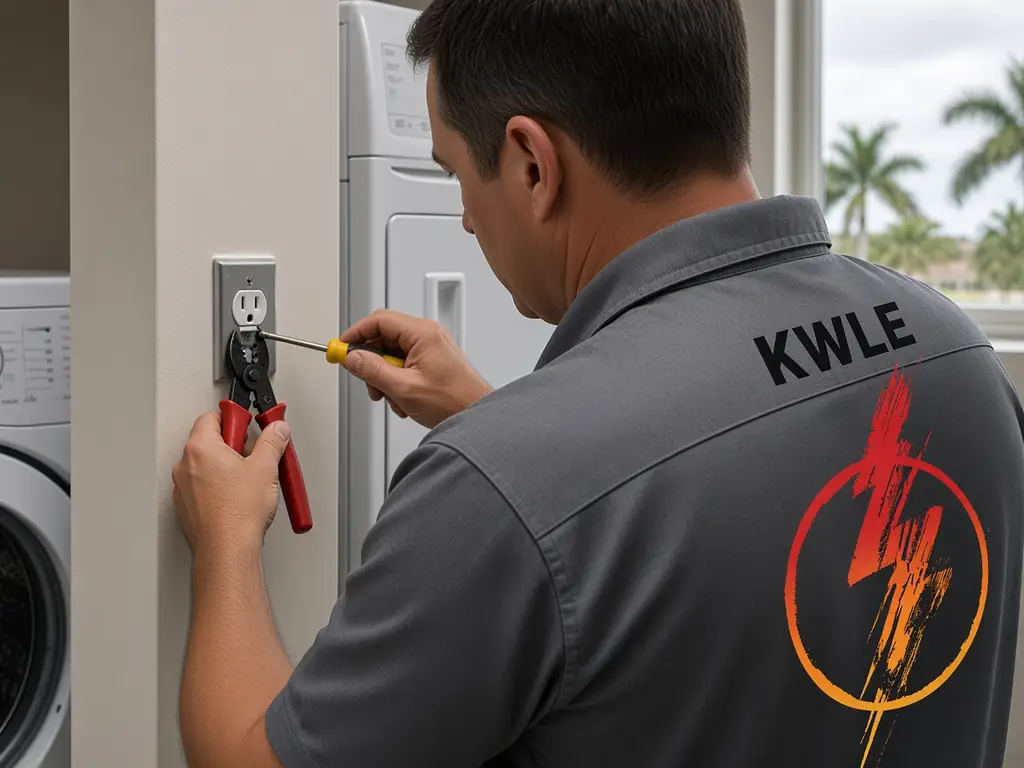
Dryer outlet installation in Tampa Bay: the right plug and the right wire
An electric dryer uses a 240-volt circuit with a 30-amp breaker in most homes. The outlet must match the dryer’s cord, either a three-prong or a four-prong type. A wrong match leads to loose plugs, burned receptacles and fire risk. We confirm your dryer’s needs, choose the outlet, check the wire and set the breaker to fit.
Three-prong and four-prong outlets
Older homes have three-prong dryer outlets, in which the neutral and ground share one wire. Newer homes use four-prong outlets with separate neutral and ground. The dryer cord must match the outlet. Changing a cord is simple, but changing an outlet may require new wire. We explain which is right for your home and safe for your dryer.
Common reasons to call
- Florida electrical contractor license EC13014717, licensed & insured
- Woman-owned business based at 6248 Seminole Blvd, Seminole FL 33772
- 2-year workmanship warranty, 5 years with a Member Care Plan
- SPAN Authorized Installer and Home Depot preferred contractor
- Open 24/7 for electrical emergencies: call or text (727) 476-7079
- New dryer: the plug does not match the old outlet.
- Moving a dryer: the laundry room is being relocated.
- Burnt outlet: melted plastic or a hot plug.
- New laundry room: no existing 240-volt line.
- Gas to electric switch: the old outlet is a gas hookup.
- Loose plug: a worn receptacle that wiggles.
Wire size and breaker
A typical dryer circuit uses a 30-amp breaker and 10-gauge copper wire. Long runs may need a heavier wire. We read the nameplate, measure the distance and select the wire and breaker accordingly. Aluminum wire needs special care, and we treat connections with the right compound.
Location, vent and clearances
The outlet should sit behind or beside the dryer, within reach of the cord but not where a crushed vent could press on it. We place the box at a height that keeps the plug from bending and the cord from stretching. A short, safe cord lasts longer and runs cooler.
Burned or melted outlets
Heat at a dryer plug is common, since dryers draw current for an hour at a time. A loose connection, a worn receptacle or a poor cord can cause melting. We replace the outlet and the damaged wire, check the breaker and inspect the cord. A burn mark is a sign to act soon.
Lint and fire safety
Lint is flammable. Clean the lint trap before each load and the vent every year. A crushed or kinked vent causes heat that stresses the plug and the dryer. We check the electrical side and give simple tips for the airflow side.
Quotes, permits and warranty
A new 240-volt circuit needs a permit, which we pull. A like outlet replacement may not. Our workmanship carries a 2-year warranty, or 5 years with a Member Care Plan.
Gas dryers still need an outlet
A gas dryer uses a standard 120-volt receptacle for the drum motor and controls, and a gas line for heat. The outlet should be grounded and often on its own circuit. We install or repair the outlet, check the gas connection with the plumber when needed and make sure the vent is clear.
Dryer cords, adapters and strain relief
Cords are sold separately, and a loose cord at the terminal block is a common fault. We attach cords with strain relief, tighten screws to the right torque and use a three-wire or four-wire kit that fits. Adapters and extension cords are not safe on a 30-amp circuit, so we avoid them.
Washer and dryer circuits together
Laundry rooms often need a 120-volt, 20-amp circuit for the washer, a ground-fault outlet near a sink and a 240-volt circuit for the dryer. We lay out all three, so each load has its own breaker and the panel is not overloaded. A tidy laundry plan prevents trips and keeps the room safe.
Panel space and capacity
A dryer is one of the larger loads in a home. If the panel is near its limit, a new 30-amp, 240-volt breaker may not fit. We calculate the load, and if needed suggest a subpanel, a tandem breaker where allowed or a panel upgrade. We never overload a panel.
Dryer vent and electrical safety together
A clogged vent forces the dryer to run longer, which raises heat at the plug. Electricians and appliance technicians both see melted plugs on dryers with blocked vents. We check the plug temperature during a test run and recommend a vent cleaning when it is needed.
Safety devices and testing
Dryer circuits do not need ground-fault protection in most cases, but they should be tested for correct wiring with a polarity and voltage check. We measure each hot leg to neutral and to ground and confirm 240 volts across both. Wrong wiring can burn motors and controls.
Mobile homes, RVs and special cases
Manufactured homes sometimes have a dryer outlet fed from the main panel through a short cable with a different neutral arrangement. RV parks and campers use 30-amp and 50-amp plugs that look similar but are wired differently. We know the differences and avoid mismatched parts.
Other 240-volt appliances nearby
An electric range, a water heater, a heat pump and a welder all use 240-volt circuits. If you plan more than one, we plan the panel together, so each gets its own breaker without crowding. A little planning keeps costs lower and avoids moving wire twice.
Upgrading the laundry space
Many owners combine a dryer outlet with new lighting, a utility sink outlet, a shelf and a better exhaust path. We coordinate the electrical work with other trades, so the laundry room becomes a pleasant place to work rather than a cluttered corner.
Neighborhood habits and seasons
Summer humidity makes clothes slow to dry, while pollen season, beach towels, sandy swimsuits and heavy bedding push dryers hard. A well-built outlet handles long cycles without complaint. Owners who host guests or run rentals near the Gulf coast often use dryers daily, so sturdy wiring matters.
Common questions
How do I know if I have a three-prong or four-prong outlet? Look at the receptacle. Three slots means three-prong, and four slots means four-prong.
Can I change my dryer cord instead of the outlet? Often yes, if the wiring supports it. We check the circuit first.
What size breaker does a dryer need? Most electric dryers use a 30-amp, 240-volt breaker. We confirm with your dryer’s label.
Why does my dryer plug feel hot? A loose connection or worn outlet is likely. Stop using the dryer and call us.
Can you move my dryer outlet? Yes. We run new wire and set the outlet where the dryer will sit.
Can you convert from gas to electric? Yes. We install the 240-volt circuit and outlet.
Do you handle condos and apartments? Yes, inside the unit and with association approval where needed.
Do you install surge protection for appliances? Yes. We can add a whole-house surge device at the panel.
Local pages: dryer outlet installation in Seminole, our home base. See also Pinellas County, Hillsborough County and Pasco County service areas, or browse all electrical services.
Call or text (727) 476-7079 for dryer outlet installation in Tampa Bay, or book online. Business hours 7 AM–5 PM, weekend service, 24/7 emergency calls.