
Need Breaker Replacement Tripping Repair in Greenbriar? Breaker replacement tripping repair in Greenbriar is a diagnosis and, when it is the right fix, a listed replacement of a breaker that will not hold in an older house panel. It is not a full panel swap, and we will tell you if the trip is a load problem, a loose landing, or a failed breaker.
Request breaker replacement tripping repair in Greenbriar
Tell us what you need and where the work is. A licensed electrician will reply with next steps and a time to visit.
From the same shop we also handle EV charging circuits, JellyFish eave lighting, a new breaker panel, battery backup installation, solar installation, generator installation, 240v outlet installation and aluminum wiring repair for Greenbriar homes. The same crew also takes commercial electrician and commercial generator installation.
Call or text (727) 476-7079 · open 24/7 for emergencies · request a quote online
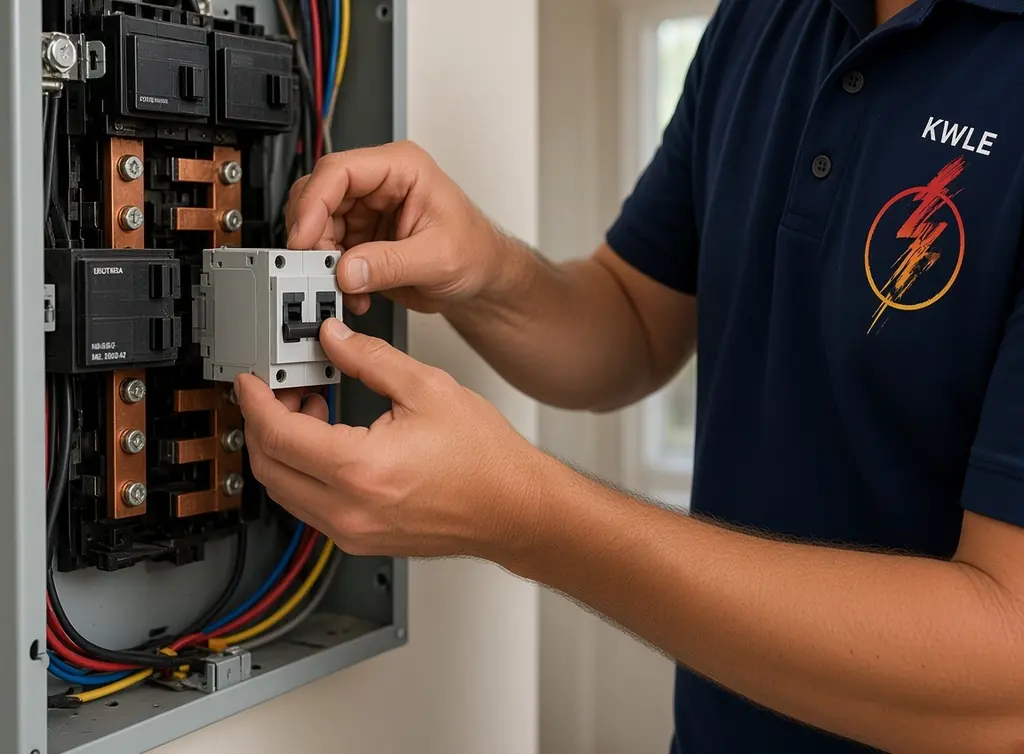
Breaker replacement tripping repair in Greenbriar is a breaker that will not hold, not a full panel swap
A single breaker that trips, feels hot, or will not reset is the usual call. In a 1960s or 1970s can, that can be a tired breaker, a loose lug, or a load that has grown. We test before we swap. We will not throw a new breaker at a shorted run or an overloaded kitchen string and call the job done. If the interior itself is the problem, we will move you to the panel-upgrade page.
Finding the cause before any breaker is pulled
The first step is a look at the trip, the load on that circuit, and the temperature of the breaker and the lugs. A kitchen string with a toaster and a microwave is a different problem than a breaker that trips with nothing plugged in. We copy the amperage and the type. A 15-amp lighting breaker will not be replaced with a 20-amp just to stop a trip. We find the cause, then we pick a listed replacement that matches the can.
Older cans, electric heat and a breaker that ages out
- Florida electrical contractor license EC13014717, licensed & insured
- Woman-owned business based at 6248 Seminole Blvd, Seminole FL 33772
- 2-year workmanship warranty, 5 years with a Member Care Plan
- SPAN Authorized Installer and Home Depot preferred contractor
- Open 24/7 for electrical emergencies: call or text (727) 476-7079
Electric heat is common here, and those 240-volt heat breakers see a lot of cycles. A garage can can also show rust at the bus, which is not fixed by a new handle. We tell you what we see. Access is usually a garage or a side-wall can on a detached house. Someone should be there to let us in if the garage is locked. We work with the power off at that breaker, and at the main when the can requires it.
How the breaker file is noted
A listed breaker swap is noted in a repair folder. If we also tighten a loose landing, that is written down. You receive the circuit number and the breaker type. Put the local street on the note. Replacing the whole interior is not this visit; that is a panel-upgrade job.
When the new breaker is first reset
We turn the new breaker on only after the landing is torqued and the cause of the trip has been addressed. If it trips again once the house is in use, message the shop at (727) 476-7079 with the circuit number. We come back to that can. The workmanship term is two years. A Member Care Plan stretches it to five.
What helps a tripping-breaker request
The street, which room or appliance goes dark, and whether the breaker feels hot or will not reset. A snapshot of the panel directory helps when the cover can stay on. Tell us if the trip started after a new appliance was added. Do not hold a breaker in the on position to “keep the room on.”
Breakers and tools we carry for these cans
Common listed interiors for older residential cans, a torque screwdriver, and a thermal check for the adjacent breakers come on the truck. A spare 15- and 20-amp assortment comes too, plus the 240-volt sizes we see on electric-heat and dryer slots.
A tandem breaker is used only when the can listing allows it. We will not force a tandem into a bus that does not accept one. A used breaker from a parts bin is not an acceptable replacement.
A kitchen GFCI breaker, a heat breaker, and a lighting breaker are different types. We match the type, not just the color of the handle.
Adjacent heat, stab tightness and the wrong tandem
AFCI, GFCI and a handle that will not stay on
A lighting or bedroom circuit may use an AFCI breaker in a later interior, or a standard breaker in an older can. We match what the can and the circuit require, not what was on sale. A kitchen or bathroom point may need a GFCI breaker or a GFCI device; we do not replace that protection with a plain handle just because a plain handle is in the truck. If the handle will not stay on, we leave it off and find the fault before we close the can. Holding a breaker on is never the fix.
We also carry common-trip handle ties, bolt-on or stab-in bodies that match the can, and half-size breakers only for slots that accept them. A magnetic-trip check and a look at the adjacent stabs are part of the diagnosis, not extras we invent later.
A trip indicator, when the breaker has one, is copied before we pull the handle. Unused openings get filler plates. A handle lock is not used to force a faulted circuit to stay on. Paint blistered at a stab is a bus problem, not a handle problem.
Rust flakes at the bottom of a garage can, a wasp nest, or a tripped window flag are all useful clues. We note them in the repair folder. A reset button on a GFCI breaker is tested only after the fault is cleared, not used as a way to keep a bad circuit alive.
A lighting-only slot and a small-appliance slot are not swapped just to quiet a trip. We map the branch, then pick the listed replacement. A filler plate is not a substitute for a missing breaker in a live bus stab.
A tandem or a slimline unit is used only when the bus listing allows it. A full-size slot is not forced to take a skinny body with a makeshift clip. We photograph the bus stabs before and after so the folder shows a clean landing.
A wiggy solenoid tester is only a secondary check. A megger reading is reserved for a feeder that has been wet, not for every branch. A kneepad and a manila clipboard stay on the garage slab so parts do not roll. Hairline rust or a concrete spall at a stem wall is noted if it is staining the can. A gusset or holdown near the enclosure is left alone.
A breaker that sits next to an electric-heat breaker can feel hot even when it is not the failed one. We check the stab tightness and the neighboring slots before we blame the handle you noticed. A tandem is used only when the can listing allows that slot. Forcing a twin into a full-size-only bus is not an acceptable close-out, even if it would “make space.”
When this visit should become a panel job
If the bus is damaged, the enclosure is rusted through, or several breakers are failing at once, a single swap is the wrong close-out. We will stop and quote the can, not stack new handles on a bad interior.
Common questions
Can you just put in a larger breaker so it stops tripping? No. A larger breaker is used only when the conductor and the load listing allow it. An overload is fixed by moving loads or correcting the run, not by up-sizing the handle.
Is this a full panel replacement? No. This page is a diagnosis and a listed breaker swap. A new can or a new interior has its own page.
Should I hold the breaker on if it keeps tripping? No. Call or text (727) 476-7079 and leave the breaker off until we can look at it.
What should we tell you when we call? The street, which room or appliance is affected, and whether the breaker feels hot or will not reset. A directory photo helps.
Who keeps the breaker note? Our shop holds the repair folder and sends you the circuit number and the breaker type.
How do we get a tripping-breaker visit scheduled? Call or text (727) 476-7079, or use the form on this page. Name the street and the room that goes dark so we can bring the right type.
The drive from our shop at 6248 Seminole Blvd is about 13 miles. In Greenbriar we work along the Clearwater edge of the community, the Safety Harbor side and the Dunedin side. From here we also reach Oldsmar, Dunedin, Palm Harbor, Safety Harbor and Clearwater.
Up: Breaker Replacement Tripping Repair across Tampa Bay · For everything we do locally, see Clearwater electrical service.
Nearby: Tierra Verde · South Highpoint · Bear Creek · Indian Shores
Call or text (727) 476-7079 for breaker replacement tripping repair in Greenbriar, or book online. Business hours 7 AM–5 PM, weekend service, 24/7 emergency calls.