
Need grounding bonding in Bear Creek? Keywest Lights & Electric corrects grounding bonding in Bear Creek when the electrode, the clamps or the bond to the metal water line is missing, loose or corroded. We are a licensed, woman-owned contractor, and the shop on Seminole Blvd is about 6 miles away.
Request grounding bonding in Bear Creek
Tell us what you need and where the work is. A licensed electrician will reply with next steps and a time to visit.
Neighbors in Bear Creek also book us for backup generator hookups, permanent lighting, backup battery systems and a solar hookup.
Call or text (727) 476-7079 · open 24/7 for emergencies · request a quote online
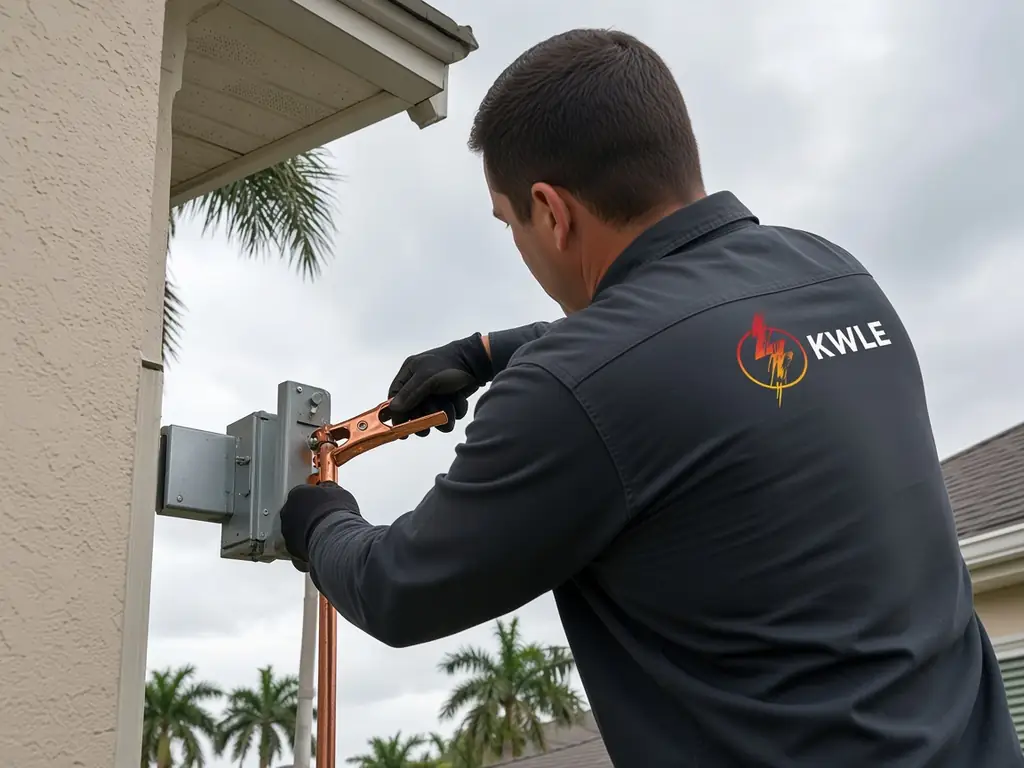
Grounding bonding in Bear Creek: test the path before you add a rod
A ground rod that is not connected, a clamp that has crumbled in damp soil, or a metal water line that was never bonded is a common find in mid-century houses here. We start by finding the existing electrode and the bonding jumpers, if they are there at all, and we test continuity. We do not drive a new rod and walk away from a broken clamp at the old one. The path has to be continuous, or it is not a grounding system.
What we usually repair or add
- An electrode: a rod or another listed electrode, driven or placed where it can last.
- Clamps and conductors: listed hardware, sized and protected where it leaves the wall.
- A water-line bond: where a metal water line is present and must be bonded.
- Bonds at other metal: where the method at this house requires it.
- A note and a photo: so you can see what was added and where it lands.
Damp soil, salt and a clamp that disappears
- Florida electrical contractor license EC13014717, licensed & insured
- Woman-owned business based at 6248 Seminole Blvd, Seminole FL 33772
- 2-year workmanship warranty, 5 years with a Member Care Plan
- SPAN Authorized Installer and Home Depot preferred contractor
- Open 24/7 for electrical emergencies: call or text (727) 476-7079
This community sits on Boca Ciega Bay, with the Bear Creek waterway through it. Soil stays damp, and a bare clamp at grade rusts or is buried by mulch. We use listed connectors, we keep the connection inspectable where we can, and we will not hide a weak clamp under a decorative rock and call it finished.
Mid-century upgrades and a missing bond
Houses from the 1960s and 1970s often picked up later work: a new panel, a later porch, a metal shed. The bonding did not always come with it. When we replace a panel or a service, we bring the grounding method current. On this page, the visit can also stand alone: a bonding repair without a full service change, if that is all the house needs.
Manufactured homes and pedestals
On a manufactured home the electrode and the bond at the pedestal and the frame follow their own rules. We check both ends. A house-style rod at the corner, with no bond at the pedestal, is not a complete path, and we will not leave it that way.
How the visit runs
We locate the existing path, we photograph what we find, and we quote the missing or failed parts. On the repair visit we add or replace those parts, we test continuity and we show you the new clamps. Dirt, leftover rod stubs and old hardware leave with us.
Paperwork
A standalone bonding repair may or may not need a permit, depending on the scope. A bonding update that is part of a service or panel change is included in that permit. We tell you which path applies.
Labor coverage
Labor on the grounding and bonding work is covered for two years, or five with the Member Care Plan. Clamps and electrodes follow their makers’ terms.
After the path tests clean
Keep the photos. If a later inspector or a four-point reviewer asks about the electrode, you will not have to describe a buried clamp from memory.
Meter bonding, jumpers and a loosened fitting
A bond jumper at the meter or at a water fitting can work loose after years of vibration or a later plumbing change. We check those jumpers, we replace a cracked or undersized one and we retighten listed fittings. A painted-over clamp that will not bite is replaced, not painted again.
Rod length, rock and a second electrode
If the first rod hits rock or will not drive to the required depth, we stop and use a listed alternative, which may be a second electrode or a different listed method. We do not cut a rod short and bury the evidence.
Bonding a later metal shed or a well casing
A later metal shed, a well casing or a metal fence near the service can need a bond, or it can need to be left alone, depending on the method at this house. We look, we explain and we only add a jumper when it belongs. A random jumper to a fence is not a grounding plan.
Label at the electrode
Where we can, we leave a small, durable tag or a note on the directory that says where the electrode is, so a later visit does not have to dig through mulch to find it.
Pool bonding is a different visit
If you also have a pool or a spa, that bond grid is its own scope. We will not treat a house electrode repair as a pool inspection, and we will not ignore a broken house clamp because a pool exists on the same lot.
Plastic water service and a bond that has nowhere to land
If a later owner replaced a metal water line with plastic, the old bond may now land on nothing useful. We find out what is still metal, we move the bond to a legal location or we add a listed electrode, and we do not clamp a jumper to a plastic fitting and hope.
Surge devices and a path worth having
A whole-house surge device is only as good as the grounding path it sits on. If you want one later, this is the visit that makes that device worth installing. We can note a spare and a location, without turning this job into a surge sale.
Telephone, cable and a stray bond that does not belong
A later cable or telephone ground may have been twisted onto the wrong fitting. We untangle that only as far as our work requires, and we do not leave a stray jumper on a gas pipe or a plastic line. If another trade’s bond is in the way, we say so rather than cut it in silence.
Driveway edges and a rod that would sit in a tire path
We will not drive an electrode where a car or a mower will catch it every week. We pick a protected, legal location and we cap or shield it when that is part of the listing.
Crawl spaces, a damp strap and a broken lug
In a low crawl we look for a flattened strap or a lug that has pulled off a pipe. We replace that hardware with a listed clamp we can actually tighten, and we do not leave a strap sitting in standing water.
A simple sketch of the path
We leave a one-page sketch of the electrode and the main bonds so a later reviewer does not have to hunt through a flower bed.
Common questions
Do you handle grounding bonding in and around Bear Creek? Yes, including electrodes, clamps and water-line bonds on mid-century houses. Call or text (727) 476-7079 with a photo of the meter or the rod if you can see it.
Is a single rod always enough? Not always. We use the method required at this house and we test the path. We do not drive one rod and assume the job is done.
My clamp is buried in the mulch. Is that fine? Usually not. We want an inspectable, listed connection, especially in this damp, salty setting.
Can you do this without replacing the panel? Often yes, if the cabinet itself is sound. If the panel is the real problem, we will say so and quote that separately.
Do you work on manufactured homes? Yes. We check the pedestal and the frame path, not just a rod at the corner.
How do I get a quote started? A photo of the meter base, the rod and the address is a good start. You can also call or text (727) 476-7079.
Our trucks leave the shop on Seminole Blvd, about 6 miles from Bear Creek, and work near Boca Ciega Bay and Bear Creek. We also serve St. Pete Beach, Treasure Island, South Pasadena, Lealman and Gulfport.
Up: Grounding Bonding across Tampa Bay.
Nearby: Seminole
Call or text (727) 476-7079 for grounding bonding in Bear Creek, or book online. Business hours 7 AM–5 PM, weekend service, 24/7 emergency calls.