
Need electric range wiring in Bear Creek? For electric range wiring in Bear Creek, Keywest Lights & Electric sizes a 4-wire range receptacle or a hardwired range landing to the nameplate, places it where the range can actually sit and retires a leftover 3-wire kitchen face when that is what is in the wall. Licensed electricians from our woman-owned shop on Seminole Blvd, about 6 miles away, treat this as a cooking-appliance circuit, not as a dryer outlet and not as a generic 240-volt page.
Request electric range wiring in Bear Creek
Tell us what you need and where the work is. A licensed electrician will reply with next steps and a time to visit.
Our Bear Creek pages cover commercial electrical service, a business standby generator, a car charger circuit and backup generator hookups too.
Call or text (727) 476-7079 · open 24/7 for emergencies · request a quote online
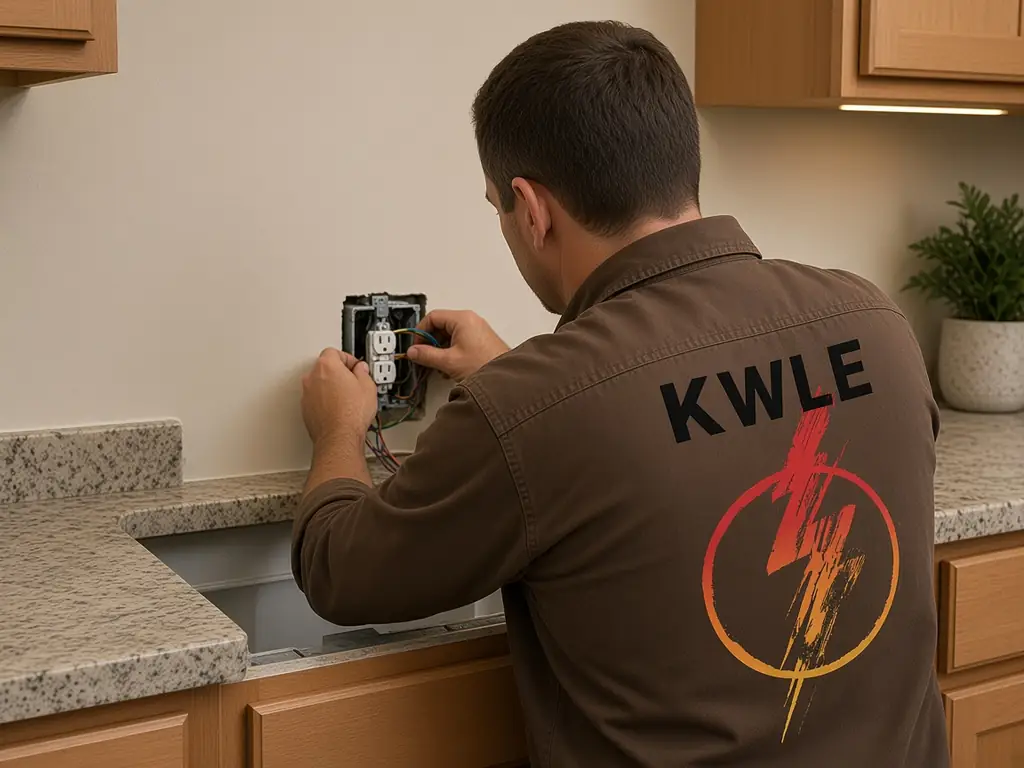
Electric range wiring in Bear Creek is a cooking-appliance landing
The job here is the range, a cooktop or a similar cooking nameplate: a 40- or 50-ampere class branch, a 4-wire receptacle or a hardwired whip and a landing the appliance can reach when it is in place. A dryer receptacle has its own page. A 120-volt dedicated kitchen branch is also a different visit. We start with the nameplate, the existing kitchen face and whether the range is cord-and-plug or hardwired.
What a range-wiring visit usually includes
- The nameplate: amperes, voltage and whether the maker wants a cord or a whip.
- A 4-wire receptacle or a hardwired landing: listed for that load, not a leftover 3-wire face.
- A branch and a breaker: sized to the plate, landed in the panel with a directory line.
- A place in the opening: the face or the whip where the range can sit flush.
- A test: the elements heat, the landing stays cool and the appliance sits still.
A leftover 3-wire range face we will not reuse
- Florida electrical contractor license EC13014717, licensed & insured
- Woman-owned business based at 6248 Seminole Blvd, Seminole FL 33772
- 2-year workmanship warranty, 5 years with a Member Care Plan
- SPAN Authorized Installer and Home Depot preferred contractor
- Open 24/7 for electrical emergencies: call or text (727) 476-7079
Older kitchens here often still have a three-conductor range receptacle. A new landing on this page uses a listed four-conductor method. We will not put a new range on that old face with an adapter and call the kitchen finished.
Slide-in ranges, a flush fit and a cord that is not in a bind
The receptacle has to sit in the opening so the range can slide back without crushing the cord or the whip. We measure that opening, we place the landing and we will not leave a face that forces the range to sit proud of the counter.
This is not a dryer outlet and not a small-appliance branch
A dryer has its own page. A 120-volt microwave or fridge branch has its own page. We keep this visit on the cooking nameplate.
How we cover the range labor
The cooking-appliance labor is warranted two years, five years under the Member Care Plan. The device, the range whip and the breaker remain on their makers’ terms.
Permits for a new range branch
A new range run or a new breaker almost always needs a permit. A same-box swap of a failed face may stay modest. We say which path you are on before we open the kitchen wall. The parcel, not the city on the mail, decides the review.
After the first meal on the new range
If a burner will not heat, the face warms or the breaker trips mid-cook, tell us. A loose landing is easier to correct after the first meal than after the range is caulked in place.
A hardwired whip versus a cord-and-plug range
Some ranges are hardwired with a listed whip; some use a cord and a receptacle. We follow the maker’s method, we support the whip and we will not convert a hardwired range to a loose cord because that was easier in the field.
A cooktop and a wall oven as two nameplates
A cooktop and a separate wall oven are often two landings, not one shared range face. We read both plates, and we will not stack two cooking loads on one branch just to save a slot.
Cabinet openings, a cutout and a landing we can still reach
The landing has to stay reachable after the range or the cooktop is in. We place it so a later tech can get to it, and we will not bury a receptacle behind a box that cannot come back out.
A gas range with an electric ignition, not a full-power range circuit
If the range is gas and only wants a 120-volt ignition receptacle, we say so and we treat that as a small 120-volt landing. We will not pull a 50-ampere range run for a machine that does not need it.
Mid-century kitchen walls and a path we plan first
We look for a path that does not wreck a finished splash or a tight cabinet run. When a cut is needed, we say so first, and we close it clean.
A 14-50 face, 6-gauge or 8-gauge copper and a run we size to the plate
Most ranges on this page want a 14-50 receptacle or a hardwired landing on 6-gauge or 8-gauge copper, depending on the plate and the length. We size that run to the plate, and we will not use a 14-30 dryer face in a range opening.
A 6-50 welder face is not a range landing
A 6-50 shop face is a different device. We will not leave a welder receptacle behind a range and tell you to change the cord.
Surface elements, an oven cavity and a test we do on both
We test a surface element and the oven, not only one burner. A landing that feeds the cooktop but starves the oven is not a finished range circuit.
A downdraft range and a second motor we will not ignore
Some ranges include a downdraft motor on a separate, smaller landing. We read that plate too, and we will not assume the range receptacle is the only circuit in the opening.
Anti-tip hardware is not our close-out, but the landing still has to let the range sit
We set the electrical landing so the range can sit flat and still be reached. The anti-tip bracket is usually the appliance setter’s work; we just will not put the receptacle where that bracket cannot do its job.
A drop-in cooktop with a junction under the counter
A drop-in cooktop often wants a hardwired junction under the counter, not a receptacle in the back wall. We land that junction where it can still be reached when the drawer is out, and we will not hide it where the only access is to lift the cooktop.
A double oven stack and two nameplates we will not combine
A wall oven stack can be two ovens with two plates, or one listed pair. We read the labels, we keep the landings honest and we will not combine two oven loads on one range face.
A kitchen island range and a feed we plan before the floor goes back
A range in an island needs a listed feed under the floor or in the island void. We plan that feed before the floor is closed, and we will not fish a late range run under a finished island sole plate as a surprise.
A convection fan, a storage drawer and a landing we can still reach with the drawer out
A storage drawer under a range can hide a poorly placed receptacle. We place the landing so the drawer can open and a later tech can still get to the face, and we will not put the receptacle in the only spot the drawer slams into.
A glass-cooktop warning light and a test that includes the hot-surface lamp
We test the hot-surface or warning lamp when the cooktop has one. A range that heats but never shows the warning lamp may still have a landing issue we should catch before we leave.
A surplus of unused 6-gauge in the wall from a prior range
Sometimes a prior range left a long enough 6-gauge run in the wall. We inspect that cable, we test it and we reuse it only when the insulation and the terminations are honest. A heat-damaged, oil-soaked or nicked leftover is a new run, not a reuse.
A range cord with a right-angle plug and an opening that has to accept it
Some range cords use a right-angle plug. We confirm the receptacle opening can accept that plug when the range is in, and we will not leave a straight-blade assumption on a right-angle cord.
A professional-style range with a griddle or a French top
A heavier professional-style range can want a larger branch than a household 14-50. We read that plate, we say when the kitchen run is too small and we will not land a household 14-50 on a range the maker listed for a larger feed.
A simmer setting, a warming drawer and a self-clean lock we test after the landing
We run a simmer setting and, when the range has one, a warming drawer, so the landing is tested beyond a single burner. A self-clean lock is the maker’s feature; we just confirm the range still has power when that lock engages.
A ceramic-glass cooktop, a radiant ribbon and a drip pan we will not treat as wiring
A ceramic-glass or radiant-ribbon cooktop still uses the same range landing, but we will not pull a drip pan or a halogen lamp as part of this visit. The electrical landing is the job.
Common questions
Can you do electric range wiring near Bear Creek? Yes, for a 4-wire range receptacle or a hardwired range landing sized to the nameplate. Call or text (727) 476-7079 with the plate and a photo of the existing face.
Is a dryer receptacle the same job? No. A dryer has its own page. This appointment is the cooking appliance.
What if I have a cooktop and a wall oven? Those are often two landings. We read both nameplates and we plan them honestly.
Does a new range run need a permit? Almost always. A same-box swap may stay modest. We explain that first.
How should we start a range-wiring visit? Text (727) 476-7079 a photo of the nameplate and the kitchen opening.
Our trucks leave the shop on Seminole Blvd, about 6 miles from Bear Creek, and work near Bear Creek and Boca Ciega Bay. We also serve Pinellas Park, Gulfport, Treasure Island, St. Pete Beach and Kenneth City.
Up: Electric Range Wiring across Tampa Bay.
Call or text (727) 476-7079 for electric range wiring in Bear Creek, or book online. Business hours 7 AM–5 PM, weekend service, 24/7 emergency calls.