
Need dryer outlet installation in Bay Pines? Keywest Lights & Electric installs dryer outlets in Bay Pines for laundry closets, garages and condo utility rooms. We are licensed and woman-owned, and we match the circuit, the wire and the receptacle to your dryer so it runs safely.
Request dryer outlet installation in Bay Pines
Tell us what you need and where the work is. A licensed electrician will reply with next steps and a time to visit.
Around Bay Pines we also put in a car charger circuit, backup generator hookups, a business standby generator and a commercial electrician.
Call or text (727) 476-7079 · open 24/7 for emergencies · request a quote online
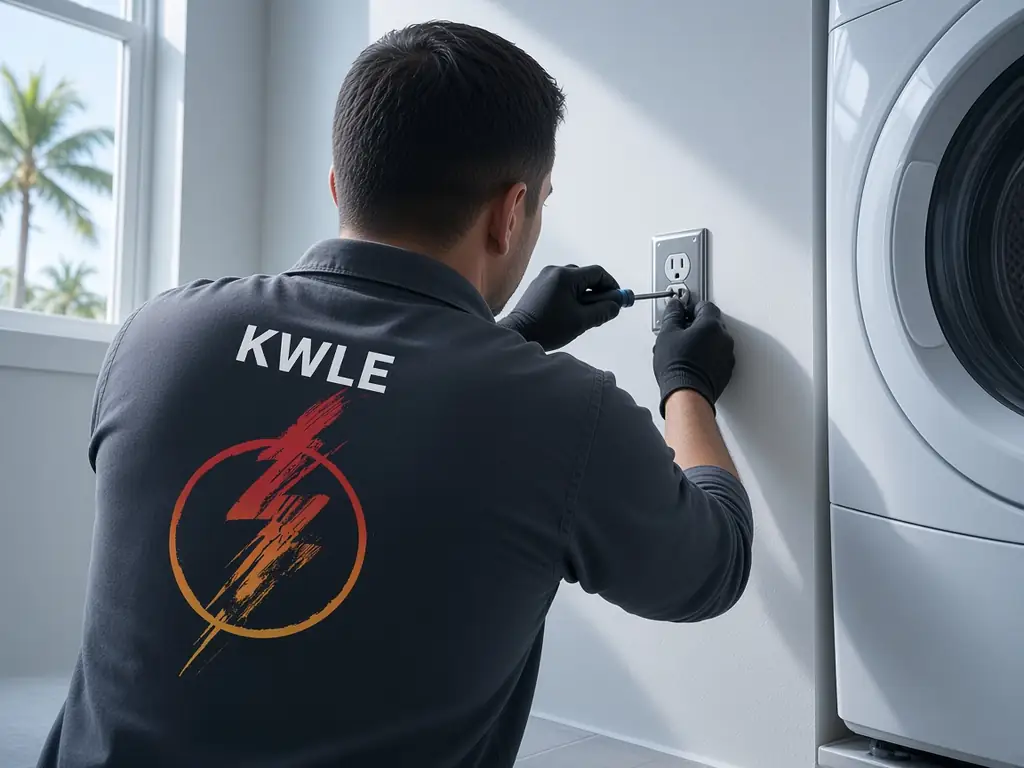
Dryer outlet installation in Bay Pines: the right plug on the right circuit
An electric dryer is one of the hungriest appliances in a home. It needs its own 240-volt circuit, a heavy cable and a receptacle that matches the plug. In Bay Pines, where many houses were built around 1970, we often find old three-prong outlets, undersized wire or a dryer cord plugged into the wrong receptacle. We bring the setup up to current practice.
What we handle
- New dryer circuits: breaker, cable and receptacle from the panel.
- Outlet replacements: worn, burned or mismatched receptacles.
- Three-prong to four-prong updates: a separate ground for safety.
- Moving a dryer: a new location with a new run.
- Condo and villa laundry closets: quiet, tidy installs.
- Gas dryer outlets: a standard 120-volt receptacle for controls.
- Surface boxes: for block walls where in-wall work is hard.
Reading the plug
- Florida electrical contractor license EC13014717, licensed & insured
- Woman-owned business based at 6248 Seminole Blvd, Seminole FL 33772
- 2-year workmanship warranty, 5 years with a Member Care Plan
- SPAN Authorized Installer and Home Depot preferred contractor
- Open 24/7 for electrical emergencies: call or text (727) 476-7079
Dryers come with three-prong or four-prong cords. Three-prong plugs share the neutral and ground, which older homes used. Newer homes use four-prong receptacles with a dedicated ground. We check what your dryer uses, what the wall has and whether a change is needed.
Sizing the circuit
Most electric dryers need a 30-amp, 240-volt circuit. We confirm the nameplate, size the wire to match and choose a breaker to fit. An undersized circuit trips the breaker or heats the wire.
Running the cable
Block and slab homes make routing tricky. We run cable through attic space, soffits and utility chases when we can, and we use surface conduit when we cannot. We keep the run as short and tidy as the layout allows.
The panel side
We check room in your panel for a double-pole breaker and confirm the panel can handle the added load. If the panel is full or old, we talk you through options, from a subpanel to a panel replacement.
A burned or melted outlet
A plug that shows brown marks or a plate that feels hot points to a loose connection. We stop use, replace the receptacle and the plug if needed and check the wire for heat damage back to the first splice.
Venting matters too
Lint can build up in a long vent run and raise dryer heat. We are electricians, not vent installers, but we note any blocked or crushed vent and tell you what to ask a vent cleaner to check.
Laundry closets and bi-fold doors
Tight closets leave little room behind the machine. We use a shallow recessed receptacle or a right-angle box so the dryer sits flush against the wall and the cord does not kink.
Garage laundry areas
A garage washer and dryer sees humidity and dust. We use a covered box, a rated receptacle and a ground-fault device where required.
Condos and villas
Association rules often limit changes to common walls. We confirm the rules, avoid shared chases and keep noise within quiet hours.
Permits and inspection
Adding a dryer circuit counts as new work, so the county inspector signs off on it. We file the permit, meet the inspector on site and correct any note on the card.
Cord kits and the right plug
A new dryer rarely ships with a cord. We choose a cord with the correct amp rating and strain relief, then connect it at the terminal block with firm torque. A cord that is too short pulls on the plug, so we measure first.
Wire size and distance
A short run to a laundry closet can use a modest gauge. A long run from a far panel needs heavier wire so the dryer sees full voltage. We measure the path, add the bends and choose the gauge accordingly.
Gas dryers and heat pump dryers
A gas dryer only needs a standard outlet for the drum motor and controls. A heat pump dryer can run on a lower-power circuit but may need its own protection. We read the manual and wire the circuit to match.
Washer power in the same room
While we are in the laundry room, we check the washer receptacle, the utility sink light and the ground-fault protection near water. One short visit can bring the whole room up to date.
Heat, lint and the cord
Dryers shake and pull on the cord every cycle. Loose terminal screws arc, blacken and soften the plastic of a plug. We retorque each terminal, inspect strain relief clamps and look for nicked insulation. A tidy, snug cord outlives a loose one by years.
Condensation and humid rooms
Coastal laundry rooms collect moisture on cool metal. We choose a rust-resistant faceplate, a sealed box where needed and a receptacle with a firm grip so the plug cannot drift loose over time.
Planning around cabinets and counters
A folding counter, a shelf above the machines or a utility tub can block the best box location. We mark the outlet height, the distance from the washer and the swing of the door before we drill.
Leaving the room tidy
We vacuum lint from the wall cavity, wipe the faceplate and take away packaging, old cord scraps and the retired receptacle.
Warranty
We stand behind our workmanship for 2 years, or 5 years with a Member Care Plan.
Before the visit
Tell us the dryer’s make and model and where it will sit. We handle the rest.
Common questions
Can I plug a four-prong dryer into a three-prong outlet? Not safely without the right cord and a proper ground. We change the receptacle or the cord to match.
How big a breaker does a dryer need? Most electric dryers use 30 amps at 240 volts. We confirm from the nameplate.
Can you move my dryer to a new spot? Yes. We run a new circuit or extend the old one to the new location.
Our trucks leave the shop on Seminole Blvd, about a mile away, and work near Seminole Boulevard, Boca Ciega Bay, Long Bayou and Bay Pines Boulevard. We also serve Bardmoor, Kenneth City, Madeira Beach, Pinellas Park and Redington Shores.
Up: Dryer Outlet Installation across Tampa Bay · For everything we do locally, see Bay Pines electrical service.
Nearby: Seminole
Call or text (727) 476-7079 for dryer outlet installation in Bay Pines, or book online. Business hours 7 AM–5 PM, weekend service, 24/7 emergency calls.