
Need residential electrical construction in South Highpoint? Keywest Lights & Electric handles residential electrical construction in South Highpoint when a house is open. We also take guts and builder trade work on a residential site. We are a licensed, woman-owned crew. Our Seminole Blvd shop is about 7 miles from this community. Crews here also do emergency electrician in South Highpoint.
Request residential electrical construction in South Highpoint
Tell us what you need and where the work is. A licensed electrician will reply with next steps and a time to visit.
Alongside this job, South Highpoint neighbors hire us for a commercial standby generator, a home EV charger, generator installation, JellyFish holiday and event lighting and a new 240-volt receptacle. Neighbors here also book generator interlock transfer switch, panel upgrade replacement and permanent lighting. Neighbors here also book commercial electrician.
Call or text (727) 476-7079 · open 24/7 for emergencies · request a quote online
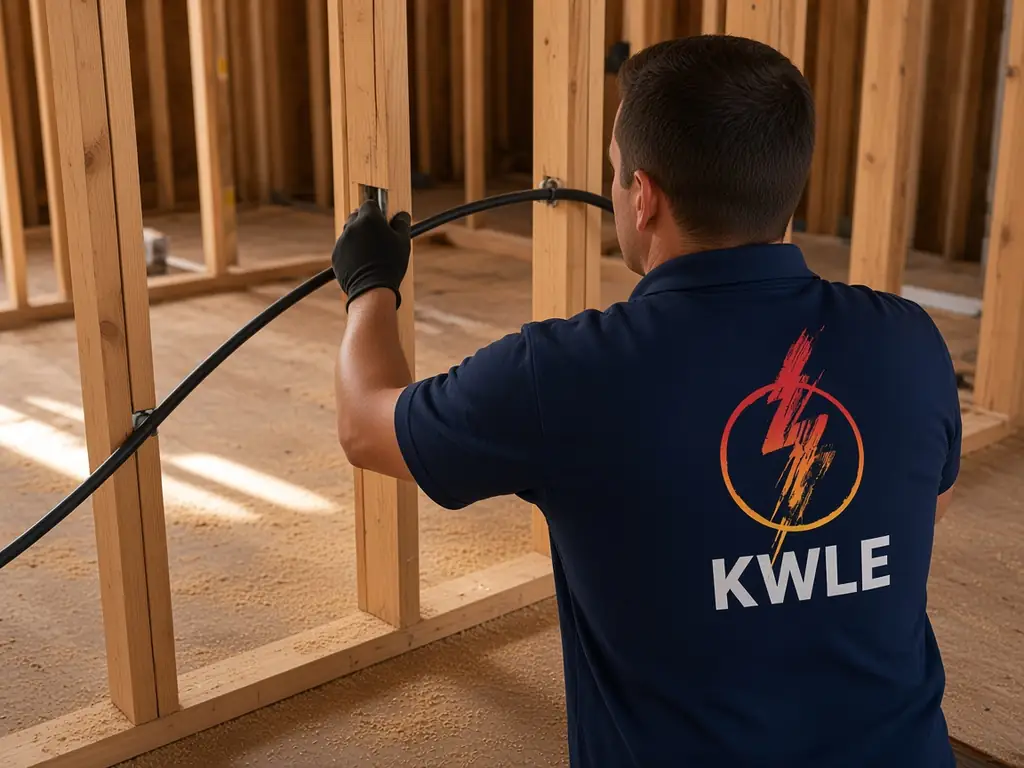
Residential electrical construction in South Highpoint is the trade package while the walls are open
This page is the construction-phase electrical on a residential job: temporary power, rough-in, device trim and a final that an inspector can sign. It is not a finished-house service call, and it is not the standalone new-home page for a full house built from a vacant lot. Those pages stay in their lanes. Here the structure is already in play, the other trades are on site and the electrical has to move with them.
A 1970s gut is the usual job in this place
Most housing here dates to the 1970s. When an owner or a builder opens those walls, we often find cloth-taped splices, ungrounded boxes, a crowded can and heat runs that were added later. We plan a fresh rough that matches the new layout. We retire abandoned cable in a listed way. We do not leave a live splice in a bay the drywall crew is about to close.
What a trade package usually includes
- Florida electrical contractor license EC13014717, licensed & insured
- Woman-owned business based at 6248 Seminole Blvd, Seminole FL 33772
- 2-year workmanship warranty, 5 years with a Member Care Plan
- SPAN Authorized Installer and Home Depot preferred contractor
- Open 24/7 for electrical emergencies: call or text (727) 476-7079
A typical package covers temporary power if the site needs it. It also covers device layout, boxed openings, home runs and smoke-alarm cable when that is in scope. Trim and a final visit are part of the same package. We write that list on the bid so the builder can see it. A panel change, a service change or a later specialty circuit is named if it is in the package. It is left off if it is not.
Job rhythm with the other trades
On a small South Highpoint lot the plumber, the mechanical crew and the carpenter are often in the same hall at once. We rough after the mechanicals have a path. We protect our boxes during the spray. We come back for trim when the paint is ready. We do not rough so early that a later duct move rips our cable. We do not show up for trim while the walls are still wet.
Temporary power that a small site can use
A gut or an addition under construction may need a listed temporary hold, a spider box or a protected stand. We set what the site actually needs. We keep cords out of the walk path. We do not tap a neighbor’s porch receptacle to run a saw. Temporary power is removed when the permanent service can carry the job.
Duplex rebuilds and a line that stays on one unit
A duplex gut has to stay on the unit you hired us for, unless the owner has clearly scoped both sides. We do not share a new home run across a party wall as a shortcut. We do not shut the neighbor down for a rough they did not approve. Shared service gear may have to change. That is a named talk with the owner before we open it.
Manufactured homes are usually a different system
About 26 percent of the homes here are manufactured. A factory assembly, a pedestal and a feeder are not the same as a site-built rough. We will look at a site-built addition off a manufactured home. We will also look at a house being reframed on a lot. We will not treat a manufactured interior as a standard construction package. If that is the building, we say so on the first visit.
Boxes, nail plates and a layout the painter can live with
We set boxes at a consistent height. We use nail plates where cable passes a stud edge. We leave the device yokes flush enough for a clean trim. A 1970s remodel wall can be a mix of old and new studs. We do not bury a box behind a future tile line or a future backsplash without a listed extension plan.
Smoke alarms, travelers and a three-way that still makes sense
On a construction job we place smoke-alarm cable and travelers where the layout and the rules call for them. We do not skip a required interconnect because a short hall already felt crowded. A three-way that made sense in 1974 may not match a new opening, and we redraw that path on the set before we pull it.
Redlines, a marked set and a change that gets priced
If the owner moves a wall or a kitchen island after rough-in, we mark the set. We price the change. We pull the new path before the wall closes. We do not absorb a late island feed as a courtesy that then shows up as a missing receptacle at final. A written change keeps the job honest for the builder and for us.
Firestopping, plates and a penetration the inspector can see
Cable that crosses a rated plate, a fire-blocked bay or a top plate needs the listed seal or plate the assembly requires. We firestop our own penetrations. We do not rely on a later trade to notice our holes. We leave the work visible for the rough inspection. A foam smear that hides the cable is not a listed close.
Trim, devices and a room-by-room walk
At trim we set the devices. We label the can. We try the three-ways. We walk each room with the builder or the owner. A missing blank, a back-stabbed leftover or a dimmer that flickers on the first try is fixed before we call the job ready. The directory has to match the rooms as they now exist, not as they existed in 1974.
What stays out of a base bid
Appliances, a future car circuit, a landscape run or a specialty generator hookup are out of the base bid unless they were written in. We would rather name those items than hide them. A later change can be added, but it is a change, not a surprise we swallow on the last day.
Paperwork and a rough inspection
Residential electrical construction usually needs a permit and a rough visit before the walls close, then a final. We file the paperwork, we stand the rough visit and we do not invent a timeline. The parcel is in unincorporated Pinellas County, even if the mailbox says Pinellas Park or Clearwater.
How we stand behind a construction package
Rough-in, devices and connections we complete on the job carry a two-year workmanship warranty. The Member Care Plan at /member-care-plans/ extends that term to five years on our work. A fixture or appliance the owner supplies later is covered only if we set it.
Close-out photos and a marked panel directory
Before we leave the site we photograph the labeled can. We leave the owner a simple room map. We note any held items that still belong to another trade. A construction job that ends with a blank directory is not closed. The next person in that house should be able to read the can without guessing.
A compact lot, a tight crawl and a path that stays legal
Lots in this 0.73-square-mile community are often short, and a 1970s crawl or a slab edge can be tight. We route feeders and conduit on a listed path. We keep working space at the can. We do not bury a new nipple behind a future water heater. If the old can has to move to make a legal wall, we put that in the package before we bid the trim.
Common questions
Is this the same as your new-home construction page? A: No. That page is for a full new house. This page is the residential electrical construction trade on a job that is already in motion, including guts and open-wall additions.
Do you work under a general contractor? A: Yes, when the contractor hires us as the electrical trade. We also work directly for an owner who is running a permitted residential project. Either way the scope is written down.
Can you rough a manufactured home the same way? A: Usually not. A manufactured interior and a pedestal are a different system. We will say that on the visit and we will not force a site-built package onto that assembly.
From the Seminole Blvd shop, South Highpoint is about 7 miles away. We know the streets around 49th Street North, Roosevelt Boulevard, 34th Street North and Ulmerton Road and also take work in Clearwater, Pinellas Park, St. Petersburg, Largo and Feather Sound.
Up: Residential Electrical Construction across Tampa Bay · For everything we do locally, see South Highpoint electrical service.
Cities next door: Bay Pines · Seminole
Call or text (727) 476-7079 for residential electrical construction in South Highpoint, or book online. Business hours 7 AM–5 PM, weekend service, 24/7 emergency calls.