
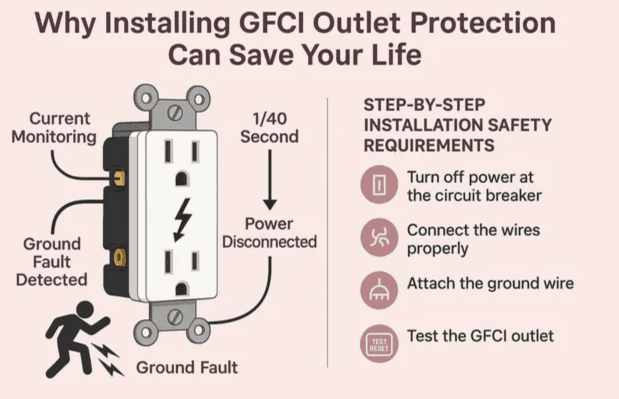
A bathroom outlet that trips, a kitchen counter that sits near the sink, or a garage receptacle that never got updated can leave people exposed to shock. Ground fault protection is not a luxury in Florida homes and commercial spaces. Moisture, salt air, and older wiring make the risk more real in St. Petersburg and across Pinellas County. Many facility managers and homeowners in the area often notice the gap only after a shock scare or a failed inspection. Key West Lights and Electric installs GFCI outlets to code so wet-area receptacles shut off power when they sense a dangerous leak of current.
Missing protection is easy to overlook. Power still flows. Lamps still turn on. The hazard shows up only when water, a damaged cord, or a person becomes a path that electricity was never meant to take.
What a GFCI Outlet Actually Does
A GFCI, or ground-fault circuit interrupter, watches current on the hot and neutral paths. If those amounts do not match, some of the current is leaking. That leak is a ground fault. The device then opens the circuit in a fraction of a second.
A standard receptacle does not do this. A three-prong plug and a grounding conductor help in other ways, but they do not cut power the way a GFCI does. That is why codes treat wet and damp locations as special cases.
Protection can sit in the receptacle you see on the wall. It can also sit upstream so one device covers several outlets on the same circuit. Either approach can meet the goal when it is wired correctly. A licensed electrician should decide which layout fits the space, the load, and the age of the wiring.
The test and reset buttons on a GFCI device are not decoration. If they do not click, trip, and restore power as they should, the device needs service. Keep using an outlet that will not trip is not a workaround. It is a warning.
Where Homes and Businesses Need Protection
Code rules for GFCI coverage have grown over the years. A house or shop that passed inspection decades ago may still lack devices in rooms that now require them. That pattern is common in older St. Petersburg bungalows, mid-century ranches, and small commercial buildings around Tampa Bay.
Water is the theme, but it is not the only theme. Concrete floors, outdoor weather, and guest use all raise the chance that a person and a live part will meet. The list below is a practical map of locations that usually need GFCI outlet installation. A licensed electrician should confirm what your property requires, because local rules and the condition of the circuit both matter.
Required and high-priority locations
- Bathrooms, including every bathroom outlet that serves the room, not only the one beside the sink
- Kitchens, especially countertop receptacles and spots within reach of the sink, island, or peninsula
- Garages, carports, and accessory buildings with grade-level or below-grade floors
- Outdoors, including porches, decks, balconies, and exterior wall receptacles
- Basements, crawl spaces, and unfinished damp areas
- Laundry rooms and utility sinks
- Boathouses, docks, and other wet locations common on the Gulf coast
- Commercial restrooms, break rooms with sinks, mop sinks, and indoor wet-service counters
That list is a starting point, not a substitute for a site visit. Pool equipment, hot tubs, and fountain circuits have extra rules. Those systems belong with a licensed electrician. They are not a match for a simple device swap.
Bathrooms: Water, Bare Feet, and Everyday Tools
A bathroom outlet sits next to sinks, tubs, and wet hands. Hair tools, electric toothbrushes, and phone chargers all plug in here. Tile and bare feet make a person a ready path to ground if something goes wrong.
In many older Florida homes, the original receptacle never had GFCI protection. A later remodel may have added a fan or new lights and left that outlet alone. Guests in short-term rentals often bring high-wattage tools and use every plug in the room. Protection belongs on the receptacles that serve the bath, not only on the newest vanity circuit.
If a GFCI in a bath trips often, do not keep resetting it and hope for the best. Moisture in a box, a tired device, or a damaged appliance may be the cause. A licensed electrician can find which of those is true.
Kitchens: Counters, Sinks, and All-Day Use
Kitchen work happens beside water, metal sinks, and grounded appliances. Countertop receptacles that serve the kitchen need GFCI protection. Islands, peninsulas, and the stretch of wall near the sink deserve the same care.
A kitchen can look updated and still miss this. New cabinets and a new faucet do not change an old counter circuit. Two-prong outlets, missing test buttons, or a single unprotected plug behind a coffee maker are all clues.
Commercial kitchens raise the stakes. Prep tables, ice machines, mop sinks, and wet floors are part of the shift, not a rare spill. A tripped device can stop service, so the layout should be planned. Dedicated equipment, downstream protection, and clear labeling help staff reset the right device without guessing.
Do not treat a power strip or a surge tap as a stand-in for a GFCI. Those products do other jobs. They do not replace ground fault protection at the receptacle or on the circuit.
Garages, Outdoors, and Basements
Garages mix concrete floors, damp air, and power tools. Chargers, freezers, and holiday lighting often share the same walls. Receptacles that serve these uses generally need GFCI protection. A refrigerator on a GFCI may nuisance-trip in some setups. That is a design question for a licensed electrician, not a reason to leave the rest of the garage unprotected.
Outdoor receptacles face rain, irrigation overspray, and salt air along the Tampa Bay coast. In-use covers help keep water off the face of the device. They do not replace GFCI protection. Landscape lighting, exterior kitchens, and dock-side plugs need a full look at wet-location ratings, covers, and circuit layout.
Basements and crawl spaces stay humid in Florida even when they look dry. Unfinished storage outlets, sump equipment, and workshop corners should not be ignored. A basement finished years ago may have receptacles that never received GFCI coverage. If the space floods even once, the devices and boxes need a professional check before anyone treats them as safe.
Panel changes, new outdoor circuits, and any work on aluminum branch circuits or knob-and-tube wiring require a licensed electrician. Those tasks are not do-it-yourself projects, and this article will not walk through them.
Why Older Tampa Bay Properties Fall Behind
Much of the housing and small-commercial stock in Pinellas County was built before GFCI rules covered as many rooms as they do now. A building can still be useful and well loved and still be short on wet-area protection.
Clues include two-prong outlets, receptacles with no test button, and devices that never trip when tested. Another common miss is a kitchen or bath remodel that kept the original counter or vanity circuit. After storms, some devices still feed power but no longer trip as they should. Heat, age, and corrosion inside the device can hide that failure.
Insurance reviews, sale inspections, and commercial occupancy checks often flag missing GFCI protection. Catching the gap before a failed walk-through is calmer than rushing after a citation or a shock event. Facility managers who oversee several units should treat testing and replacement as scheduled maintenance, not as a one-time punch list.
Commercial Spaces Follow the Same Wet-Area Logic
Offices, shops, and restaurants need the same basic idea as a house, applied to public and staff areas. Restrooms need bathroom outlet protection. Break rooms with sinks act like small kitchens. Janitor closets and mop sinks are wet locations even if guests never see them.
Exterior receptacles for signs, vendors, or seasonal displays need weather-rated covers and GFCI protection. Patios and outdoor dining add guest use on wet floors. Multifamily buildings and vacation rentals in St. Petersburg see heavy turnover of hair tools and countertop appliances. A missing GFCI in a unit bath is both a safety issue and a code issue.
Tenant improvements should include GFCI outlet installation in the electrical scope, not as a last-day add-on. If a space will gain a sink, an espresso bar, or an outdoor serving window, plan the receptacles before finishes close up the walls.
What Professional Installation Involves
Installation is more than swapping a device. The electrician confirms the circuit, the grounding path, and the line and load orientation. One GFCI can protect downstream outlets when that is the right design. Wrong connections can leave the reset useless or create a false sense of safety.
Some locations need weather-resistant devices and extra-duty covers. Kitchens and laundry rooms may need a mix of GFCI and arc-fault protection depending on the circuit and the code cycle in force. A licensed electrician sorts those requirements against the panel, the wire type, and the way the space is used.
If a circuit keeps tripping after new devices go in, that is information. It can point to a damaged cord, water in a box, a pinched cable, or a real ground fault. Resetting without finding the cause is not a repair.
Homeowners and maintenance staff should not open unknown circuits to rewire receptacles. They should not work in the service panel to add breakers or move neutrals. For homes and businesses in St. Petersburg and Pinellas County, Key West Lights and Electric can inspect existing receptacles and install GFCI protection where the code and the site conditions call for it.
When to Call a Licensed Electrician
Call a licensed electrician if wet-area rooms still have standard outlets, if test buttons do nothing, if a receptacle sparks or feels warm, or if a remodel will add water or outdoor use. Call as well after storm damage, flooding, or a failed inspection note about ground fault protection.
Do not open the service equipment to “just add a breaker.” Do not attempt aluminum repair or knob-and-tube replacement from a blog post. Those jobs need a licensed electrician who can see the system on site and pull the permits the work requires.
If you are a facility manager, bring a simple inventory: which restrooms, kitchens, garages, and exterior walls still lack GFCI devices, and which devices fail a monthly test. That list makes an estimate faster and keeps the visit focused on risk, not guesswork.
Schedule an Inspection Before the Next Wet Season
Florida humidity, older housing, and busy commercial kitchens all argue for the same step: confirm that wet-area receptacles actually protect people. If you are planning a remodel, preparing a rental, or catching up a Tampa Bay property that has never had this work, schedule a visit. Key West Lights and Electric can inspect those locations and provide an estimate for GFCI outlet installation. Call (727) 776-0718 or visit https://keywestlights.com/ to set up a time.